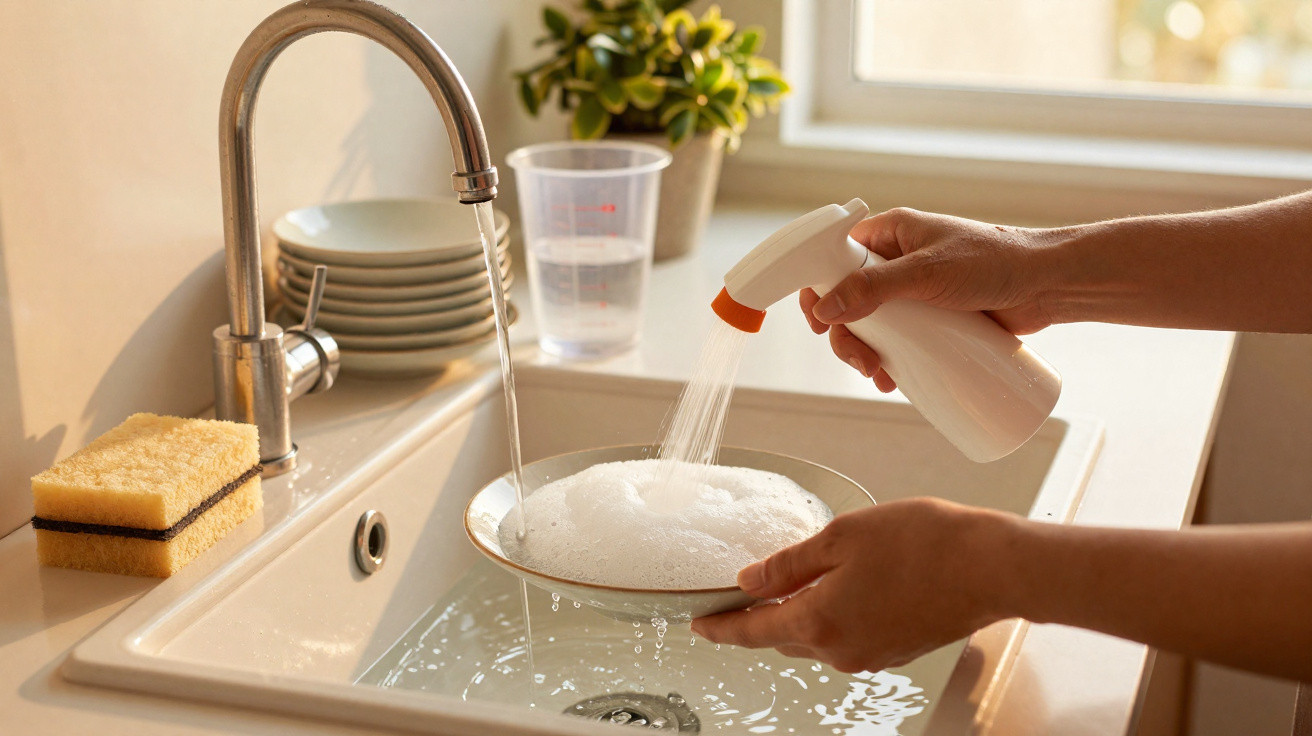
The tap was running, the plates were piled up and the small kitchen somehow seemed far too noisy. Water striking china, cutlery knocking together, and somebody in the living room calling out, “You’re wasting half the river in there!” You know that pang when you realise they are not completely wrong. The sink is full, your hands have gone numb, and the meter is silently ticking over on some chilly wall.
Later, as you look through your water bill, that moment comes back to you. All that flowing water for a dozen plates and one pan. There must be an easier way to be environmentally friendly - one that does not make washing up feel like an elaborate eco-ritual.
This is where one minor adjustment to your washing-up routine can make a real difference, without seeming like extra effort.
This simple change transforms the way you use the sink
Next time you are standing at the sink, notice what happens to the tap. Most of us switch it on once and leave it flowing like a miniature waterfall while we scrub, rinse, talk, think about work or gaze through the window. The sound seems “normal”, even reassuring.
But that uninterrupted flow carries a cost that is invisible at the time. Litres of clean, treated water disappear down the plughole while the sponge does the real cleaning. It may look like an ordinary daily routine, but it is effectively a small drain on both your monthly budget and the planet’s resources.
In one London flat-share, four housemates timed one another while doing the washing-up. They had the same stack of dishes, the same products and the same sink. The only variation was the method: one person used running water from beginning to end, while the others tested different stop-and-start approaches.
The person who kept the water running used nearly 40 litres. The housemate using a basin system used about 12 litres. The third person, who followed the method discussed here, fell somewhere in the middle - without taking longer or giving it a second thought.
No one altered their personality. No one turned into a zero-waste monk overnight. They simply changed when the water ran, rather than how vigorously they scrubbed.
It may sound almost absurdly straightforward. The main misconception about washing up is that people assume the running water does the cleaning. In reality, it’s the combination of detergent, time and friction that does the heavy lifting.
Water mainly acts as the carrier: it delivers the washing-up liquid to the surface and then takes the dirt away. Alter the timing of the flow, using short and deliberate bursts rather than one continuous stream, and the dishes will be equally clean. Meanwhile, your bill reduces quietly in the background, and the change barely registers as an effort.
The “burst rinse” method that saves water without holding you up
Many plumbers, budget-conscious families and quietly practical grandmothers already follow this approach, often without giving it a name. Think of it as “burst rinsing”.
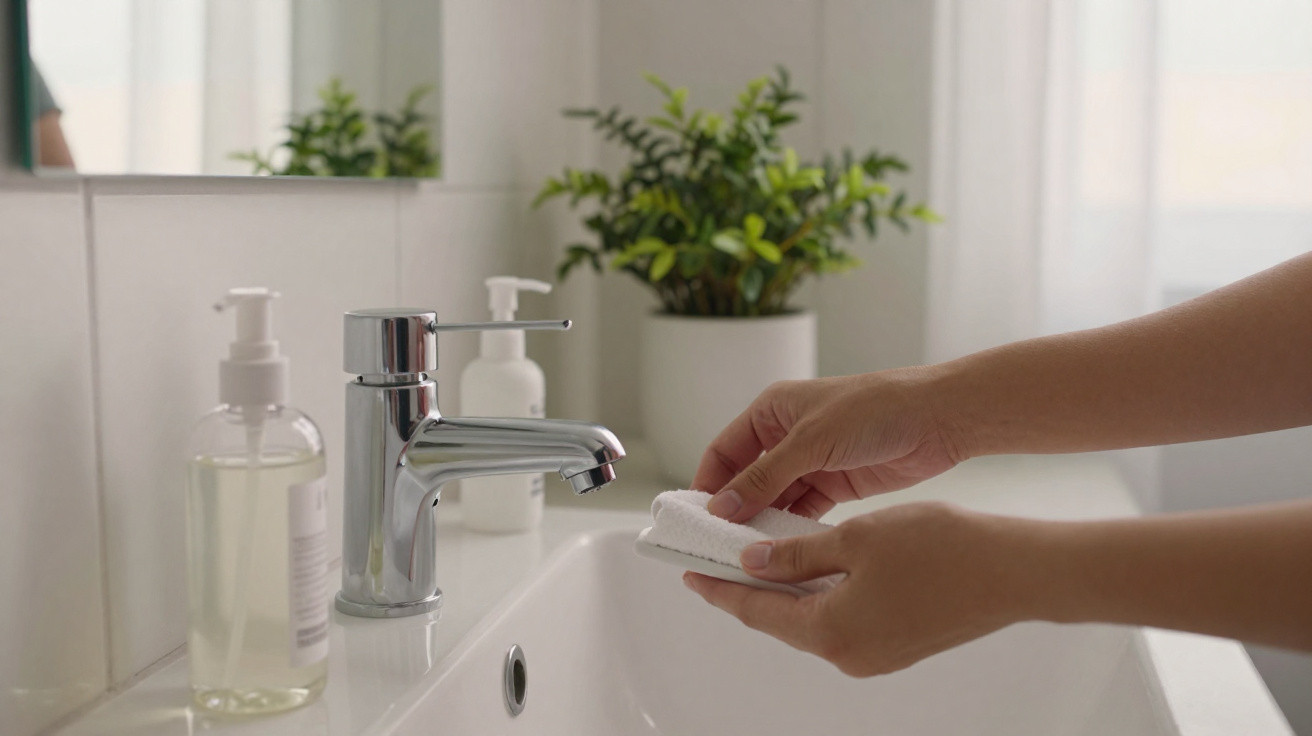
First, scrape all food scraps into the bin or compost caddy. Do not use any water yet. Next, fill a small bowl or part of the sink with hot, soapy water. This becomes your “active zone”. Wash everything in that water, loading the sponge once, twice or three times. The tap still stays off.
Once a group of items is ready, switch the tap on only long enough to give each piece a quick, focused rinse. On. Off. Plate. Glass. Fork. Finished. The tap should run only when there is actually something beneath it - nothing else.
Once you find the rhythm, it is unexpectedly easy. It does not feel like making a “green gesture”; it simply feels efficient. The soap remains where it is useful, on the sponge and in the bowl, instead of being swept away with the water.
The first common mistake is leaving the tap on at “just a trickle” in case it is needed. That modest stream builds up alarmingly quickly.
The second is pre-rinsing every single plate under hot water before even using washing-up liquid. Let’s be honest: nobody genuinely does that every day for enjoyment; it is simply a habit inherited from a time when bills mattered less.
One environmental educator put it this way during a workshop about daily habits:
“The cleanest plate isn’t the one that saw the most water - it’s the one that saw the smartest water.”
You do not need to feel guilty to make this change. All it takes is a little curiosity, and perhaps the small pleasure of hearing silence between each burst from the tap.
For simplicity, here is the “burst rinse” method at a glance:
- Scrape all food into the bin or compost caddy before turning on the tap.
- Prepare a small basin or half-filled sink with hot, soapy water.
- Fully wash several items in the same soapy water.
- Rinse each item using only brief, targeted bursts of water.
- Switch the tap off the moment there is nothing beneath the flow.
A modest routine that can improve your bills - and your mood
The first time you notice how often the tap is left on for no reason, something changes. Your hand reaches automatically for the handle, then pauses. There is one moment of awareness. Then you try the alternative: basin, soap, scrub, burst, off.
After a long day, this can feel like a small act of control. You cannot solve energy prices or worldwide droughts from your kitchen, but this little setting belongs to you. One sink, one pile of washing-up, one choice about how the water is used. That is all.
On a hectic weekday evening, when children are shouting in the next room or your inbox is still occupying your thoughts, a water-saving method that adds no mental burden has genuine value. You get the feeling that you are doing one thing properly without having to work any harder.
| Key point | Detail | Benefit for the reader |
|---|---|---|
| Reduce the continuous flow | Replace constantly running water with short rinses | Lower water consumption without changing products or equipment |
| Create a “soapy zone” | Use a small basin or half-filled sink containing hot water and washing-up liquid | Wash more utensils with the same amount of water |
| Change the rhythm, not the effort | Keep the same washing-up time but alter when water is used | Save money without feeling any added restriction |



Comments
No comments yet. Be the first to comment!
Leave a Comment