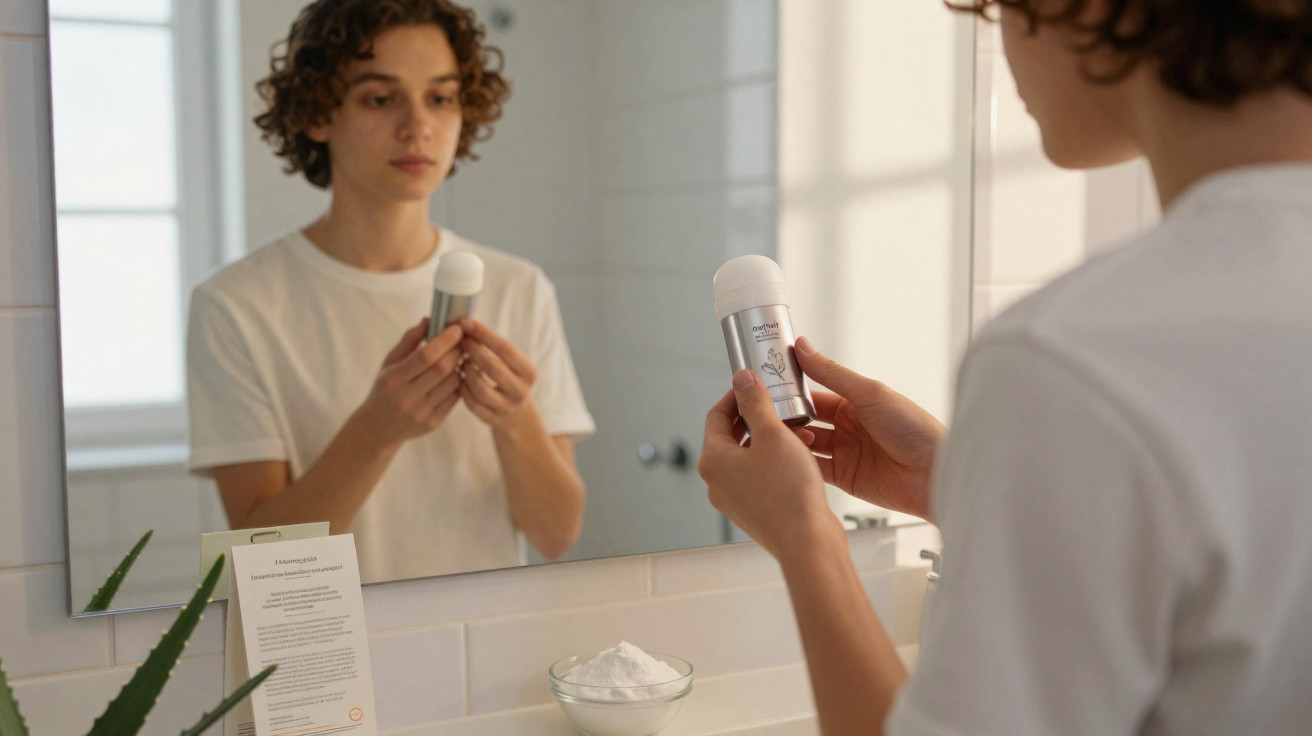
For years, concern has circulated through social media and friendship groups: aluminium in deodorant is said to cause illness, ranging from breast cancer to Alzheimer’s. Some people anxiously throw away their sprays, while others dismiss the warnings altogether. Between fear and everyday underarm care lies a confusing landscape of studies, limits and misunderstandings that few people fully understand. It is time to set out the facts clearly.
How aluminium enters the body in the first place
Aluminium is among the most common elements in the Earth’s crust, so regular human exposure is entirely normal. The main route of exposure is not deodorant at all, but food.
- Foods including cereal products, vegetables, tea and cocoa
- Aluminium-containing cookware and barbecue trays
- Food packaging made from aluminium foil or aluminium containers
- Certain medicines and additives
- Cosmetics such as lipstick, sun cream and antiperspirant deodorants
The body eliminates most absorbed aluminium through the kidneys. A small proportion remains in the body, primarily in the bones and, to a lesser degree, in the brain. This residual amount is broken down only slowly.
For healthy people, total exposure generally remains below the range that authorities regard as critical. The European Food Safety Authority has set a guideline value: up to one milligram of aluminium per kilogram of body weight per week is considered tolerable. Someone weighing 70 kg should therefore not consistently exceed 70 milligrams a week by a substantial amount.
What antiperspirant deodorants with aluminium salts actually do
Many people treat deodorant and antiperspirant as though they were the same thing, but chemically this is incorrect. The distinction matters when considering potential risks.
- Standard deodorants mask odour with fragrances and inhibit the bacteria that cause unpleasant smells.
- Antiperspirants act directly on sweat production, usually by using aluminium salts.
These aluminium salts react with proteins in the ducts of the sweat glands. This creates a temporary plug, meaning less sweat reaches the skin’s surface. Underarms feel drier and shirts remain free from marks for longer.
“Based on current research, using antiperspirant deodorants containing aluminium is considered harmless for healthy people.”
The German Federal Institute for Risk Assessment has reviewed the available evidence several times in recent years. More recent assessments have reached a clear conclusion: antiperspirants contribute far less to overall aluminium intake than was previously assumed. The amount that seems to enter through the skin in everyday circumstances is very low.
Breast cancer, Alzheimer’s and more: what studies have shown so far
Fears about aluminium in deodorant largely stem from two suspected links: a possible connection with breast cancer and with neurodegenerative illnesses such as Alzheimer’s.
Earlier research noted that breast tumours occur more often in the outer upper quadrant of the breast, close to the underarm. This led to the theory that antiperspirants might be involved. At the same time, studies identified aluminium deposits in the brains of certain groups of patients, which intensified the debate about Alzheimer’s.
What may appear to be a clear picture becomes less convincing on closer examination. Many of these studies were small, methodologically weak or observational, without demonstrating a clear cause-and-effect relationship. Large, well-designed studies have not so far been able to prove an unambiguous association between antiperspirant deodorants and breast cancer.
“There is currently no robust evidence that aluminium-containing antiperspirants increase the risk of breast cancer or Alzheimer’s.”
Professional bodies and authorities nevertheless stress that research into long-term effects is continuing. Science rarely deals in “absolutely safe”; instead, it works with probabilities and threshold values. This is precisely why cautious advice on limiting total exposure exists.
Who should take particular care with aluminium?
Not every body processes aluminium in the same way. People with certain underlying health conditions face a greater risk that the metal could build up.
Kidney problems
The kidneys are the main organs responsible for excretion. Anyone with impaired kidney function or who requires dialysis is much less able to eliminate aluminium. Doctors therefore generally advise strict monitoring of total exposure, including cosmetics, medicines, food and contact materials.
Possible consequences of sustained excessive exposure include:
- Kidney damage
- Changes to bones (disorders of bone metabolism)
- Impairment of the nervous system
- Disruption to blood formation
Children, pregnant women and heavy users
Risk discussions are considered particularly sensitive for children and pregnant women. This involves not only actual dangers but also safety margins. A person who uses strongly protective antiperspirants several times daily, regularly barbecues using aluminium packaging and consumes heavily contaminated foods could theoretically move closer to the tolerable range.
In such situations, it is worth taking an honest look at personal habits: is the strongest anti-sweat deodorant really necessary every day? Or might gentler, aluminium-free products be enough on ordinary days?
How to reduce your personal aluminium exposure
No one needs to live in the woods or eat from wooden bowls out of fear of aluminium. A few straightforward everyday measures can noticeably reduce intake without much effort.
| Area | Practical tip |
|---|---|
| Deodorant & antiperspirant | On demanding days with heavy sweating: use antiperspirant; on quieter days: choose aluminium-free deodorant. |
| Skin condition | Do not apply aluminium-containing deodorant immediately after shaving or to damaged skin. |
| Kitchen | Avoid using aluminium trays and foil for highly salty or acidic foods, especially when hot. |
| Barbecuing | Choose stainless-steel barbecue trays or coated alternatives instead of bare aluminium. |
| Food | Cut down on ready meals and highly processed products, and favour fresh cooking. |
What the updated assessment means in everyday life
The key message from current risk assessments is that antiperspirants contribute much less to total aluminium intake than was claimed for a long time. Healthy people using these products normally do not need to panic about aluminium in deodorant.
Even so, specialists advise against raising exposure unnecessarily. It can be compared to noise: one loud evening at a concert is not a disaster, but someone standing beside a jackhammer for hours every day should wear hearing protection. With aluminium, a combination of modest attention and sensible calm provides a reasonable balance.
“Anyone who likes antiperspirant can continue using it – consciously, not thoughtlessly.”
Why the debate is so emotionally charged
Aluminium in deodorant affects a deeply personal area: body odour, the fear of being noticed for the wrong reasons, and, at the same time, anxiety about serious disease. This creates a combination that spreads perfectly on social media. Individual study findings or animal experiments are picked out, stripped of their context and circulated in alarming posts.
This is exactly where study quality deserves scrutiny: were people studied, or only cells in a laboratory? What dose was used: realistic quantities or extreme concentrations unrelated to everyday life? How long were participants followed? Without asking these questions, the discussion can quickly become misleading.
How to recognise trustworthy products and information
When faced with the shelves on the next visit to a chemist, a few indicators can help:
- Clear labelling: aluminium salts are listed among the ingredients of antiperspirants.
- Transparent manufacturer information: reputable brands are open about ingredients and research.
- Independent assessments: statements from authorities or consumer organisations carry more weight than advertising claims.
- Realistic promises: products that supposedly “detoxify everything” or provide “100% protection from illness” should be treated sceptically.
Over the longer term, the crucial issue is how your own skin responds. Burning, itching or a rash are signs that a product is unsuitable, whether it contains aluminium or not. In that case, changing to a gentler alternative can be worthwhile, such as deodorant creams, mineral options or sprays that work through other mechanisms.
Ultimately, this is not about a strict yes or no to aluminium in deodorant. What matters is making informed choices: people who sweat heavily or work under constant pressure may benefit from an effective antiperspirant. Those working mainly from home may need that maximum effect only on certain days. This makes it possible to manage exposure without sacrificing everyday practicality.





Comments
No comments yet. Be the first to comment!
Leave a Comment