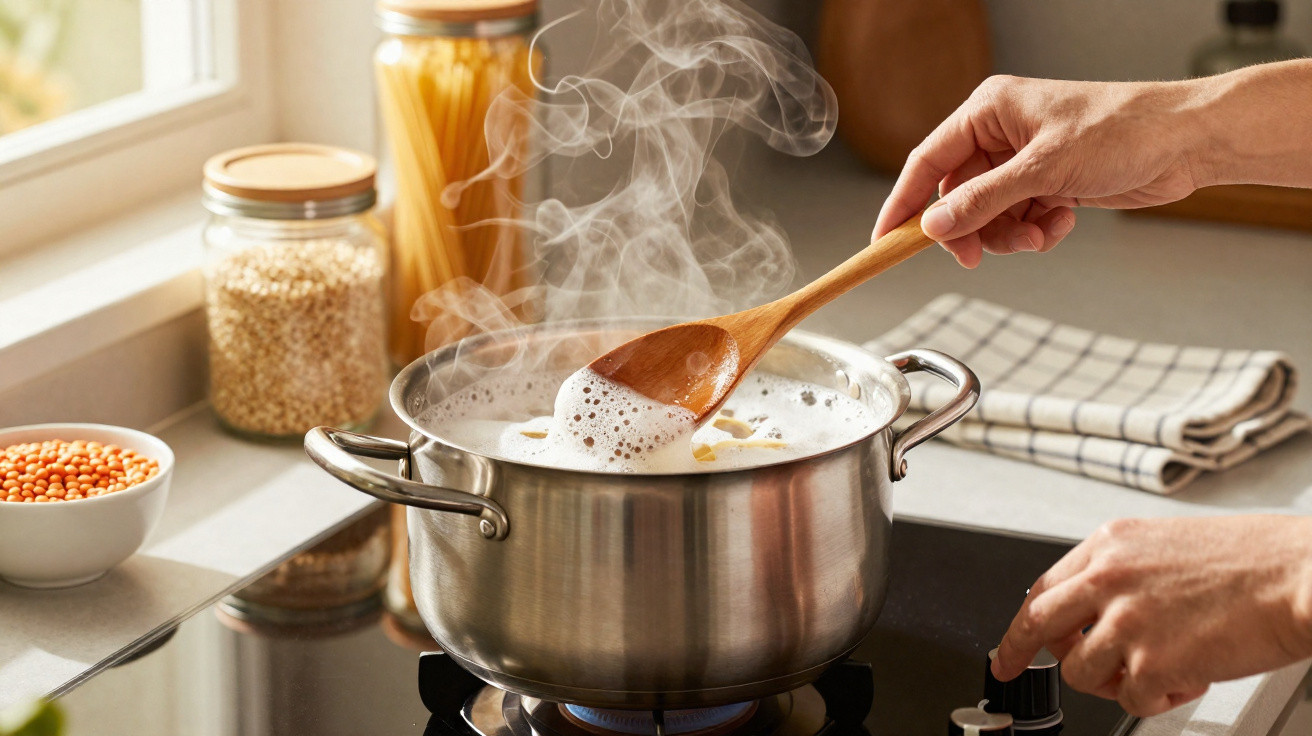
Placing a wooden spoon across a boiling pan is an old kitchen trick used to keep foam under control. The explanation involves bubbles, starch and surface tension, particularly when pasta, rice or pulses release residues.
Why put a wooden spoon across the pan?
The spoon acts as a cool, porous barrier in the path of rising foam. As bubbles meet the wood, they become less stable and burst before they can build into a high layer over the boiling water.
This effect is more noticeable in pans of pasta, rice, potatoes or pulses, as these foods release starch. Starch makes the foam thicker and helps bubbles last longer, increasing the chance of boiling over on a hot hob.
The trick generally helps for the following reasons:
- Wood: its porous surface helps to burst foam bubbles.
- Bubbles: they lose stability when they touch the spoon laid across the pan.
- Starch: pasta and grains release substances that thicken the foam.
- Boiling: this method can reduce splashing, but it does not replace supervision.
- Limit: a pan that is too full can still spill over despite the spoon.
What does surface tension have to do with it?
Surface tension makes the liquid’s surface behave like an elastic film. In a pan, this property explains why bubbles form, hold their shape briefly and then burst when exposed to contact or movement.
When water boils with dissolved starch, the film surrounding the bubbles becomes stronger and rises as foam. The spoon provides a point of interruption, weakening that structure before it goes over the rim of the pan.
Why does it work better with pasta, rice and grains?
Pasta, rice and certain grains release starch as they cook, making the water cloudier and more likely to produce long-lasting foam. This foam traps steam, expands quickly and may spill over before the cook notices the volume rising.
Starchy foam kept under control
The spoon helps, but it does not solve everything.
When the foam reaches the surface, the spoon laid across the pan bursts some of the bubbles.
If the pan is overfilled, the water can still rise and spill over.
With plain water, boil-overs tend to produce less foam and are more often caused by excessive heat or volume. Foods high in starch, however, create a thick layer, which is why the wooden spoon has a more visible effect.
The trick is most commonly used with these preparations:
- Pasta cooked in plenty of water.
- Rice or potatoes in an overly full pan.
- Grains that release foam at the start of boiling.
- Stock with starch collected on the surface.
How should you use the spoon without causing another problem?
The spoon should rest across the pan’s rim, spanning the opening without touching the flame directly. It can help contain foam, but it is no substitute for a suitably sized pan, enough space above the water and careful attention during cooking.
It is also best to use a clean, dry, intact spoon with no deep cracks. Very old wood can retain residues, darken in the heat and transfer odours to the dish, particularly in more delicate cooking preparations.
For safer use, follow these precautions:
- Do not fill the pan to the rim.
- Keep the handle away from a direct flame.
- Stir the water if the foam continues to rise.
- Turn down the heat if the volume keeps increasing.
Does this trick replace turning down the heat?
The trick is helpful, but it does not remove the need for basic precautions, just as understanding the role of ingredients matters during cooking. If the boil is too vigorous, reducing the heat remains the most safe and effective solution.
In practice, the wooden spoon is a simple aid that buys a few seconds before a boil-over. It works best with pans that have spare room, a moderate boil and starchy foods, but it still requires monitoring throughout preparation.




Comments
No comments yet. Be the first to comment!
Leave a Comment