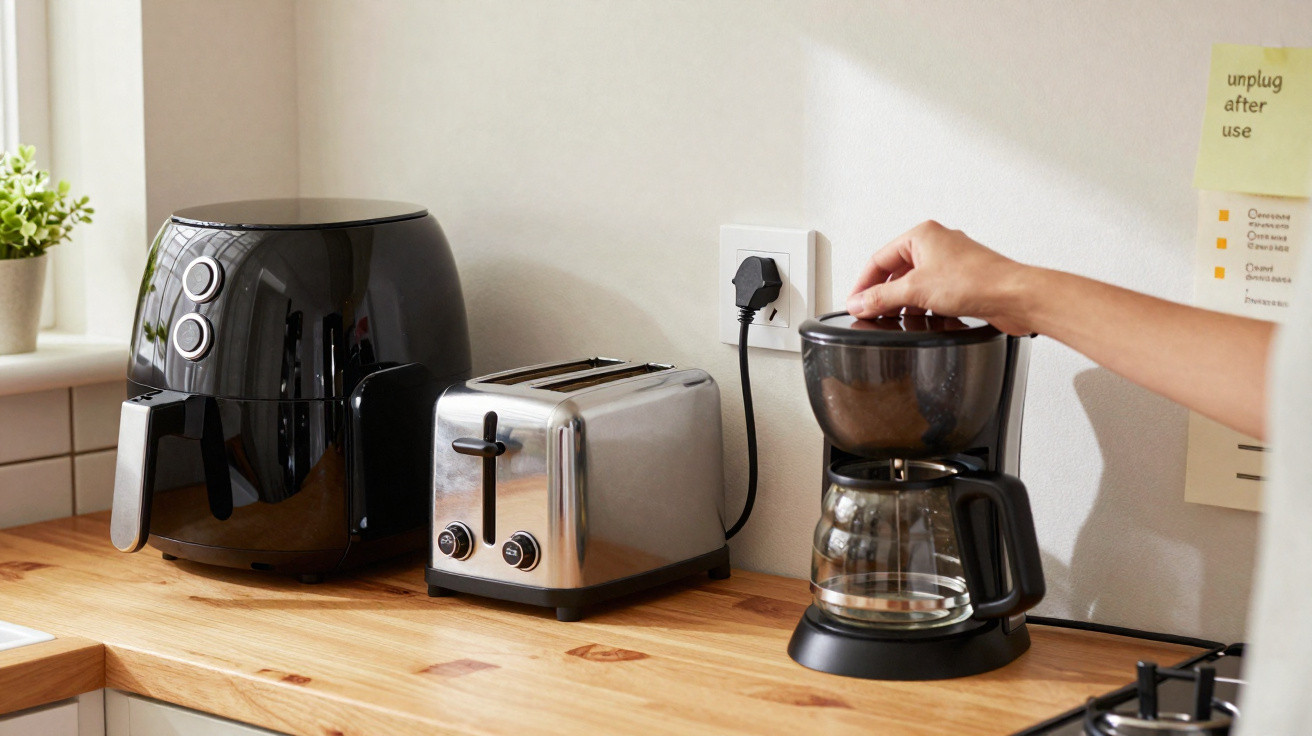
In many home kitchens, certain appliances stay plugged in all day, even when they are not being used. Although this may seem harmless, it can increase the risk of fire and waste electricity through standby power use, particularly with heat-producing appliances that are regularly left plugged in on the worktop.
Which kitchen appliances require extra care with the plug socket?
Three kitchen appliances particularly warrant added attention: the air fryer, toaster and electric coffee maker. Each uses internal heating elements that reach high temperatures and is often left connected to the mains, increasing the risks in older or overloaded electrical installations.
Even when switched off at the button, these appliances may still draw power, heat internal components and add to so-called phantom energy consumption. Combined with manufacturing defects, worn parts or loose plug sockets, this can raise the likelihood of a short circuit.
Why should an air fryer be unplugged after use?
An air fryer, also known as an electric fryer, heats air using a heating element and fan, quickly reaching high temperatures. On many models, part of the system remains live even after it has been switched off on the control panel, making it more vulnerable on older circuits or where numerous appliances share the same line.
Standby mode may also keep lights, sensors and circuits operating, resulting in ongoing electricity use. To make use safer and more economical, it is worth building a few straightforward precautions into your routine:
- Unplug it after every cooking session and avoid using it with overloaded extension leads.
- Do not place the air fryer on flammable surfaces or near cloths and plastic items.
- Do not exceed the plug socket's capacity, keeping just one heating appliance connected at each point.
Why does a toaster left plugged in present a genuine risk?
A toaster contains exposed heating elements that warm up quickly and, over time, collect bread crumbs, creating potentially combustible material. If the automatic shut-off fails or a short circuit occurs, these crumbs can ignite within seconds, particularly when the appliance is positioned against paper or fabric.
Some models remain live even when the lever is raised, which can create a false sense of security. It is therefore advisable to unplug the toaster after use, clean the crumb tray regularly and keep it away from curtains, tablecloths and food packaging.
How can you make unplugging the air fryer, toaster and coffee maker a habit?
Making a habit of unplugging appliances is easier when the action becomes part of normal kitchen tasks. One useful approach is to use a quick “mental checklist” before going to bed or leaving home, always checking the air fryer, toaster and coffee maker, as well as other nearby heating appliances.
Another practical option is to keep these appliances together in the same worktop area, with easy-to-reach plug sockets and reminder labels beside them. When unplugging becomes the final stage of preparing food, the brain begins to repeat the behaviour almost automatically, improving household safety and subtly reducing energy costs over the months.









Comments
No comments yet. Be the first to comment!
Leave a Comment