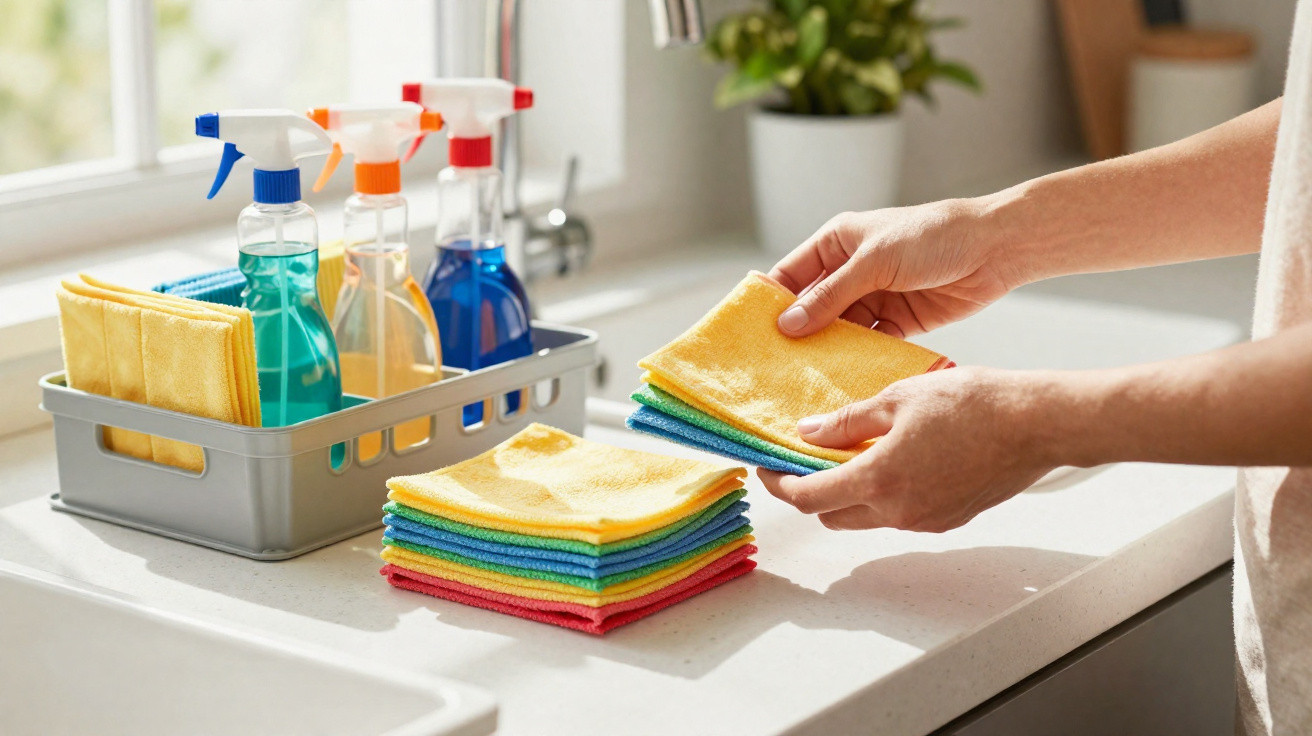
Microfibre cloths have become one of the most widely used household cleaning accessories because they combine effective dirt removal with everyday convenience. Reusable, hard-wearing and suitable for a range of surfaces, they can help keep the home tidy while using fewer chemical products, cutting waste and making organisation straightforward through different colours.
How does a colour code for microfibre cloths help with cleaning?
In practice, the range of colours available for microfibre cloths is not linked to the material's quality. Instead, it allows each household to decide how to allocate every cloth. Keeping one cloth for the bathroom, another for the kitchen and another for furniture lowers the risk of mixing dirt from separate areas.
This visual system acts as a quick prompt, especially in homes where several people share cleaning duties. Following a consistent pattern makes it easier to prevent a cloth used on the toilet from accidentally being reused on the kitchen worktop, which could pose health risks.
Watch a video on the Organise Sem Frescuras YouTube channel about organising a cleaning routine by dividing cleaning cloths by colour to avoid cross-contamination:
https://www.youtube.com/watch?v=J3mCbyE8nco
Why is it beneficial to separate microfibre cloths by colour?
Organisation, hygiene and household safety are among this system's main benefits. Since a microfibre cloth holds dust, food residue and micro-organisms, using the same item in several places can spread dirt rather than remove it.
To understand more clearly how colour separation can support the routine, consider some benefits commonly noticed from day to day:
- Easy identification: different colours immediately show which cloth should be used for each job.
- Less cross-contamination: this reduces the likelihood of transferring germs from the bathroom to the kitchen or bedrooms.
- An organised washing routine: cloths with the same purpose can be washed together, preventing unwanted mixing.
- Wear monitoring: when every cloth has a set role, it is easier to tell when each one needs replacing.
How can you create a colour code for microfibre cloths at home?
To begin, consider which areas require the greatest attention to hygiene. Bathrooms, kitchens and food preparation areas generally need extra care. From there, choose distinctive, easy-to-remember colours and avoid shades that are too similar.
A simple step-by-step approach can put this idea into practice, even in busy households where more than one person is involved in cleaning.
- Define the areas: list the rooms or tasks that need dedicated cloths, such as the bathroom, kitchen, glass, furniture and so on.
- Assign a colour to each area: for instance, use one colour for bathroom surfaces, another for glass, another for kitchen worktops and another for general furniture.
- Write down the system: keep a short list in the utility room or near the cleaning supplies explaining the purpose of each colour.
- Guide everyone in the household: make sure everyone knows the code and follows the separation of cloths.
- Review the system: adapt the colours and quantities as the routine changes or new sets are bought.
What care helps microfibre cloths last longer?
Washing and storage methods are essential if microfibre cloths are to continue performing well. It is advisable to avoid fabric conditioner, as it can affect the fibres and reduce absorbency. Cloths should also be washed separately from ordinary clothing so that lint does not cling to the fabric.
Once cleaned, the cloths should be allowed to dry fully before being put away, as dampness encourages odours and micro-organisms. A small rotation, with one set in use and another clean set ready, keeps the colour code in operation and makes the cleaning routine more organised, predictable and hygienic over time.





Comments
No comments yet. Be the first to comment!
Leave a Comment