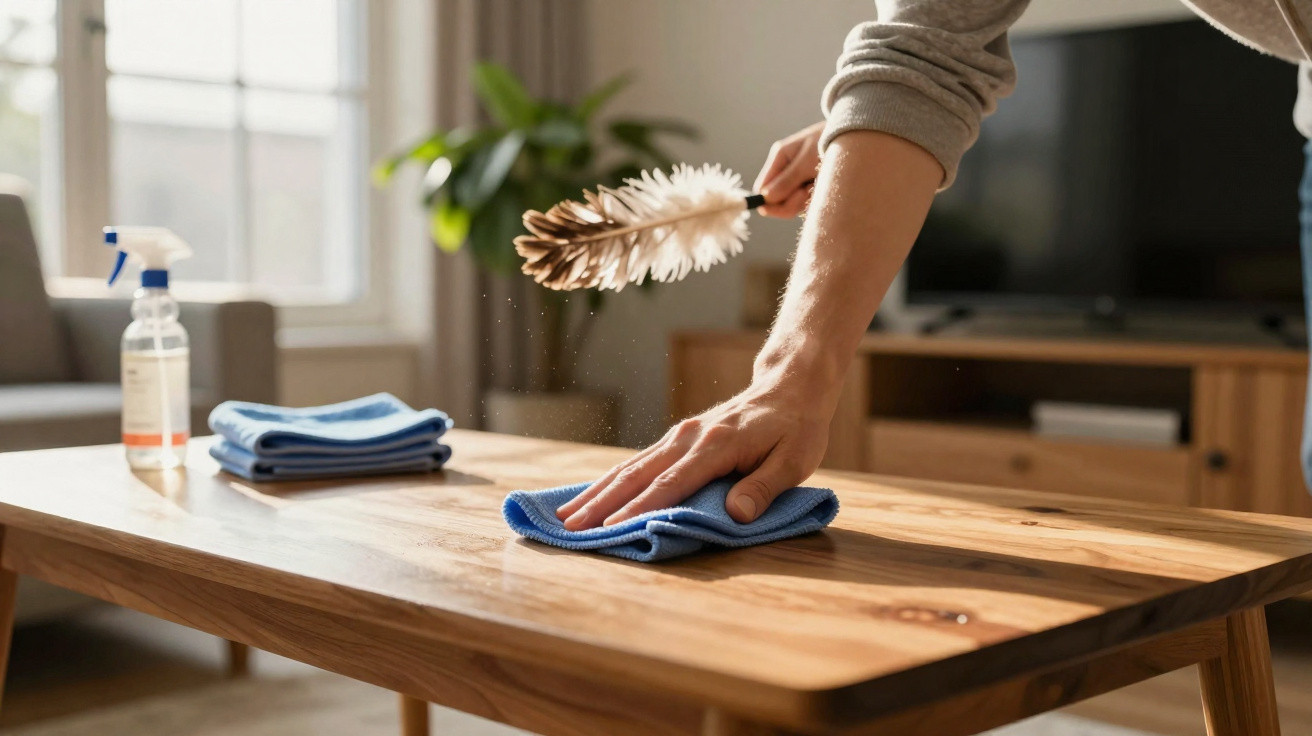
It drifts through the window, catches every minute particle floating indoors, and before you know it, your “just cleaned” living room resembles a snow globe. The TV unit gleams, the coffee table carries the scent of lemon cleaner… yet a light grey film is already settling over everything again.
You stand back, annoyed. Have you cleaned incorrectly? Is your home secretly grimy? Or does dust simply win every time?
Professional cleaners say you are neither cursed nor using pointless products. In many cases, the issue begins with one automatic habit. It makes dust settle more quickly, in greater quantities, and almost as soon as you have stored the vacuum away.
And yes, nearly everyone does it.
The surprising habit that makes dust settle faster
Most cleaning professionals agree: the worst approach to dust is dry dusting with either a feather duster or a dry cloth. It seems productive, even soothing, to see a few strokes transform a dull surface into a shiny one. But appearances are deceptive.
In reality, you are not getting rid of the dust; you are propelling it into the air like party confetti. It hangs there, moves around, and then drops back down, often onto the exact areas you have just wiped.
It’s a bit like sweeping a sandstorm under the rug and hoping it disappears.
On a grey Tuesday morning in London, I accompanied a professional cleaner carrying out a “deep dust” in a townhouse. The homeowner insisted that she cleaned “all the time”, but still felt that every room was coated in a fine powder. It was a familiar complaint.
The cleaner came in, raised the blinds fully, and paused. Seconds later, tiny flecks were visible throughout the air. Smiling, she said softly: “That’s last week’s dry dusting.” Her client’s preferred tool was a soft feather duster, used on shelves and picture frames every few days.
Following several test strokes, the cleaner demonstrated the issue: a single sweep of the feather duster sent a noticeable cloud rising from the bookcase. The dust had not gone anywhere. It was merely suspended, waiting to settle elsewhere - on the sofa, television screen or window ledge. The home was not “dirtier than average”. Rather, this cleaning habit was sustaining the cycle.
From a basic physics perspective, dry dusting produces plenty of movement but captures very little. Dust consists of skin cells, textile fibres, pet dander, pollen and tiny particles of soil. It is light, loose and easily carried through the air. A dry cleaning tool sends these particles upwards instead of holding them.
Once airborne, particles can remain suspended for several minutes, sometimes longer. Even slight air movement from an open door, a fan or your own movements distributes them around the room. Eventually, they land on the first clear flat surface, typically lower furniture such as coffee tables and TV units, which are the places we tend to notice most.
That is why you get that strange, dispiriting thought: “I just did this.” The irony is obvious: the more vigorously you dry dust, the sooner the dust appears to come back.
What professionals use instead of dry dusting to keep dust away longer
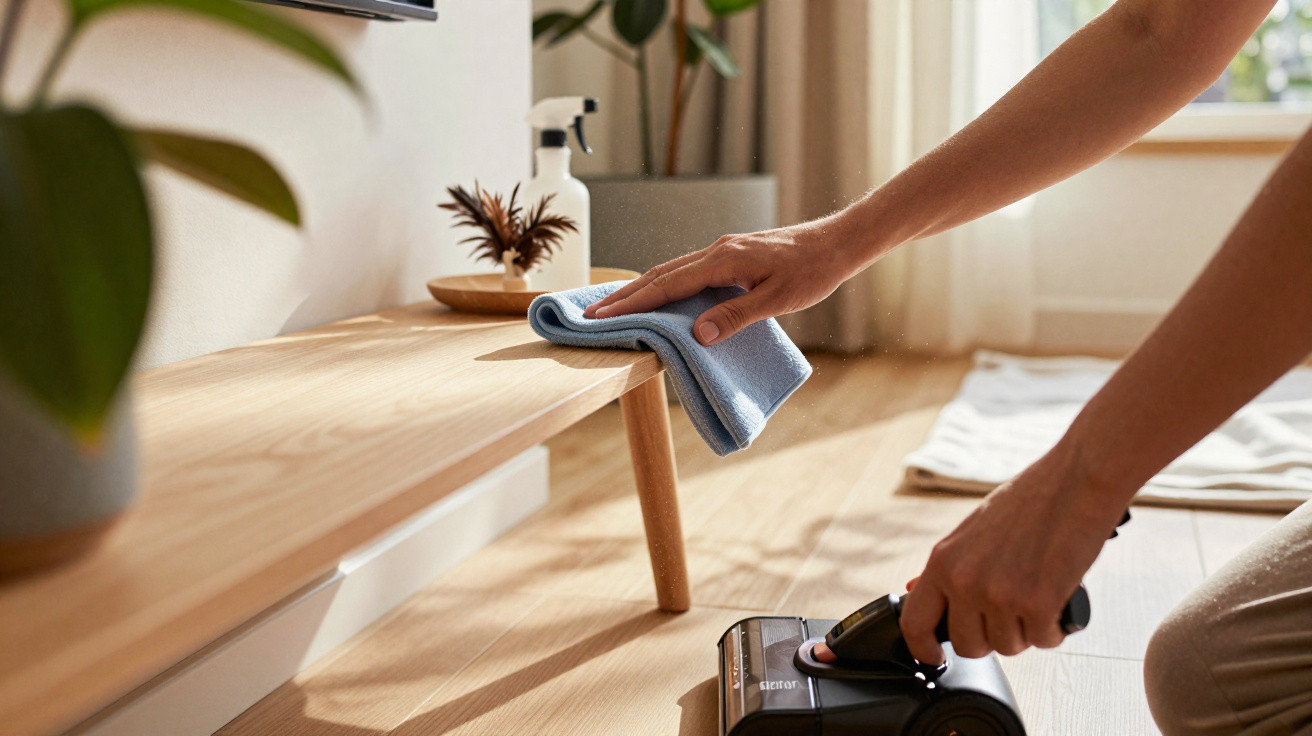
Nearly all professional cleaners follow the same principle: dust using something lightly damp or specifically made to attract particles, rather than scatter them. This could be a slightly moistened microfibre cloth, an electrostatic duster or a cleaning wipe with a small amount of product.
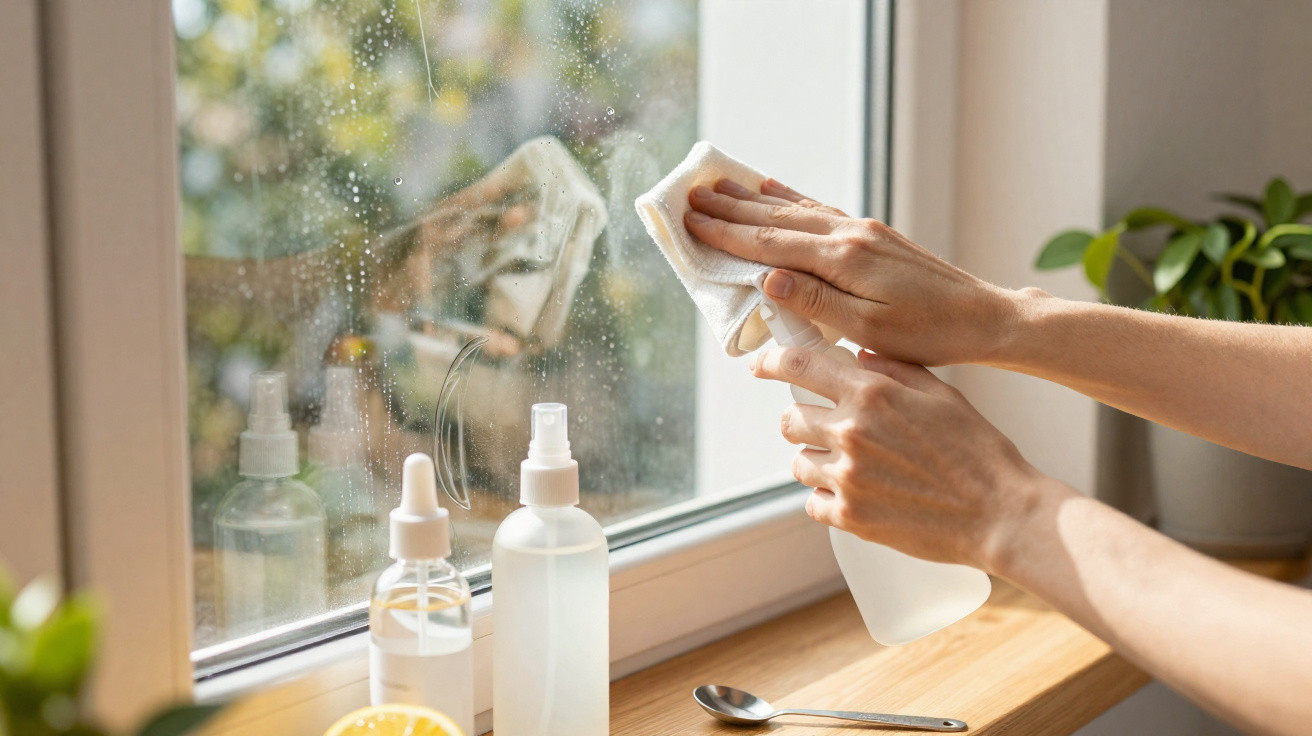
The important word is “slightly”. Your cloth should not be wet enough to drip; it needs only enough moisture for the dust to adhere rather than fly away. Wipe the surface, fold the cloth to expose a clean section, then continue. The dust remains trapped in the fibres instead of ending up in your lungs or back on the shelves.
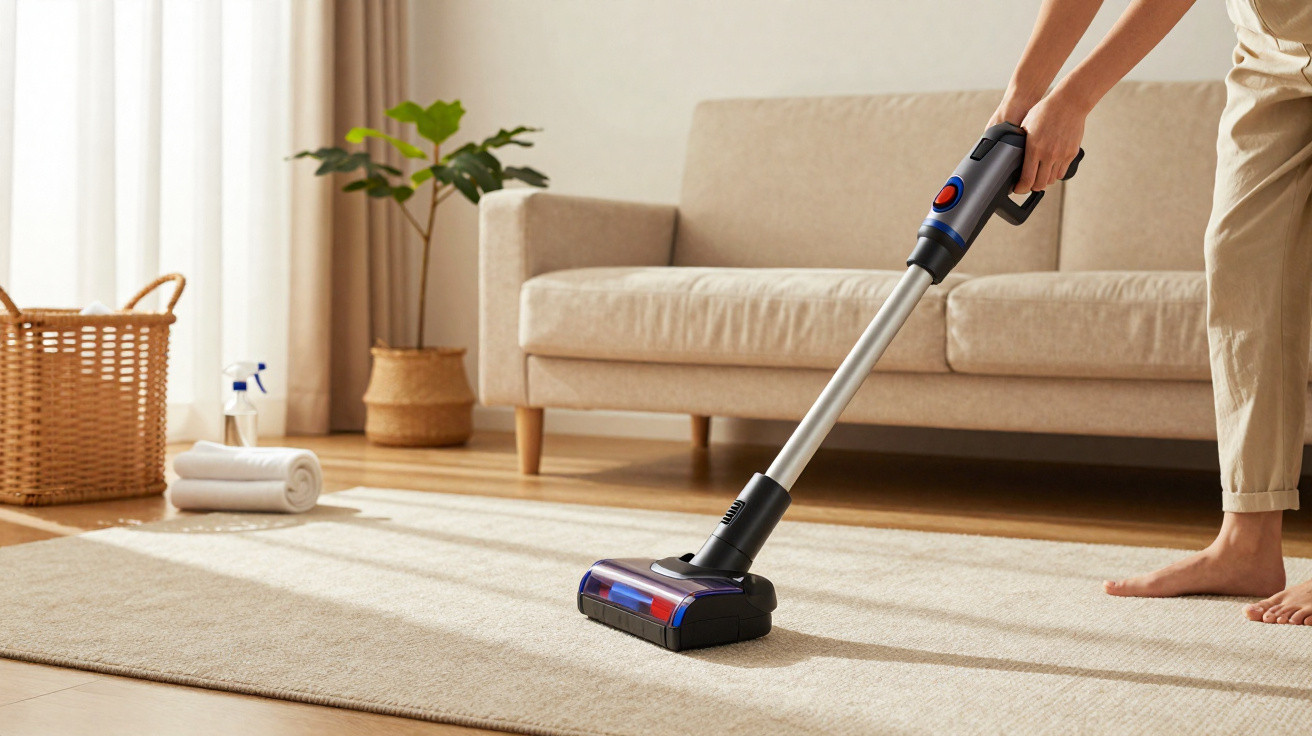
Professionals also clean from top to bottom. They begin with high shelves, picture frames and ceiling fans, move to furniture at mid-height, and finish with skirting boards. Gravity takes care of the rest, so when it is time to vacuum, you collect the fallen dust rather than launch it upwards again.
There is also a human reality here. Most people do not have an hour to follow a “perfect protocol” every few days. On a busy evening, picking up a dry cloth and quickly wiping the TV unit can feel sufficient. It is fast, looks effective and ticks the task off the list.
In terms of results, however, that shortcut works against you. Dry dusting is particularly unforgiving on glossy surfaces, including black TV screens, glass tables and piano lids. Every smear and speck is visible. Frustration builds, and you may begin to believe that your home simply “collects” more dust than other homes.
Let’s be honest: nobody really does this every day. Professionals understand that and do not judge. They simply reinforce the essentials: choose a damp cloth over dry dusting, vacuum before mopping, and remember the hidden dust producers, such as radiators and vents.
One cleaner I spoke with put it bluntly:
“If your dusting tool is lighter than the dust you’re fighting, you’re just decorating the air.”
She suggested keeping a small “dust kit” together in one place: a spray bottle containing water with one drop of washing-up liquid, two microfibre cloths and a handheld vacuum.
This means that, even when you are exhausted, the more effective option is as convenient as the lazy one. Open the cupboard, take out the kit, wipe quickly and contain the dust. It takes no major mental effort and requires no complicated system, just a simpler routine that helps surfaces stay clearer for longer.
- Choose microfibre over cotton to capture dust rather than spread it around.
- Always work from the highest shelves down to the floor.
- Use a lightly damp cloth for narrow areas, including window sills and headboards.
How to change your dusting routine without turning your life upside down
The aim is not to become the mythical person who deep-cleans every skirting board each Saturday. Instead, make a few sensible adjustments that settle dust rather than disturb it. Small changes to your order, tools and timing can have a greater impact than another hour spent scrubbing.
Begin with the room that bothers you most, often the living room or bedroom. Replace the feather duster with damp microfibre, clean from top to bottom, then vacuum slowly with the lights on so that you can see what you are collecting. Look at the room again two or three days later. That is often when people notice the genuine difference.
We have all experienced cleaning frantically before visitors arrive, only to spot a new coating of dust in the afternoon sunlight. Altering one habit will not create a showroom-perfect home, and that is not the objective. It simply gives you a little more calm between cleans.
Once you have seen how quickly dry dusting invites dust back, it is difficult to ignore.
| Key point | Details | Why it matters to readers |
|---|---|---|
| Avoid feather dusters for everyday cleaning | Feather and fluffy dusters send particles into the air instead of retaining them, particularly on bookcases, blinds and ornaments. | Changing tools means dust is less likely to “reappear” on the same surfaces, reducing both frustration and cleaning time. |
| Use a slightly damp microfibre cloth | Lightly moistened microfibre catches particles and keeps them within its fibres. Rinse the cloth or change it once it becomes dirty. | It stops dust from resettling on TVs, sideboards and window sills, allowing the clean appearance to last noticeably longer. |
| Clean in the correct sequence: high to low, then vacuum | Begin with ceiling fans and high shelves, end with skirting boards, then vacuum the floor slowly in good lighting. | Gravity works for you: you remove fallen dust instead of distributing it around the room again. |







Comments
No comments yet. Be the first to comment!
Leave a Comment