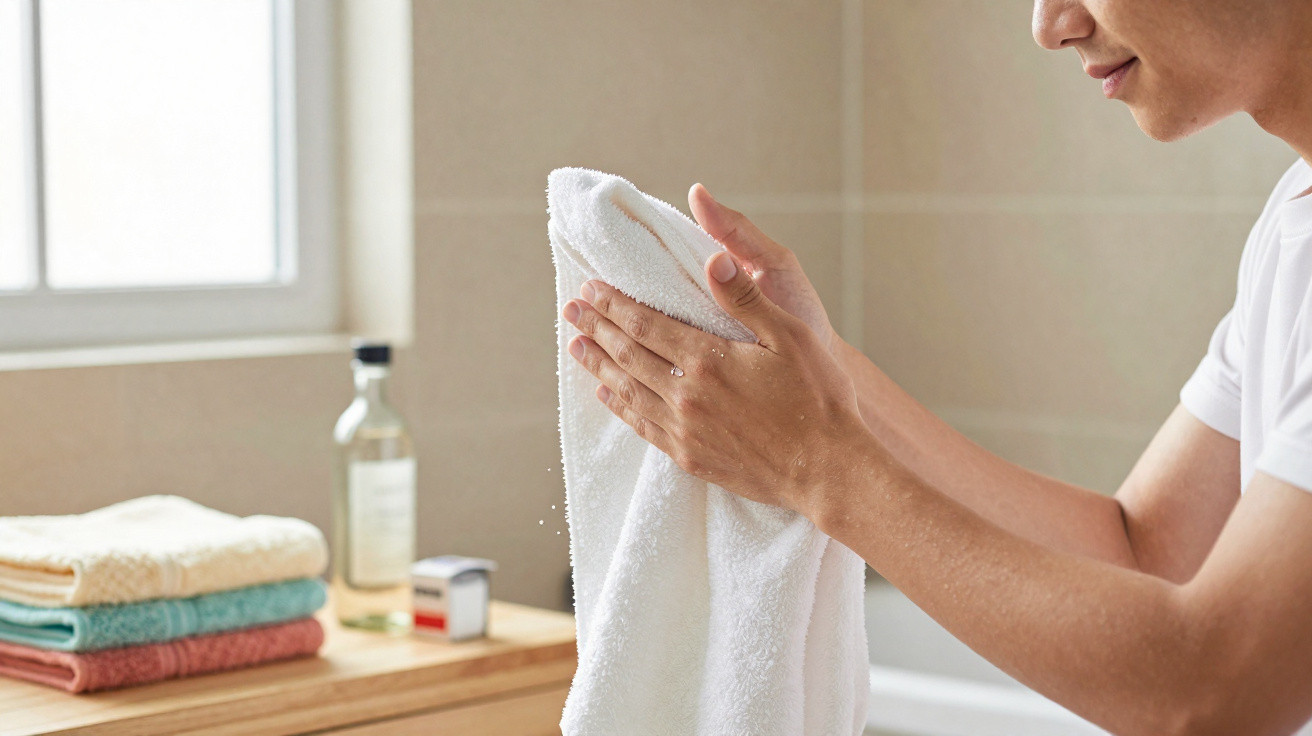
The towel looks immaculate on the shelf.
Thick, plush and hotel-white. You imagine a spa-like moment: steam clouding the mirror and soft cotton against your skin. Then you leave the shower, reach for it… and it merely seems to push the water about. Your skin remains damp, the towel feels strangely slick, and you end up air-drying like a cormorant in your own bathroom.
You blame the manufacturer, the cost, your washing machine, perhaps even your skin. At 11.43 pm, you search for “best absorbent towels”, half-wrapped in this useless cloud of fabric. Between the promise on the label and what happens on your body, something has plainly gone wrong.
The explanation, however, is much simpler – and more irritating – than most people realise.
Why some towels just refuse to drink water
The first surprise is that a towel may look luxurious while being dreadful at its real purpose. That marshmallow-soft feel in the shop? It is often created by finishing agents and surface treatments rather than genuine absorbency. Your skin recognises within seconds what marketing teams spent months designing.
A properly absorbent towel does not simply glide over your skin. It grips slightly. In your hands, it feels almost thirsty, as though the fibres are reaching for every droplet. The key lies in how open the cotton loops are, how clean the yarn is and whether anything has blocked the microscopic routes water needs to pass through.
When those routes are obstructed, the water has nowhere to go.
Watch shoppers in any department store testing towels. They tend to do exactly the same thing: thumb and forefinger, a quick rub of a corner, a slight “oh, that’s soft” nod, then straight into the basket. We buy towels with our fingertips, not a drop of water. That is a major part of the issue.
Many new towels come coated with silicone softeners and factory “loom wax” residues. These finishes make them appear flawless on the shelf, stack tidily and feel especially strokeable during that two-second test. The drawback is that such coatings can genuinely repel water for the first few uses.
A British retailer quietly acknowledged in a trade interview that complaints about “non-absorbent towels” rise whenever it introduces a new plush range. Laboratory tests show the cotton itself is fine. The true culprit is the combination of softeners and customers’ washing routines at home.
The science is both dull and ruthless. Cotton naturally absorbs water because its fibres contain countless tiny channels, and water readily travels along them. When oils, silicones, detergent residue or even fabric conditioner block those channels, water beads on the surface and rolls away. It is like trying to pour tea through a teapot packed with wax.
New towels often arrive already partly blocked. We then add heavy liquid detergent, a generous splash of conditioner, low wash temperatures and quick cycles. Gradually, this leaves a film over the fibres: layer upon layer, wash after wash.
The straightforward reason some towels never seem absorbent is that they are coated and clogged up – both before and after they arrive in your bathroom. It is not magic. It is chemistry and habit.
How to “reset” a bad towel and make it actually absorb
There is a simple ritual that can turn an ineffective towel into one that finally performs like those in boutique hotels. It is not glamorous and requires no expensive product. Think of it as a fabric detox.
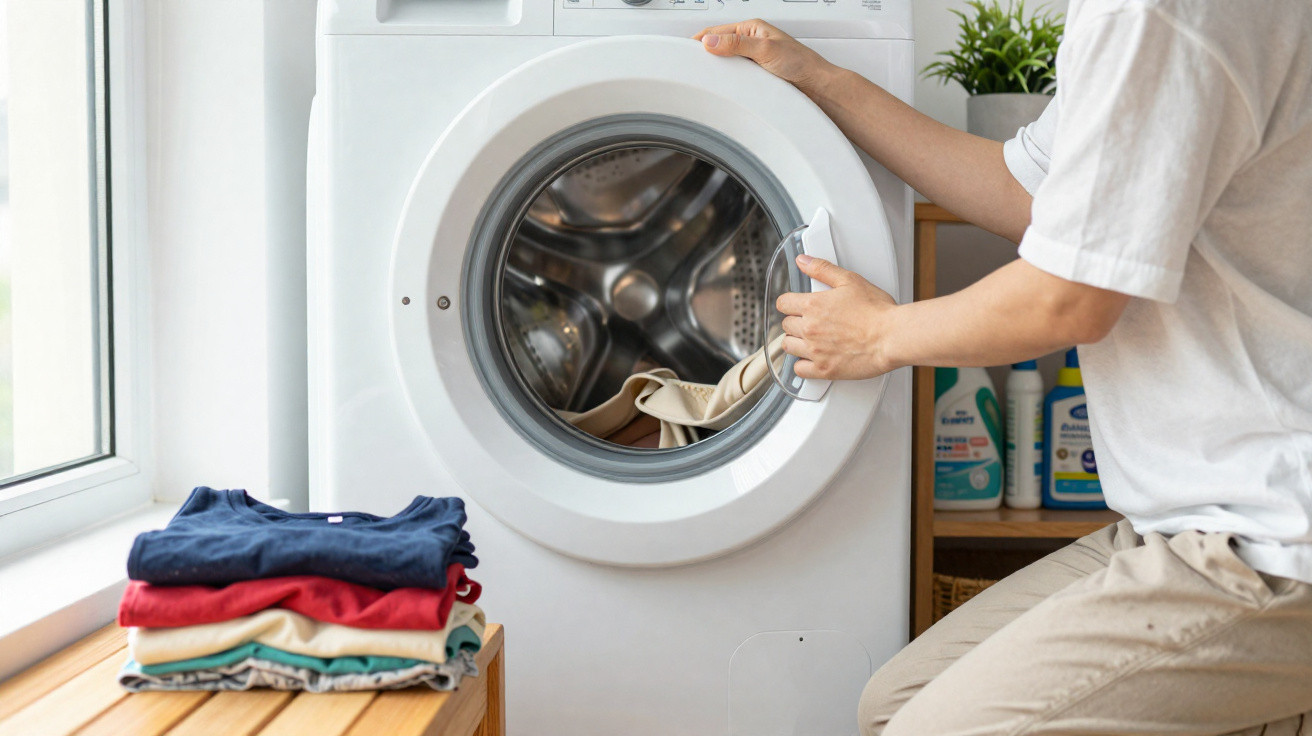
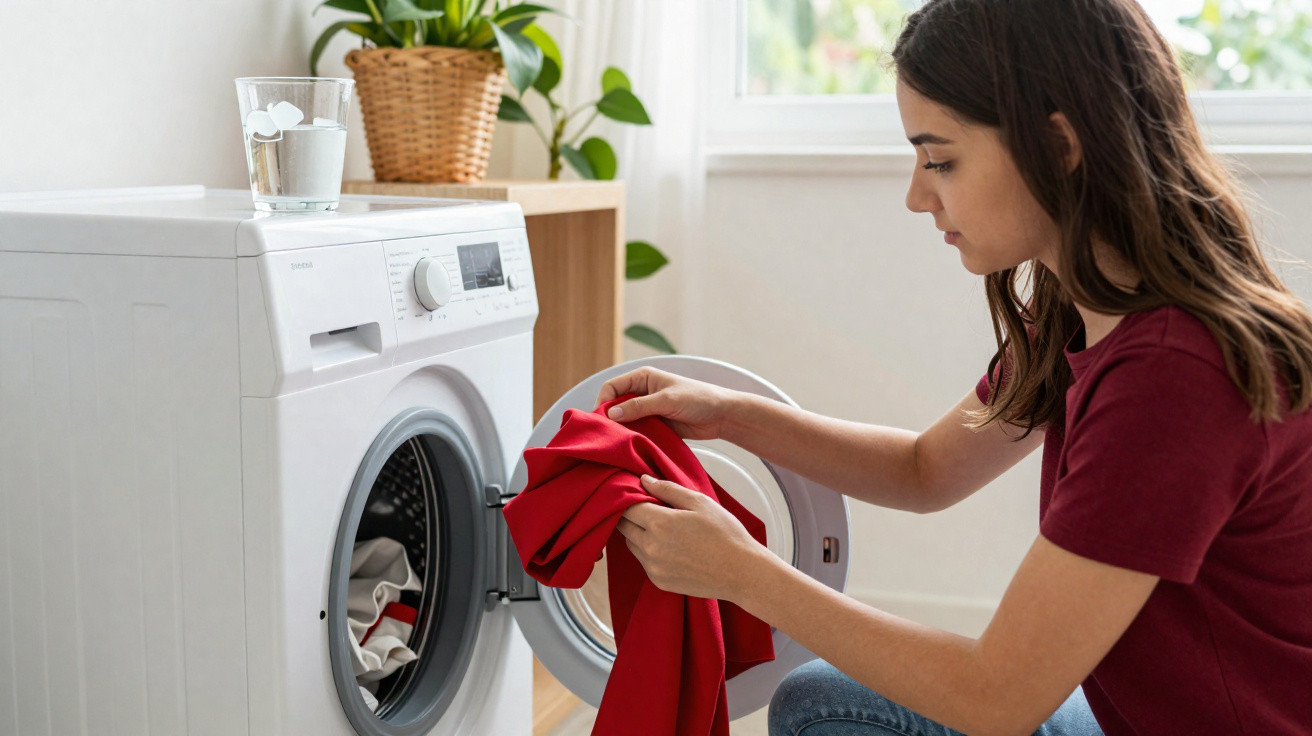
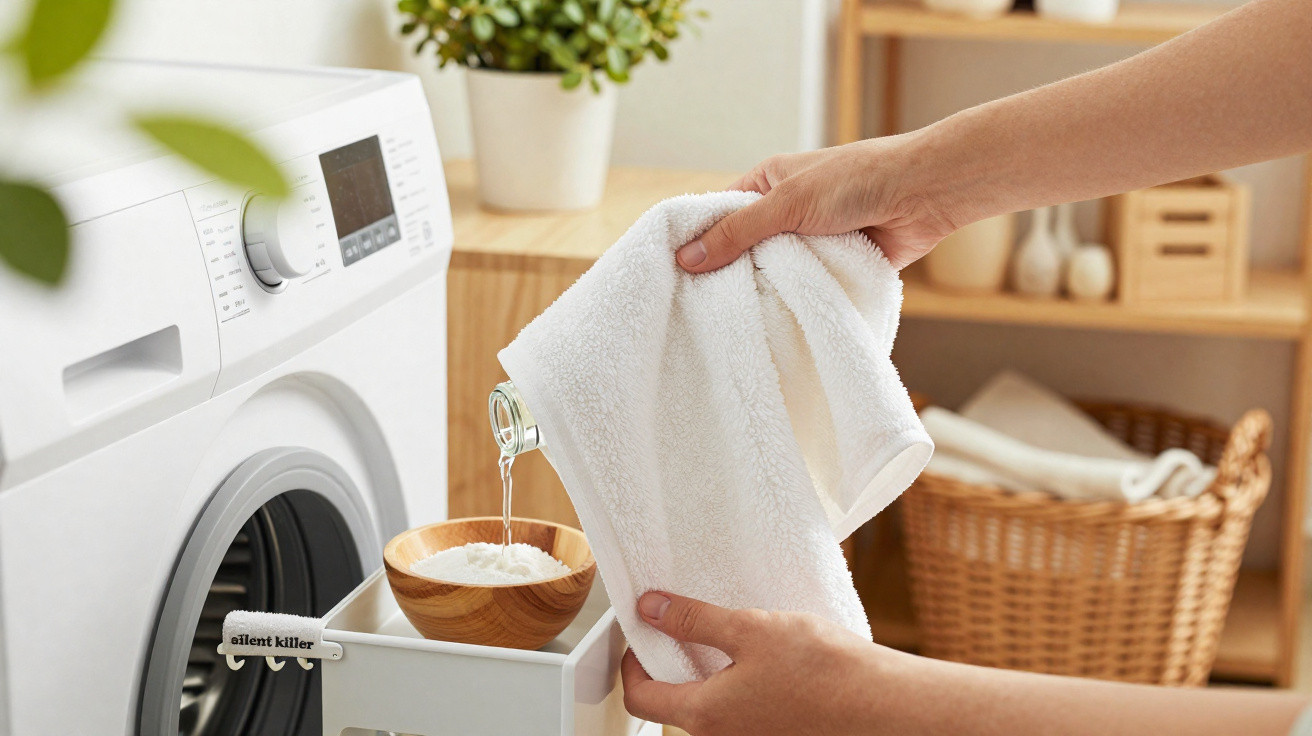
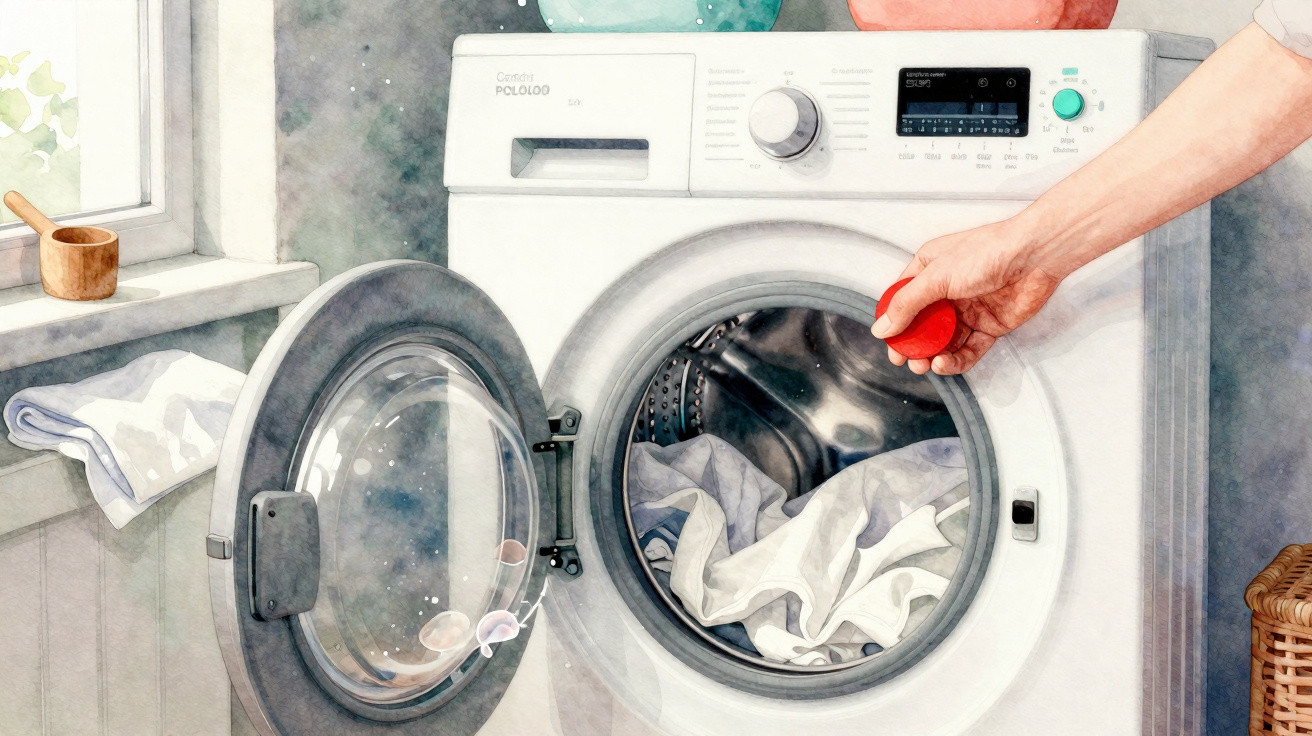
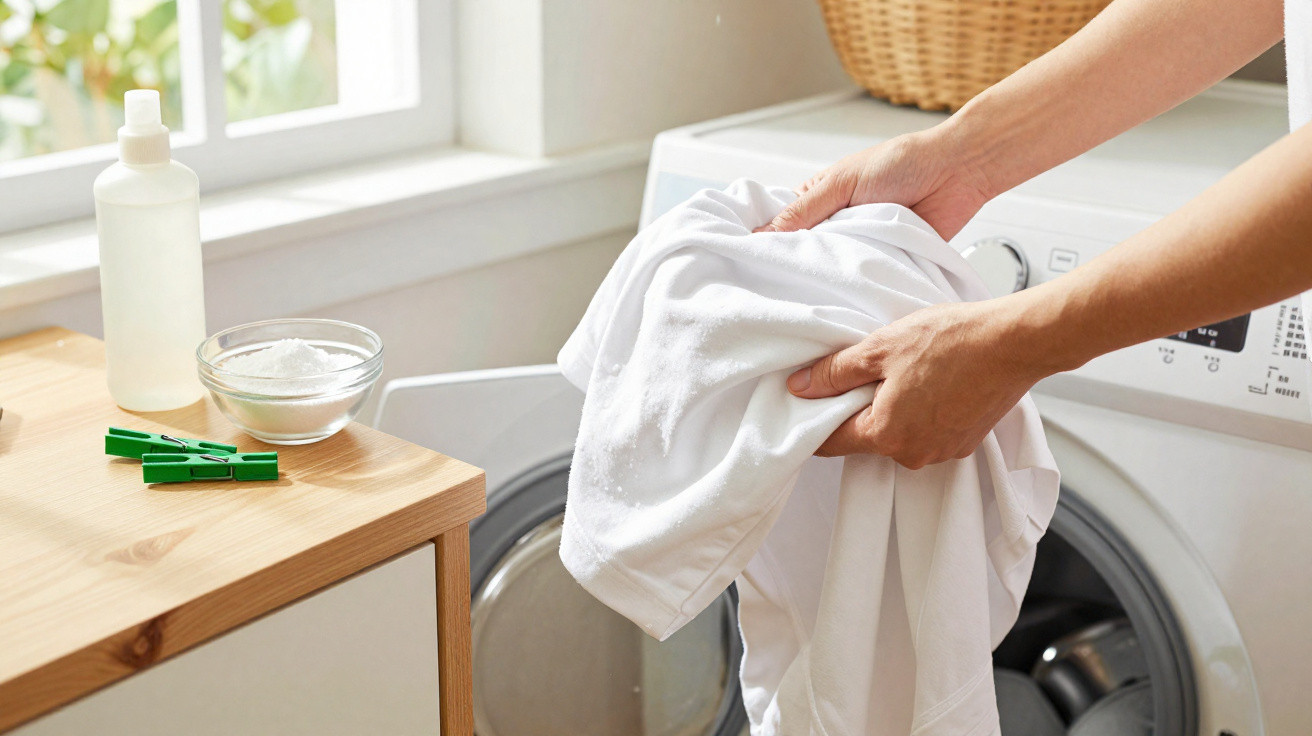
Begin with a hot wash – as hot as the care label safely permits. Leave out fabric conditioner completely. Run one wash using only half your usual amount of detergent, then wash the towels again with no detergent at all, adding a cup of white vinegar directly to the drum. Vinegar helps loosen residue and softeners stuck to the fibres.
For particularly stubborn towels, many people rely on a pre-soak: fill a large basin or the bath with warm water, add a generous sprinkling of bicarbonate of soda and stir well. Leave the towels to soak, then wash them as described above. It is not magic; it simply removes the build-up that has been suffocating the cotton.
If your towel seems to smear water around instead of soaking it up, your laundry routine has probably changed it from absorbent cloth into coated fabric. Fortunately, that can be corrected. Most of us were brought up to connect “soft” with strong fragrance and a silky feel, which is almost the opposite of what an effective towel requires.
True absorbency can initially feel a little rougher and more textured. That does not mean scratchy or unpleasant, only less coated. Picture the difference between a brand-new T-shirt and one washed fifty times that somehow simply works better against your skin.
Let’s be honest: nobody really does this every day.
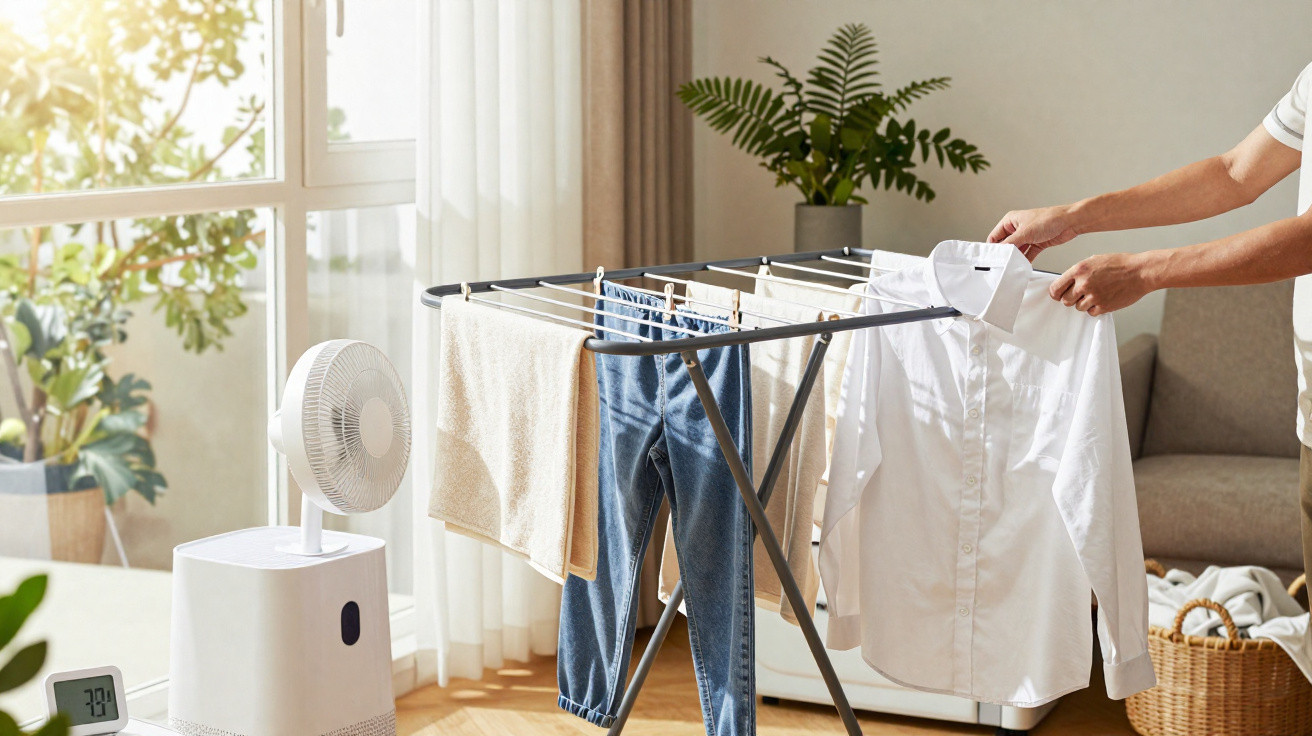
The aim is not to chase the softness created by fabric conditioner, but to reach the point where the loops are clean, springy and free. That could mean using half your normal detergent, avoiding conditioner on towels entirely and accepting some line-drying, which helps lift the fibres rather than flattening them.
One textile technologist I spoke to put it bluntly:
“If a towel comes out of the wash smelling like a perfume advert and feeling glossy, there’s almost no way it’s at peak absorbency.”
Once you understand that, your care routine changes from “pampering” into something more practical. You begin checking labels for GSM (grams per square metre) and fibre length rather than colour and price alone. You also stop washing towels with synthetics, which shed micro-residues that become lodged in cotton loops.
- Wash towels separately using a modest amount of detergent.
- Avoid fabric softener; use vinegar occasionally instead.
- Select cotton or bamboo-cotton blends with looped terry surfaces.
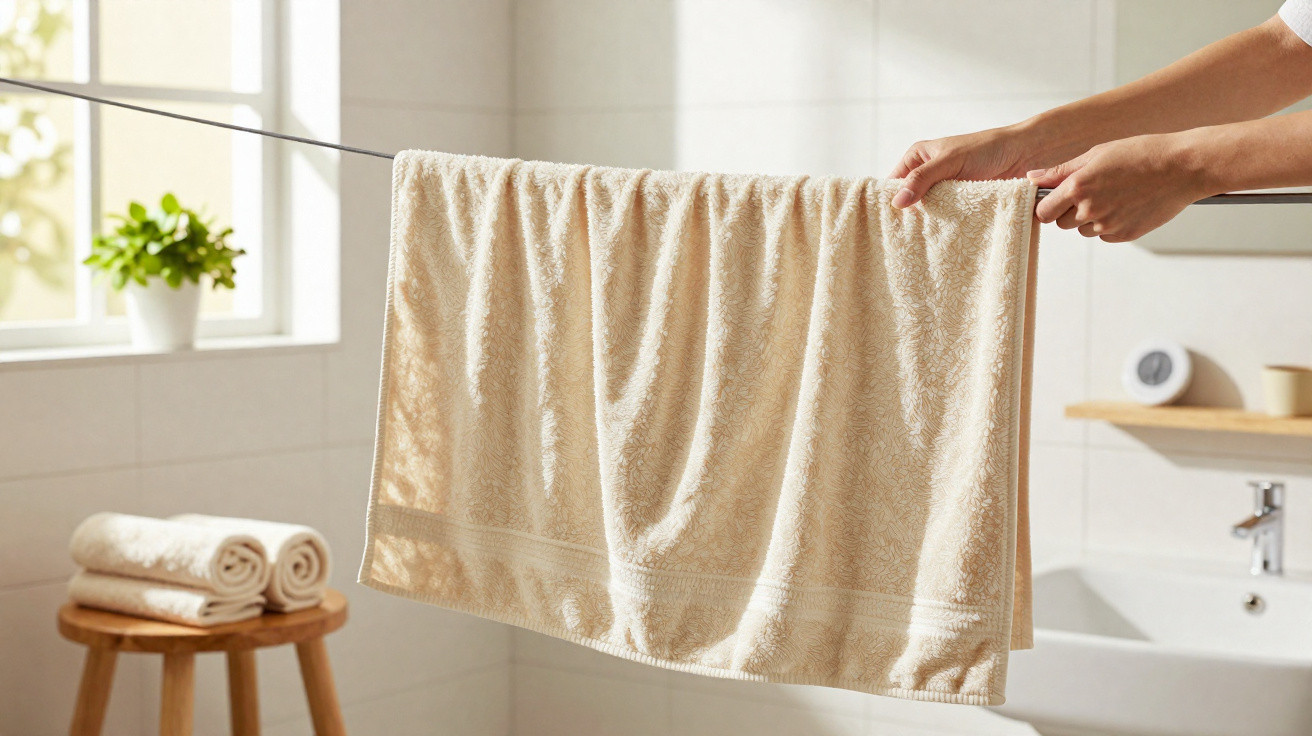
- Dry them completely and shake them out to fluff up the loops.
- Replace towels when the loops have worn flat and the base fabric shows through.
The quiet satisfaction of a towel that actually works
There is a small, almost private pleasure in stepping from the shower and finding that your towel does precisely what you wanted. No fuss. No sticky glide. Just a quick, quiet instant when you press the fabric against your skin and the water seems to disappear.
We rarely discuss it because towels seem too everyday to examine. Yet they touch your skin on weary weekday mornings, hurried post-gym evenings and long Sundays when you finally wash your hair. A good towel becomes invisible because it performs properly. A poor one irritates you every day.
At a deeper level, this entire story of “non-absorbent towels” concerns how much of home life is influenced by invisible treatments and unquestioned routines. Fabric conditioner used automatically. Low-temperature washes intended to save energy. Fast purchases based on touch alone. None of these is a sin; they simply accumulate.
More humanly, it is oddly reassuring to know the solution is practical and fully within reach. You do not need to throw away every disappointing towel. You can test different methods, strip back the build-up, alter how you wash them and see them gradually come back to life.
Once you have experienced the difference made by a towel that truly drinks up water, it becomes difficult to pretend you do not know the truth.
| Key point | Detail | Why it matters to the reader |
|---|---|---|
| Coatings block absorbency | Factory softeners, loom wax and laundry residues seal cotton fibres | Explains why both new and old towels can begin to fail |
| Simple “reset” routine | Hot washing, less detergent, vinegar or bicarbonate soaks | Provides an inexpensive, practical way to rescue towels you already own |
| Smarter buying and care | Focus on fibre quality, GSM and avoiding fabric softener | Helps you choose better towels and keep them absorbent for years |


Comments
No comments yet. Be the first to comment!
Leave a Comment