That indistinct blend of stale products, damp towels and something you would prefer not to identify near the toilet brush. You open the cupboard beneath the sink: partly used sprays, a hardened sponge, and a bottle whose label has rubbed away. You simply stand there, looking at it all, already tired before you have begun.
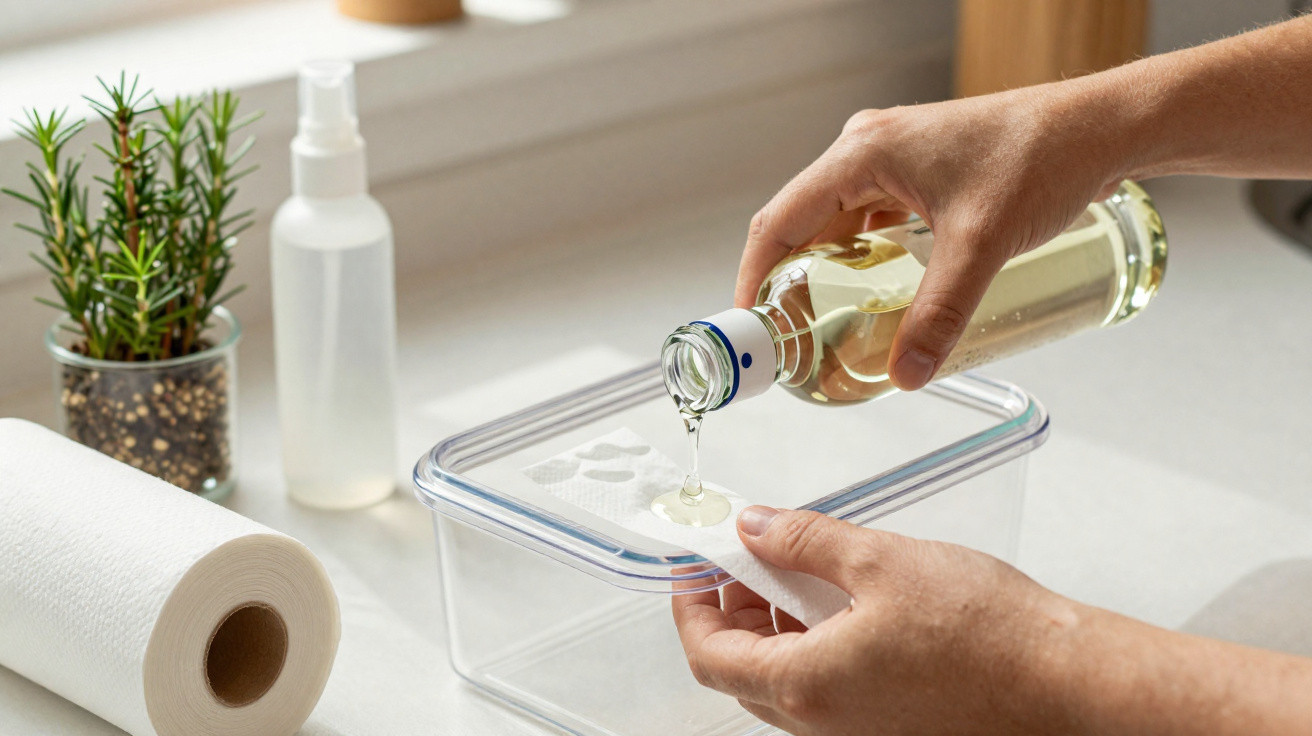
You pick up your usual cleaner, but then notice an unremarkable toilet roll on the cistern and a nearly forgotten bottle of vinegar on the windowsill. Everyday items. Not glamorous. Almost dull.
They are two things found in practically every bathroom, sitting unnoticed like film extras. Then it occurs to you that they could be the real stars of the show.
Why vinegar and toilet paper are the unexpected cleaning duo
Vinegar has an unusual second identity. It belongs in a salad dressing in the kitchen, yet in the bathroom it can feel like a hidden weapon. It is a mild acid, inexpensive, and probably already somewhere in your home, quietly tackling limescale while we scroll through our phones.
A toilet roll attracts even less attention. It is used, thrown away and forgotten. But its soft texture and ability to absorb and stay in place make it unexpectedly useful for something it was never sold to do: provide slow-release cleaning.
Combined, they offer more than a money-saving trick. They allow you to clean while getting on with something else – rather like handing the dullest part of household cleaning over to time and gravity.
One figure repeatedly appears in household surveys: about 60% of people say the bathroom is the room they most hate cleaning. Not the oven or the windows, but the bathroom. It is a small room with plenty at stake and countless corners where dirt can take hold unnoticed.
The situation is familiar: guests are due in 30 minutes, you rush into the bathroom, and suddenly spot the hard-water ring in the toilet, the scale-encrusted tap and the dusty top of the flush. They were invisible yesterday. Now they are impossible to miss.
Someone on TikTok records a gleaming bathroom makeover in 30 seconds. Beyond the camera, they may well have scrubbed for an hour. Meanwhile, you are looking at a bottle of vinegar and asking yourself whether the internet has misled you once again.
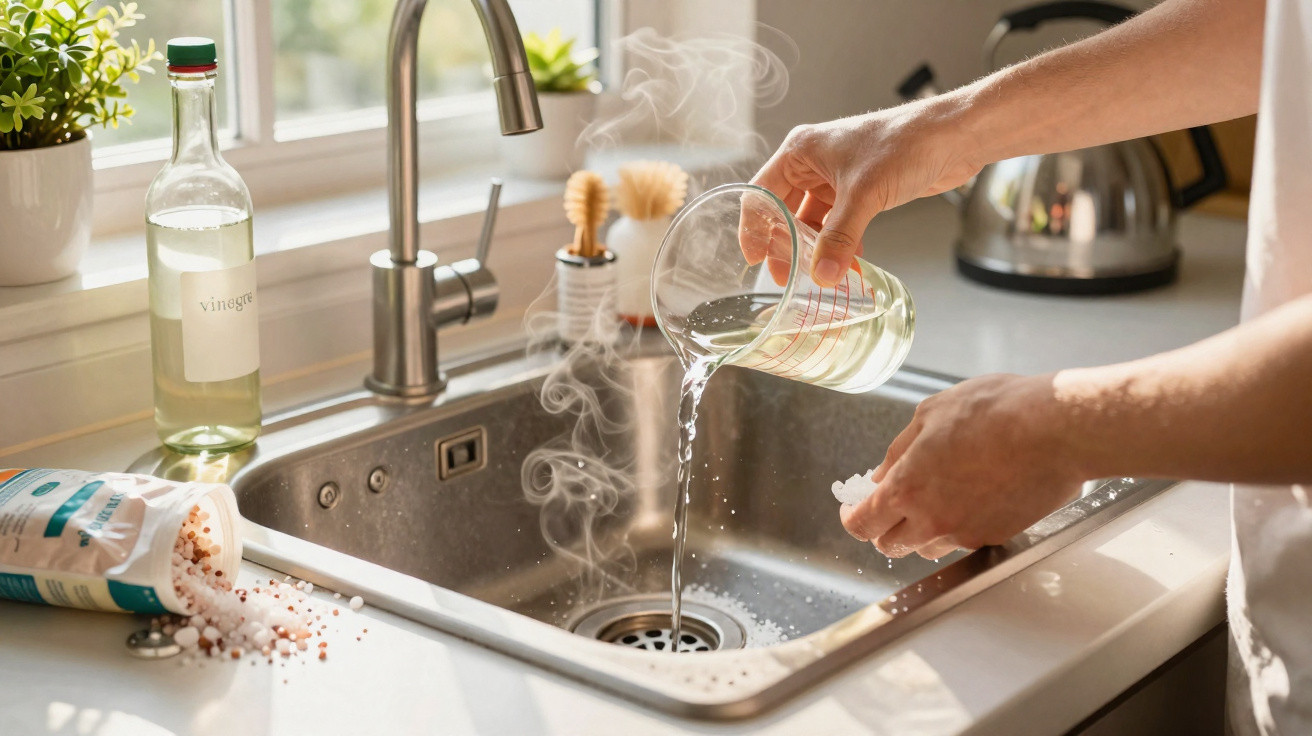
The principle behind the method is remarkably straightforward. Vinegar contains acetic acid, which reacts with the minerals found in limescale and soap scum. Rather than stripping them away like a harsh chemical, it gradually breaks them down.
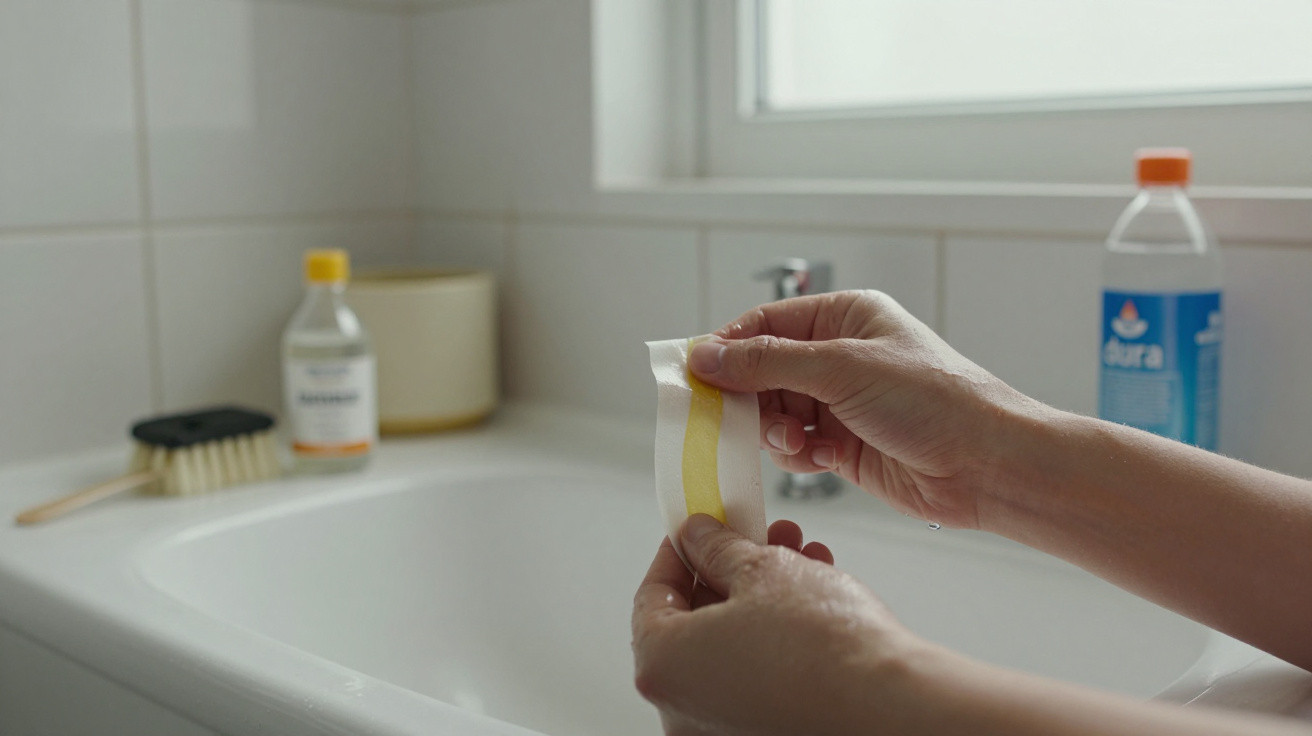
Toilet paper acts as the applicator. When it is wrapped around or pressed onto a surface, then saturated with vinegar, it works as a compress. Its fibres keep the liquid against the grime rather than allowing it to run onto the floor or evaporate within minutes.
Rather than spending 20 minutes scrubbing until your wrists ache, you make a kind of “vinegar bandage”, walk away and allow chemistry to handle the uncomfortable work. It is not a superhero solution, but a slower kind of magic. And it does work.
How to use toilet paper and vinegar in everyday cleaning
Begin with the mark that bothers you most. For many people, that will be the brownish waterline inside the toilet bowl or the chalky deposit around a tap. Pull off a generous section of toilet paper and loosely twist it into a rope.
Lay the paper rope over the stain: around the inner rim of the toilet, wrapped around the bottom of a tap, or along the edge of a tiled joint. Slowly pour white vinegar over it, ensuring the paper is completely saturated without disintegrating.
Then leave it alone. This is the stage that can feel both wrong and strangely freeing. Reply to emails, watch a series or just carry on with your day. Return after an hour or several hours, lift away the wet paper and wipe or brush gently. Often, the stain comes away with very little resistance.
Those who abandon this approach tend to make the same mistake: they hurry it. They apply a little vinegar, wait ten minutes, decide it is “not working”, then return to an aggressive cleaner. Vinegar is not a fast-food answer. It is more like a slow cooker.
If the limescale or ring has accumulated over many months, it requires time. This is exactly why the toilet paper is important. Without it, the vinegar runs off and evaporates, leaving you to assume the trick was overhyped.
Go easy on yourself. Nobody wants to spend their weekend on their knees on tiled flooring with a brush. Put your “vinegar compress” in place, leave it overnight and accept that real homes are untidy, lived in and not Instagram showrooms. Let’s be honest: nobody really does this every day.
The best results come from treating this as routine maintenance, rather than a miracle cure. A light “vinegar and paper” treatment around taps and toilet rims once a month can quietly prevent the feared deep clean. It is background upkeep, much like charging your phone while you sleep.
“The first time I tried it, I honestly thought: this is too simple to work,” says Emma, 34, who lives in a hard-water area. “I wrapped vinegar-soaked paper under the toilet rim before bed. The next morning, the brown ring that had survived every product was just… gone with one brush.”
This technique is also particularly useful for the awkward details that people rarely mention aloud: the grime where the shower screen joins the tiles, the line beneath the bathroom mirror and the bases of taps. These small edges collect a surprising amount of visible dirt.
- Choose plain white toilet paper, as coloured or fragranced versions can leave residue.
- Keep the room ventilated if you are using plenty of vinegar, as its odour may linger.
- Do not use vinegar on natural stone, including marble, granite and some tiles, because it can etch the finish.
Beyond the bathroom: a small habit that changes your view of cleaning
Once you have watched a stubborn ring vanish with minimal effort, your perspective changes. Vinegar stops seeming like the poor relation of expensive cleaning sprays and begins to feel like a quiet, dependable colleague. The toilet roll becomes a practical tool rather than simply a disposable essential.
This pairing encourages a different pace. Rather than tackling the entire house in one draining afternoon, you can introduce small “set and forget” routines: a paper rope on a tap before work, or a strip along the shower rail overnight. Small actions accumulate.
The idea can spread to other jobs. You may find yourself wondering what else can be prepared and left to time: a soaking pan, pre-treated washing, or shoes filled with paper to dry. It is less about getting everything perfect and more about being kinder to your own energy.
| Key point | Detail | Benefit for the reader |
|---|---|---|
| Vinegar + toilet paper combination | Creates a slow-release “compress” over stains and limescale | Cuts down on scrubbing and physical effort in the bathroom |
| Time, not strength | Leaving it in place for 1–8 hours allows the acid to break down grime | Makes cleaning a background task rather than an exhausting sprint |
| Simple, inexpensive, repeatable | Uses common items you already have, with very little technique needed | Makes regular maintenance achievable within a busy, real-life routine |

Comments
No comments yet. Be the first to comment!
Leave a Comment