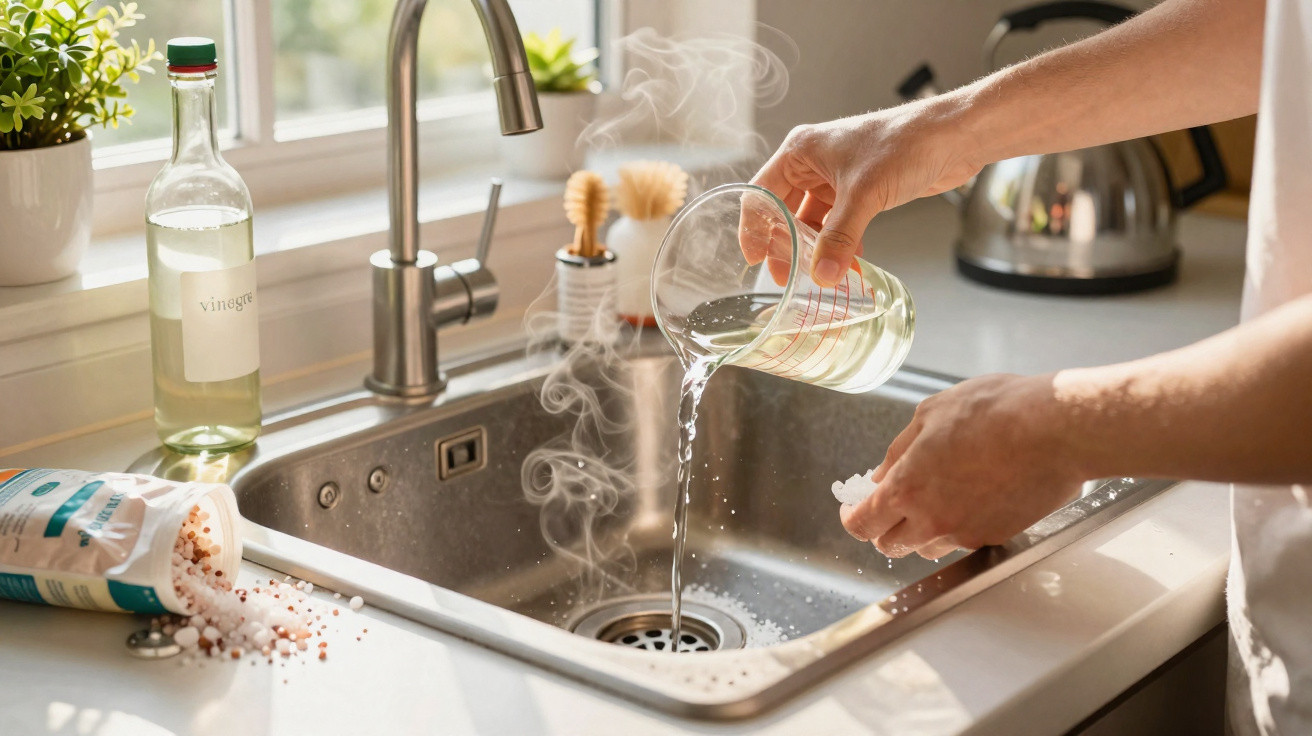
Using coarse salt with hot vinegar has become a popular household method for cleaning drains and managing odours in pipework. It is generally used for minor issues, where water still drains but there is an unpleasant smell or the first signs of residue build-up. The mixture can serve as straightforward regular maintenance and is less harsh than powerful chemical products.
How does coarse salt and hot vinegar help to clean and unblock drains?
Coarse salt works as a mild abrasive, rather like a miniature scourer, helping to loosen grease deposits, soap residue and particles stuck to the inner walls of a pipe. Hot vinegar, meanwhile, is mildly acidic and can help break down lighter organic residue while neutralising strong odours.
Heating the vinegar helps soften grease and makes it easier for dirt to detach as the salt moves through the pipework, particularly in kitchens and bathrooms. This is useful for early-stage blockages and routine cleaning, but it is not a replacement for professional help with serious obstructions or very old plumbing.
Watch a video on the Dr. BACTÉRIA YouTube channel about the properties and useful tips of effective household mixtures containing vinegar for everyday cleaning, using the link below:
How to use coarse salt and hot vinegar in a drain step by step
For more consistent results, follow a simple process that allows the mixture to reach the inside of the pipe. This method can be repeated from time to time as preventive maintenance, provided you check that the plumbing can safely withstand hot water treatments.
- Prepare the area: remove grilles, covers or fittings that prevent direct access to the drain opening.
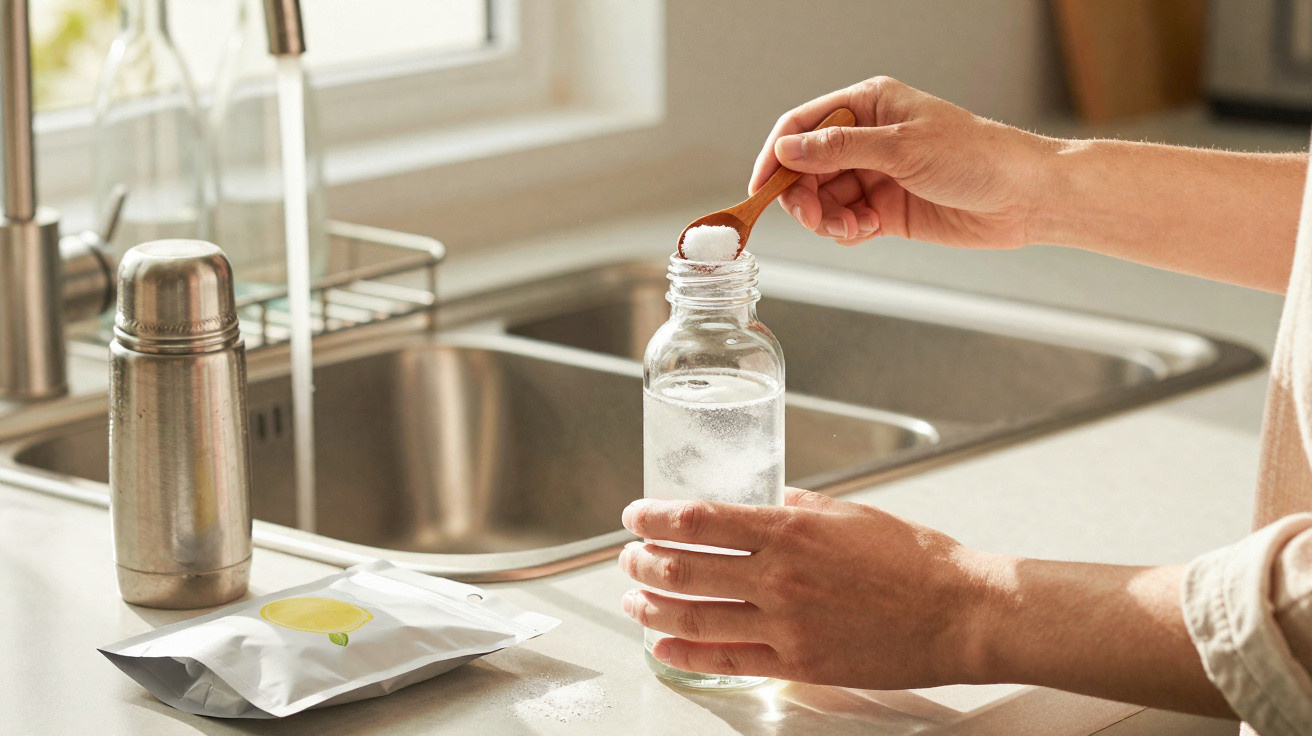
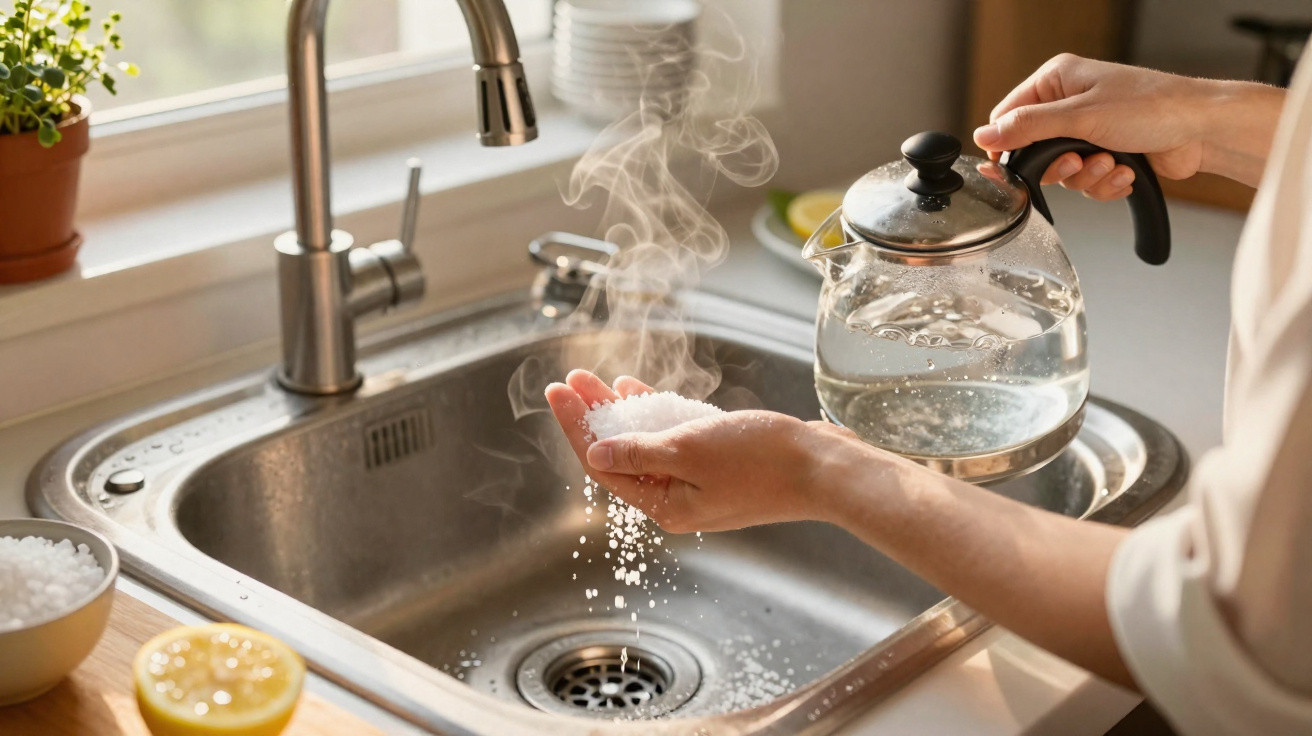
- Add the coarse salt: put a few spoonfuls of salt straight into the drain, aiming to reach the pipe entrance.
- Heat the vinegar: warm the vinegar in a suitable container without allowing it to boil; it only needs to become very hot.
- Pour in the hot vinegar: slowly pour the vinegar over the salt, allowing the mixture to travel down the pipework.
- Allow time to work: leave it for several minutes without running taps or pouring in other liquids.
- Rinse with hot water: finish by flushing with hot water to help carry away the loosened dirt.
This process is commonly used in kitchen sink drains, cloakroom basins and shower drains, where food scraps, soap, hair and grease can accumulate. When used moderately, it may reduce the need for more aggressive drain unblockers and help keep water flowing more steadily.
What precautions should you take when using coarse salt and hot vinegar in pipework?
Although it is a relatively simple household method, certain precautions are vital to prevent pipe damage or health risks. Most importantly, never combine this treatment with chlorine-based products, such as bleach, as the interaction may produce vapours that irritate the eyes and respiratory system.
It is also advisable to monitor how the drain performs before and after use, as recurring problems may point to a more serious issue. The following practical guidance can help you use the mixture more safely and effectively:
- Avoid dangerous combinations: do not apply it immediately after using bleach or chemical drain unblockers; wait and rinse thoroughly first.
- Assess the extent of the blockage: if water does not drain at all, the obstruction is likely to require specialist assistance.
- Watch how often it is used: do not repeat the process too frequently, especially with old or fragile plumbing.
- Stop if sewage backs up: extremely strong smells, overflowing or backflow require immediate technical assessment.
When is it worth using coarse salt and hot vinegar in everyday cleaning?
This combination is usually more beneficial as a preventive measure than as a remedy for serious blockages. In sinks with a moderate build-up of grease, shower drains with small hair deposits and infrequently used basins, it can help maintain a more regular water flow and reduce unpleasant odours.
Alongside periodic cleaning, a few simple habits can improve the results: avoid pouring cooking oil down the sink, remove food remnants before washing up, and use drain covers to catch larger particles. In this way, coarse salt and hot vinegar act as a complementary household-care tool that can, in many cases, postpone the need for more complex work on the pipework.






Comments
No comments yet. Be the first to comment!
Leave a Comment