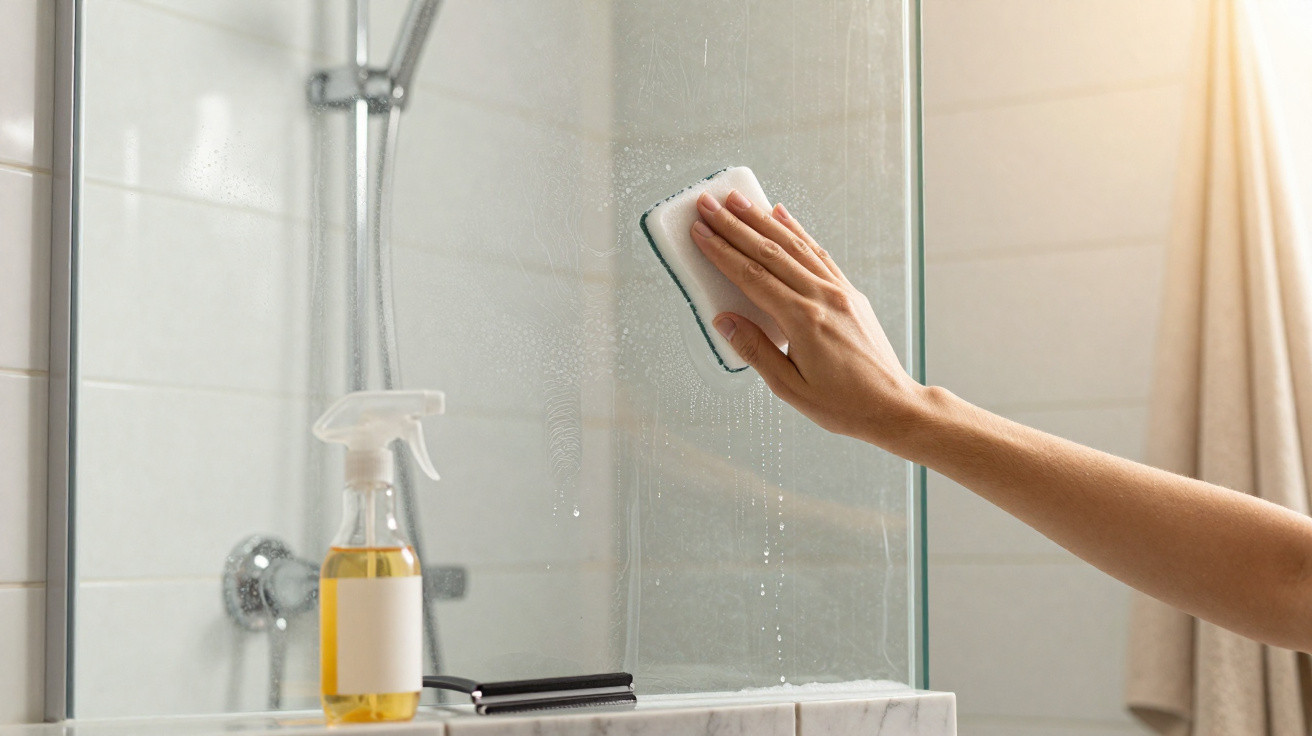
Behind the glossy glass lies a remarkably simple secret.
Most people only tackle the shower when limescale and soap scum are too obvious to overlook. Hotels, however, often keep their glass clear every day without aggressive chemicals or hours of scrubbing. The technique they use is surprisingly easy to adopt at home.
Why shower screens become cloudy so quickly
Showers bring together three mess-making elements: water, warmth and toiletries. Hard water deposits minerals on the glass, while shower gels and shampoos leave a greasy layer behind. Warm, still air also promotes mould and bacteria. Together, these create the familiar hazy appearance and dark patches in corners.
Since the shower is where you wash yourself, it is easy to miss how quickly it can become one of the dirtiest areas in the home. Household-hygiene studies frequently place the shower area among the most contaminated spaces, at times even above the toilet flush button.
Mould commonly begins as pale grey or black specks along seals and grout joints. Left untreated, these marks develop into larger stains. As well as looking unpleasant, they may provoke allergies, irritate the airways and make tiled surfaces slippery.
A neglected shower screen combines mineral scale, soap residues, bacteria and mold - all packed into the space where you breathe warm steam.
Smells can follow as well. Even with occasional cleaning, a constant damp coating on glass and joints can hold on to odours. This is where the hotel routine is effective: it removes residue before it has the chance to set or develop.
The low-tech hotel trick: a melamine sponge
Many housekeeping teams use one straightforward tool to refresh glass panels between guests: a melamine foam sponge, commonly sold as a “magic eraser”. It is inexpensive, requires no specialist cleaner and can be used on far more than glass.
How melamine foam works
Although melamine foam feels soft, its microscopic structure resembles a very fine, firm honeycomb. Once dampened and rubbed over a surface, it works like ultra-fine sandpaper. Rather than dissolving grime chemically, it lifts dirt and limescale through mechanical action.
Its exceptionally fine structure allows it to work into tiny pits and grooves in glass or plastic that ordinary cloths simply pass over. This explains why hotels use it for wall marks, switches, baths and, in particular, shower screens that need to appear spotless under bright lighting.
The sponge doesn’t just wipe: it microscopically sands away soap film, mineral spots and fingerprints, leaving a clearer surface with very little effort.
Step-by-step: the “hotel” method at home
- Give the shower screen a quick rinse with warm water to loosen surface dirt.
- Cut a melamine sponge into smaller blocks. They are easier to handle and reduce wasted material.
- Dampen the sponge using clean water only. Avoid soaking it until it breaks apart; it should be moist rather than dripping.
- Rub the glass using light to medium pressure, moving in horizontal or vertical strips.
- Pay particular attention to white streaks and dull areas where limescale has collected.
- Rinse the glass well to remove loosened dirt and fine foam residue.
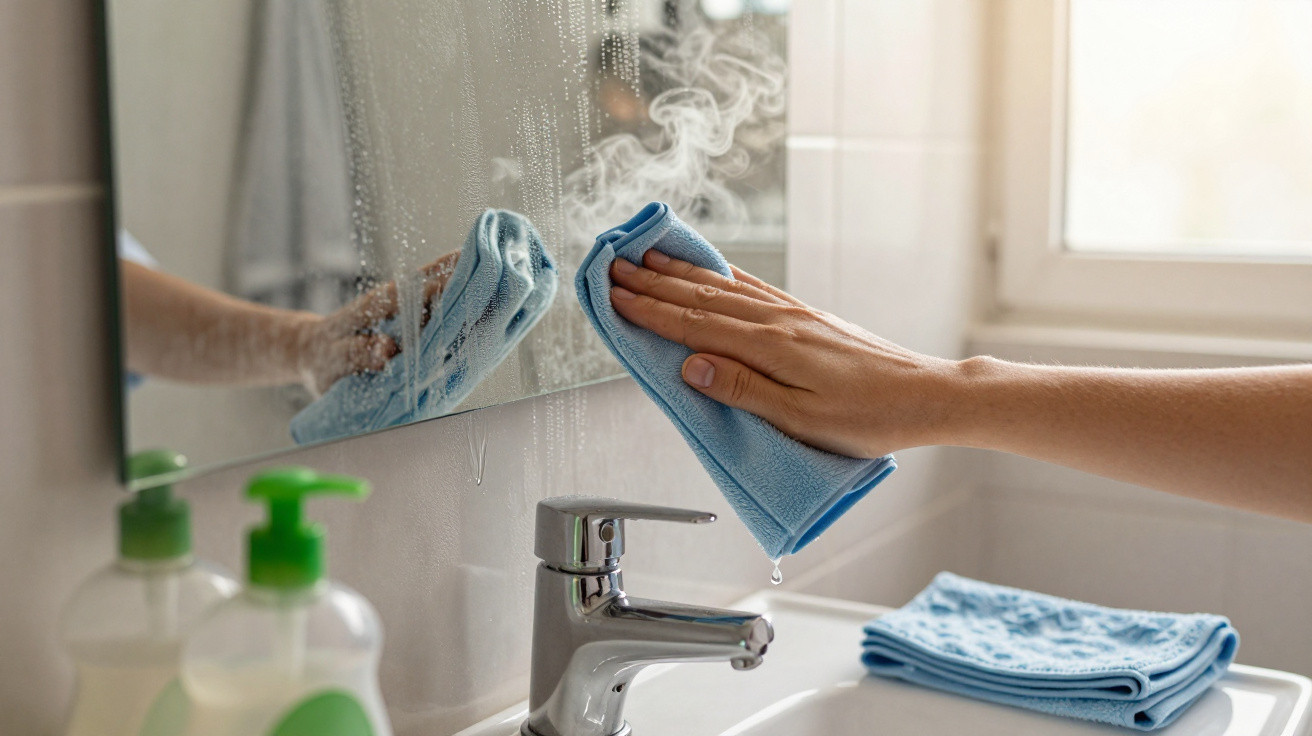
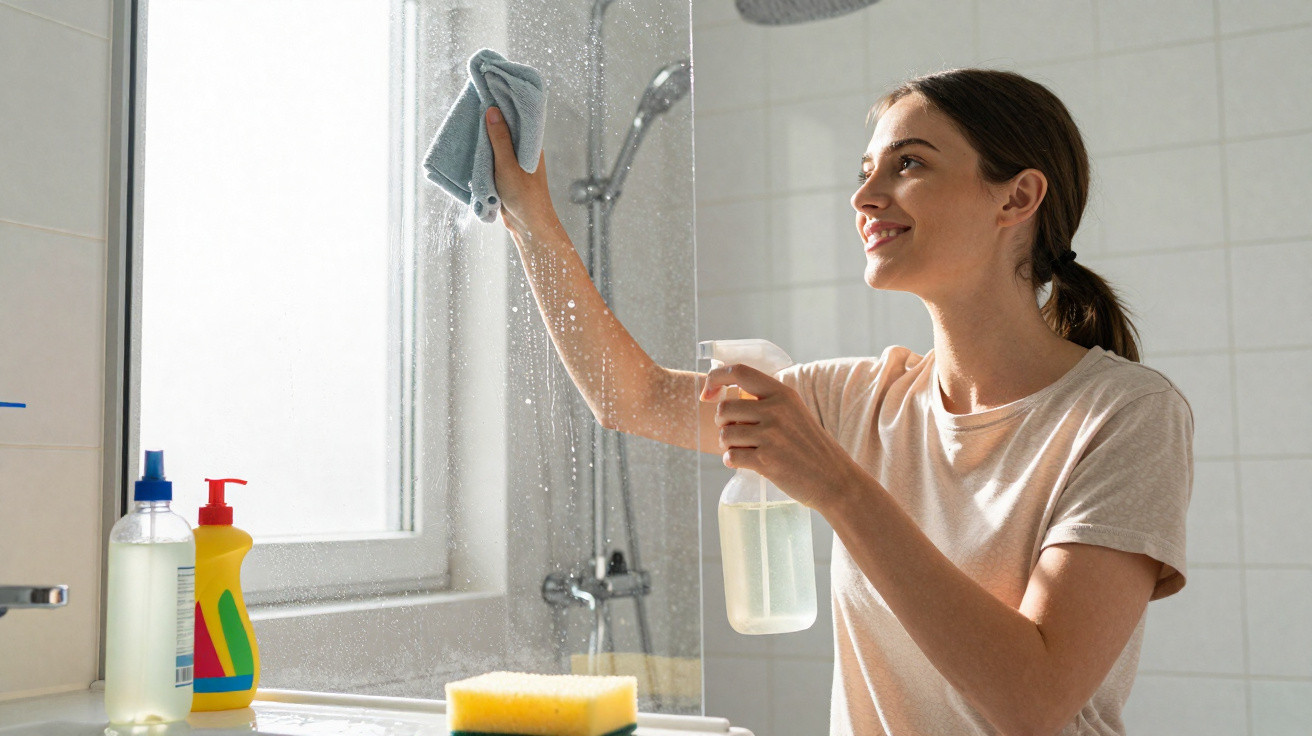
- Finish by drying it with a microfibre cloth or rubber squeegee for a streak-free result.
Most hotel cleaners reserve powerful acidic descalers for serious scale. Melamine foam offers a quick turnaround with less chemical odour in the room, something guests generally value.
What to consider before sanding your shower
As melamine foam acts as a very fine abrasive, it has both advantages and restrictions.
| Surface | Can you use melamine foam? | Notes |
|---|---|---|
| Toughened glass screens | Yes, in most cases | Apply gentle pressure; always rinse and dry. |
| Ceramic tiles | Yes | Works well on soap scum and light scale. |
| Acrylic or plastic screens | With care | Try a small corner first; fine scratches are possible. |
| Glossy painted walls | Risky | It may dull the coating or lift paint. |
| Metal fittings | Limited use | Test first; do not use on delicate coatings. |
Always begin with a small, inconspicuous lower corner. If the material becomes dull or scratched, use a gentler option instead, such as a microfibre cloth and diluted vinegar.
Daily habits hotels use to keep showers fresh
The sponge removes build-up, but regular timing is the real reason hotel showers remain presentable. Housekeeping routines are brief, repeated frequently and centred on controlling moisture.
Moisture management rather than cleaning alone
Following every cleaning round, staff usually open a door or window where possible, or switch on the extractor fan to clear steam rapidly. At home, keeping the shower door or curtain slightly open, along with leaving the bathroom door ajar, improves airflow.
Drying takes just a minute: one quick sweep with a squeegee over the glass and floor can significantly slow limescale and mould growth. Rather than performing a major monthly scrub, many hotel teams use this same daily movement.
The less time water stays on the glass, the fewer minerals bond to it - which means less scrubbing, fewer chemicals and clearer panels.
Simple rules to borrow from professional routines
- Use a squeegee on glass and tiles after the day’s final shower.
- Keep the bathroom extractor fan running for 15–20 minutes after use.
- Once a week, wipe silicone seals and corners using a cloth and mild detergent.
- Choose a gentler, low-soap shower gel if heavy residue forms rapidly.
These small habits may seem laborious, but they reduce the later need for harsh descalers or bleach. Hotels use them because they save labour and help fittings last longer.
Other home-friendly methods that support the hotel method
Melamine foam is effective on existing marks, while pairing it with a few household basics can make upkeep more economical.
Vinegar and baking soda for stubborn spots
In areas with particularly hard water, chalky crusts may form along the bottom of glass panels or around taps. A hotel-style deep clean at home can include ordinary kitchen ingredients:
- Spray white vinegar over the limescale and leave it for 10–15 minutes.
- Wipe gently, then complete the task with a damp melamine sponge.
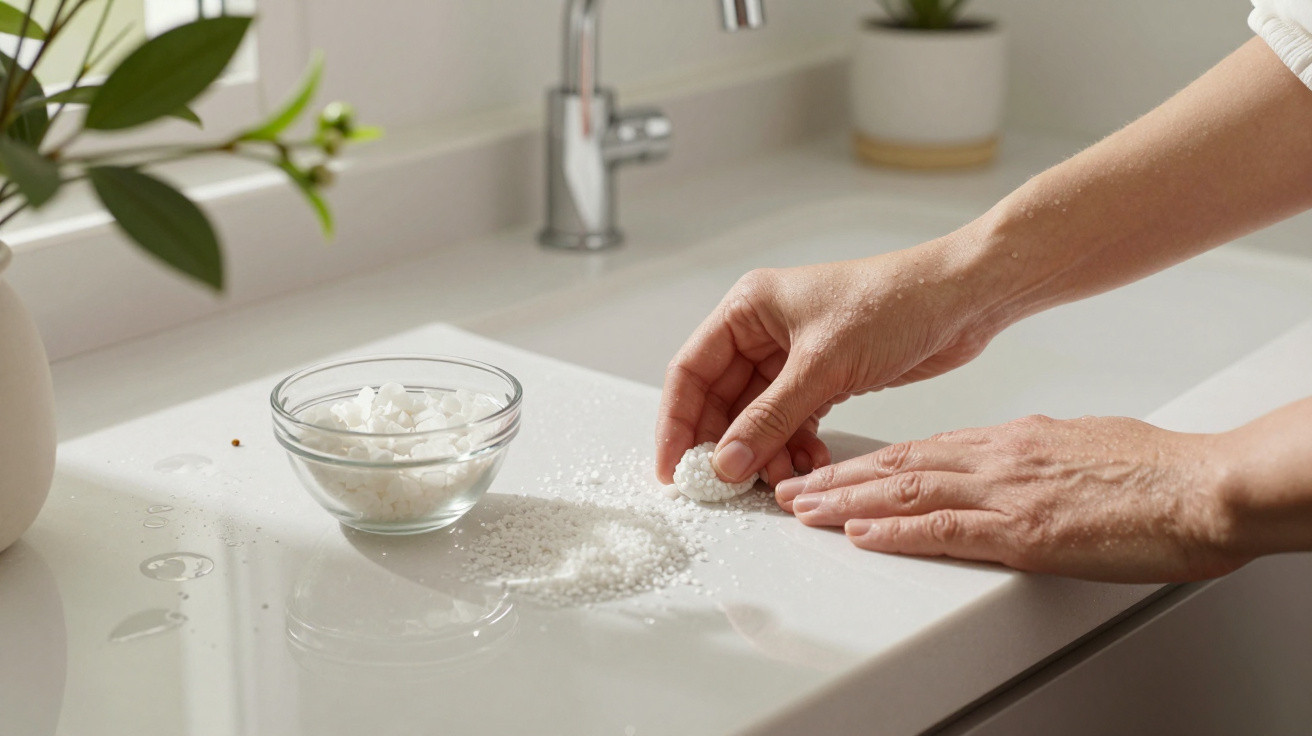
- For grout, combine baking soda with a little water to make a paste, apply it using an old toothbrush and rinse thoroughly.
This method limits the use of strong acids while still dealing with deposits that a sponge alone may not remove effectively.
Health, safety and environmental considerations
Shower maintenance sits at the intersection of hygiene, indoor air quality and sustainability. Strong cleaning products can contain volatile compounds that remain in a small, poorly ventilated bathroom. Hotels deal with this problem on a large scale, so many chains now favour low-odour products and methods based more on mechanical cleaning than harsh chemicals.
This change is sensible for homes too. A melamine sponge creates waste because the foam gradually crumbles during use, but routine glass care normally requires no additional bottled cleaner. Combined with simple acids such as vinegar and sensible ventilation, it can reduce the number of specialist products kept beneath the sink.
There is one limitation: since melamine foam abrades materials, applying it to delicate finishes or tinted glass can reduce their lifespan. Alternating a soft microfibre cloth for everyday wiping with the sponge only for visible deposits strikes a practical balance between effective results and preserving surfaces.
Time is another frequently overlooked factor. Professional cleaners work to demanding timetables, so they choose approaches that produce obvious results in minutes. Bringing the same approach home - two minutes with a squeegee after showering and ten minutes with a melamine sponge every few weeks - can maintain a “hotel-ready” bathroom without spending whole weekends scrubbing.


Comments
No comments yet. Be the first to comment!
Leave a Comment