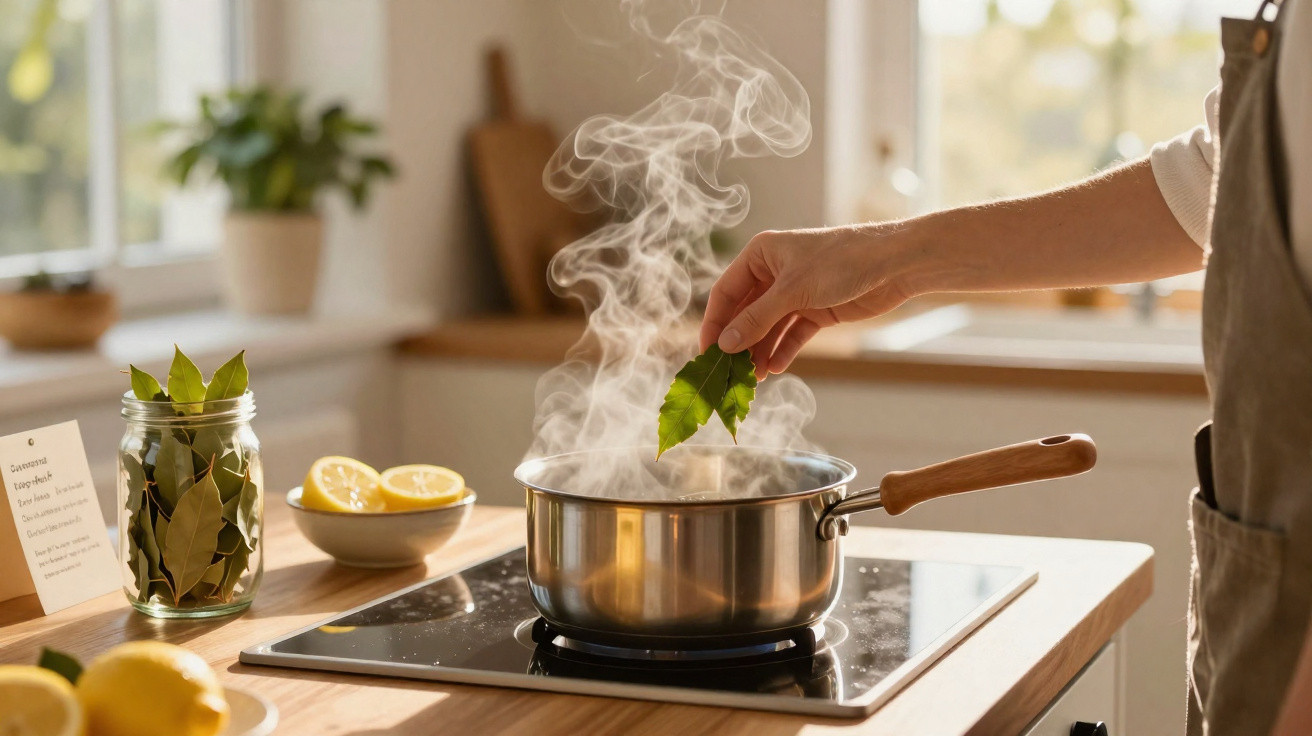
Home cooks are bringing back a gentle household ritual: simmering bay leaves on the hob, not to make soup, but to scent the air. It may seem traditional, but it also suits modern life. A soft, consistent fragrance spreads from the kitchen into the rest of the home, helping to reduce odours, make the air seem easier to breathe and create more restful evenings.
A kitchen practice with longstanding roots
Bay leaves have been used to flavour sauces and stews for generations, yet their appeal extends beyond cooking. As the leaves are heated, their essential oils rise with the steam. This vapour alters both the smell and, often, the atmosphere of a room. More households are using this straightforward simmer as a natural option instead of intense sprays, plug-in fresheners or candles whose fragrance can be overpowering and short-lived.
Five or six bay leaves simmered in a liter of water for 5–10 minutes can refresh the air in a small apartment.
Bay leaves for naturally fresher indoor air
Bay leaf steam contains compounds, notably eucalyptol and linalool, which can help lessen persistent cooking odours caused by frying, fish or smoke. Rather than simply covering unpleasant smells, the fragrance combines with them and makes them less noticeable. Many people start a bay leaf simmer immediately after cooking, then take off the lid to allow the steam to travel through the home.
| Key compound | What it’s known for | Where it shows up |
|---|---|---|
| Eucalyptol (1,8-cineole) | Fresh, camphor-like scent; studied for airway comfort and deodorizing effects | Bay leaf, eucalyptus, rosemary |
| Linalool | Floral-woody note linked with calming aroma profiles | Bay leaf, lavender, basil |
| Alpha-pinene | Piney aroma; contributes to that “clean forest” impression | Conifers, some culinary herbs |
Unlike synthetic deodorisers, a simmer pot does not leave behind a sticky residue, require propellants or linger indefinitely. It is inexpensive, can be repeated whenever needed and is simple to tailor: use extra leaves for a deeper scent, or add citrus peel for a fresher note.
How to make a bay leaf simmer
- Bring 1 litre of water to the boil in a small saucepan.
- Add 5–6 fresh or dried bay leaves (Laurus nobilis).
- Reduce the heat and let it simmer gently for 5–10 minutes.
- Switch off the heat and remove the lid so the vapour can circulate around the room.
- Optional: include a strip of orange peel or a sprig of rosemary to build a more layered fragrance.
Easier-feeling breathing, particularly in winter
The same steam produces a mildly balsamic aroma. On cold, heavy days when windows remain closed, many households find that it makes the air seem clearer. Laboratory research into bay essential oil has indicated expectorant and antimicrobial activity under controlled conditions. At home, however, the effect is more straightforward: the nose may feel less blocked and the room less stuffy.
If you have asthma or a sensitive chest, keep the simmer brief and gentle, and ensure the room is ventilated. Powerful fragrances can irritate some people. This is a comforting home routine, not a medical treatment.
A more restful home through scent-led rituals
Scent and mood are closely connected. A softer fragrance can take some of the sharpness out of a hectic evening. Those who use bay leaf simmer pots often describe a small but noticeable change: the room feels less tense and more like a reset after work. Small studies of aromatic compounds such as linalool indicate possible calming effects, although everyday use largely depends on personal taste and routine.
Make the process into a brief ritual. Put the saucepan on while you tidy the kitchen, then lower the lights for a few minutes. As the steam disappears, the room often feels more settled.
A small, repeatable scent ritual can anchor the evening-no screens, no apps, just a warm pot and gentle vapor.
Gentle pest deterrence without chemicals
Bay’s pungent scent can also disturb small household pests. Regular use is reported to result in fewer pantry moths and flies. In cupboards, place several dried leaves in a jar or position them near flour and grains. This is not a replacement for thorough cleaning or correct food storage, but it provides a mild, plant-based deterrent alongside the measures you already take.
Energy and tradition
Across Mediterranean kitchens and Feng Shui traditions, bay has symbolic associations with clarity, protection and a fresh start. Some families boil or burn bay leaves during seasonal resets, spring cleaning or before visitors arrive. Whether regarded as a spiritual practice or a sensory one, fragrance-based rituals can mark a transition and give everyone in the household a shared point of focus.
Safety, sourcing and important details
- Choose true bay: Laurus nobilis. Do not use similar-looking plants such as cherry laurel (Prunus laurocerasus) or mountain laurel (Kalmia latifolia), which are not culinary bay and may be toxic.
- Do not add bay essential oil to the saucepan. It is highly concentrated and may irritate the airways; the leaves are sufficient on their own.
- Consider pets. Birds and animals that are sensitive to scents may respond badly to strong aromas, so ventilate the area and keep simmering sessions short.
- Do not swallow whole leaves. They remain rigid and can create a choking hazard, so remove them from food.
- If you are allergic to Laurus nobilis or related plants, proceed carefully with a test or avoid using it.
When to use it - and when to avoid it
Suitable times include after frying or searing, before guests arrive, during winter stuffiness or on an especially stressful evening. Avoid long simmers on very humid days or in small rooms without ventilation. If the scent causes irritation for anyone at home, stop the simmer and air out the room.
Useful additions for a signature home scent
Bay leaves make an effective base for a personalised simmer pot. Add a teaspoon of whole cloves for warmth, lemon peel for brightness or a rosemary sprig for a more herbaceous lift. Begin with uncomplicated combinations so that the fragrance does not become overwhelming. Adjust the blend with the seasons: citrus in winter, mint in late spring and a touch of cinnamon over the holidays.
What you may notice after a week
Use the simmer three or four times over a week and observe the difference. The kitchen will generally smell cleaner, while fabrics may retain less cooking odour. During cold spells, people often mention slightly easier mornings and a more peaceful atmosphere at night. The effects are not dramatic; instead, they are a series of modest improvements that accumulate.
Quick troubleshooting
- Is the scent too weak? Add one or two more leaves, or simmer for an extra two minutes.
- Is the scent too powerful? Turn off the heat and open a window for five minutes.
- Do not have bay leaves at home? Dried leaves work just as well as fresh ones, so check the spice cupboard.
For low-waste households, this practice works particularly well: it uses a spice you may already have, water that can be left to cool and then used on plants, and creates a difference you can notice. It is not showy. It simply makes the room more pleasant to spend time in. That is the point.














Comments
No comments yet. Be the first to comment!
Leave a Comment