A kettle spout marked by that familiar rainbow sheen. Candlesticks that once shone but now brood on the shelf. You needn’t fill a cupboard with chemicals to revive them. Mixed together, vinegar and baking powder make a mild polish that mirrors the controlled, gleaming results professional restorers achieve at the bench.
I first saw this method on a wet Wednesday in a North London workshop, scented faintly with wax and ageing books. A restorer placed a chipped brass latch beneath a lamp, added a pinch of baking powder to a small bowl and let in a few drops of white vinegar. The mixture puffed up like a miniature soufflé, bubbling with promise. Using a cotton pad, she moved along the metal’s grain. Nothing theatrical: gentle circles, a brief wait, a light buff - and the metal seemed to wake up. She smiled. “Don’t overthink it.” It fizzed like champagne.
Why this fizzing duo works beyond the kitchen
Vinegar provides gentle acidity, helping to release the dull oxides attached to metal. Baking powder adds an ultra-fine abrasive along with enough substance to hold the paste in place. That creates less mess and gives you greater control. Rather than stripping the finish, the polish coaxes oxidation from the surface, much like brushing dust from a table.
I saw that brass latch change from cloudy to honey-toned in less than five minutes. There was no noisy drill and no sharp solvent odour, only quiet fizzing and unhurried strokes. Used on a silver spoon bought at a car boot sale, the same paste removed the grey coating without wearing down its fine engraving. The spoon did not look “new”. It simply looked like itself again - which is exactly the aim.
There is a little chemistry behind it. Baking powder combines bicarbonate, a dry acid and starch. When vinegar is added, carbon dioxide bubbles help loosen grime, while the starch gives the mixture thickness so it remains on curves and in corners. Add too much vinegar and you neutralise its cleaning action. Aim for a paste rather than a puddle. The skill lies in the proportions, not in vigorous scrubbing.
How to mix and use the vinegar and baking powder polish like a calm professional
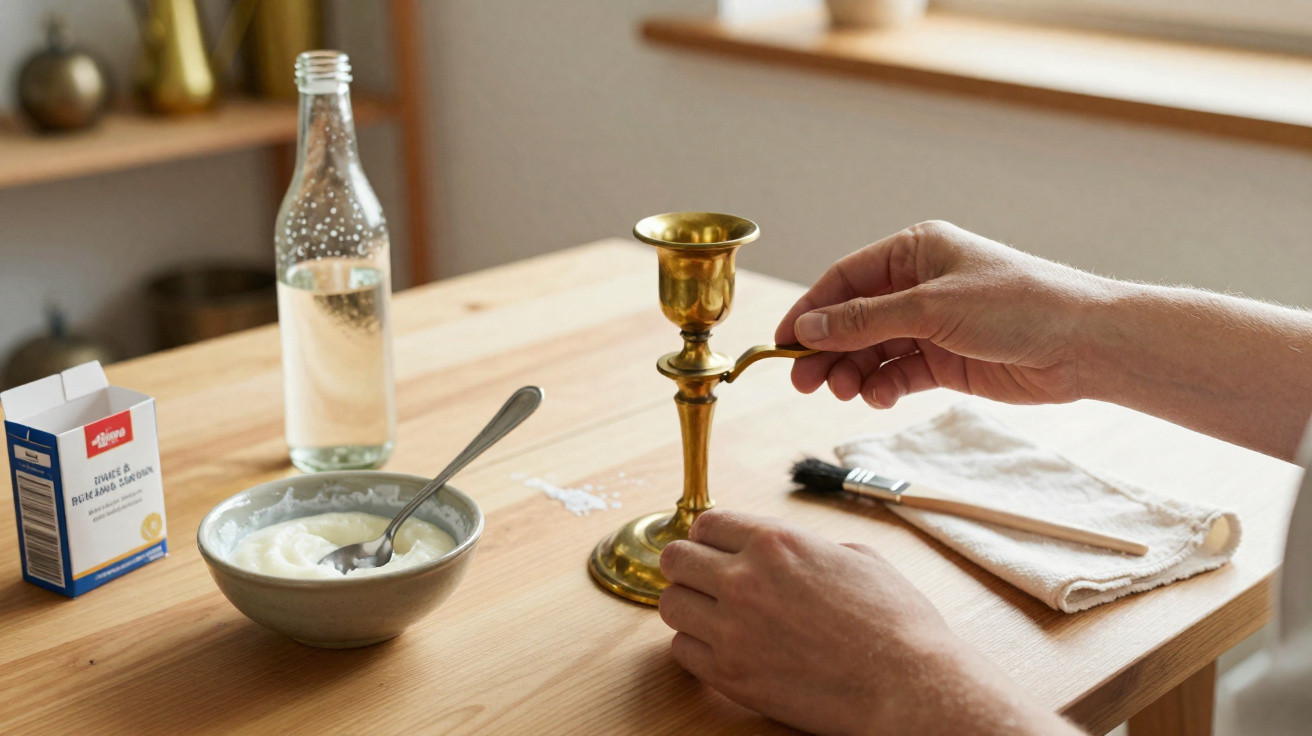
Put two teaspoons of baking powder into a small ramekin. Stir in white vinegar one drop at a time until you have a soft, spreadable paste. It should resemble yoghurt, not soup. Dip in a cotton pad or microfibre cloth, spread a thin layer over the metal and follow the grain. Let it sit for 60–90 seconds. Remove the paste with a clean pad, then polish with a dry lint-free cloth until the shine appears.
Apply the paste only where it is needed. Do not soak hinges or tight gaps where dampness may remain hidden. For textured objects, use a cotton bud around edges and a soft toothbrush in grooves. Wet a clean cloth with water, wring it out firmly and make a quick pass to clear away residue. Dry the item completely. If desired, finish with the lightest coating of microcrystalline wax for protection. It may feel like cheating, but it is effective.
Most mistakes come from making the mixture too wet or scrubbing with forceful circles. Be gentle and allow the chemistry to do the lifting. We have all felt tempted to rub harder and faster. Don’t. Test on a hidden spot first. Keep it away from marble, limestone, travertine and any other acid-sensitive material. Do not use it on lacquered finishes, gilding or painted metal. When uncertain, pause, research it or contact a professional. Honestly, no one does this every day.
“In the studio we’ll often pair a mild acid with a very fine powder like chalk,” a restorer told me. “This home version with vinegar and baking powder follows the same logic. Small, patient steps. Stop when the surface looks alive, not raw.”
- Gear: cotton pads, microfibre cloth, cotton buds, small bowl, gloves.
- Recipe: 2 tsp baking powder + vinegar drops to a paste.
- Timing: 60–90 seconds dwell, then wipe and buff.
- Surfaces: Brass, copper alloys, stainless trim, chrome fixtures. Avoid stone and lacquer.
- Finish: Optional thin wax layer for protection.
Where it shines, and where to draw a line
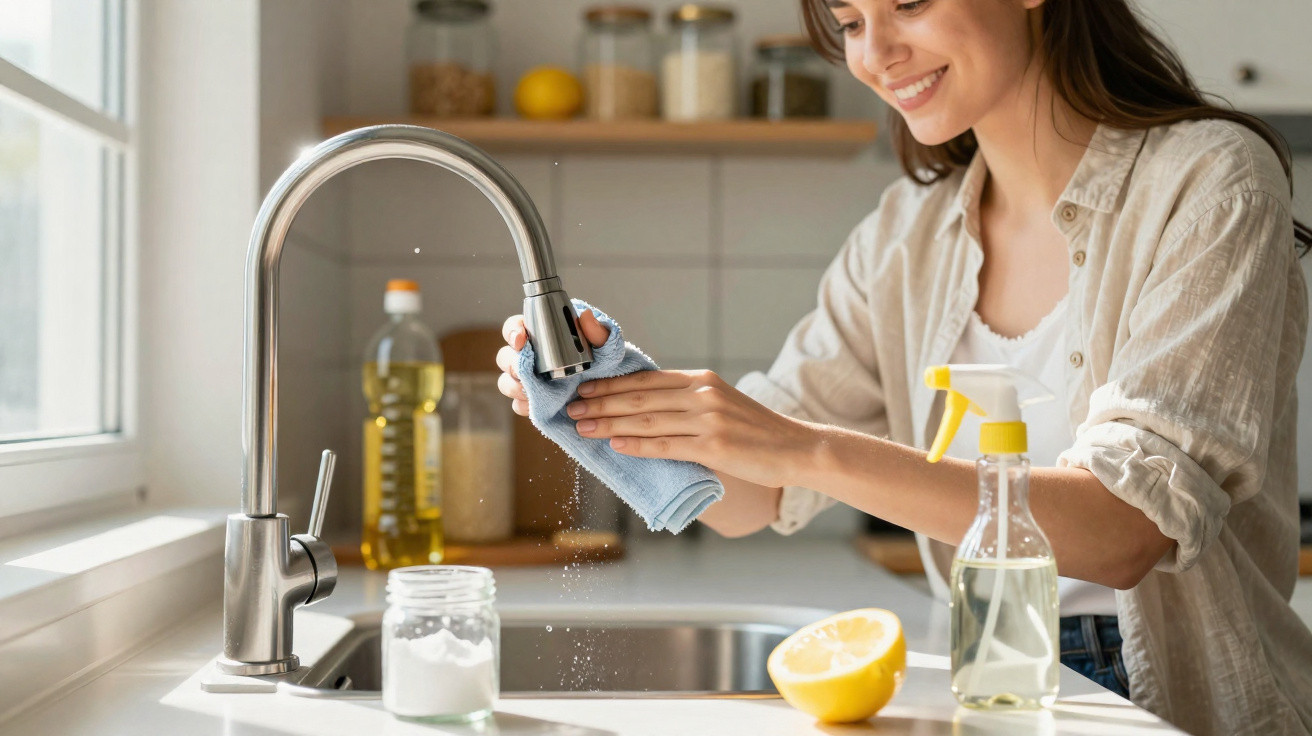
This modest polish is surprisingly versatile. On a weary brass tap, it removes water marks and leaves a warm satin finish. On a chrome bicycle bell, it shifts the film without cutting into the plating. On stainless-steel saucepans, it clears the tea-coloured haze that gathers near rivets. You get the pleasure of a visible improvement without the worry of overdoing it.
Museum conservators commonly use precipitated chalk with diluted acetic acid instead of kitchen products, particularly for valuable objects. The household version follows the same principle: a mild acid plus a fine abrasive, applied with care. If you have bicarbonate of soda rather than baking powder, it works just as well - add a pinch of cornflour to give it body. Do not use this mix on marble, limestone, or any calcareous stone. Acid will etch it.
There is a certain romance in restoring objects, too: a baker’s scale made sticky by time, or a door plate dulled by a century of touch. Vinegar-and-baking-powder paste will not reverse time. Instead, it offers a manageable, reversible nudge. Tackle small areas, observe the surface and stop as soon as the sheen returns. Dry thoroughly to avoid hidden moisture and fresh tarnish. Show the before-and-after to a friend who enjoys a satisfying rescue story.
Certain tasks call for costly compounds and specialist pads. Plenty do not. This polish occupies that pleasing middle ground: inexpensive, gentle and almost absurdly satisfying. After restoring a handle or two, you will spot possibilities everywhere - lamp bases, cupboard pulls and buckles that have acquired a dull mood. Make each batch small and fresh, allow yourself enough time, and let the fizz handle the first stage. What follows is touch, with the kind of care you can feel in your hands.
| Key point | Detail | Benefit for the reader |
|---|---|---|
| Simple ratio | 2 tsp baking powder + vinegar to a yoghurt-like paste | Easy to remember and repeat |
| Gentle method | Apply, leave for 60–90 seconds, wipe, then buff | Clear results without damaging the surface |
| Areas to avoid | Marble, limestone, lacquered surfaces, gilding | Prevents costly mistakes |

Comments
No comments yet. Be the first to comment!
Leave a Comment