
There is a surprisingly simple solution.
Many people wash their clothes far more often than is good for them. This not only affects the environment and household budget, but also makes colours fade and fabrics wear out sooner. A few inexpensive kitchen staples can replace part of the laundry detergent – and in some cases, you can even do without it entirely.
Why we often wash too much
In day-to-day life, plenty of items go into the washing machine even though they could still be worn: jeans after an evening on the sofa, jumpers after a day at the office, or towels after being used once. Every wash cycle damages fibres and gradually washes away colour pigments.
Textile experts therefore recommend airing clothes rather than automatically washing them. Delicate materials such as wool, silk and modern performance fibres particularly benefit from this approach. When washing is necessary, lightly soiled laundry can often be cleaned using hot water and simple household ingredients.
“Washing less and using household remedies selectively protects colours, fibres – and your wallet.”
These foods really help with dirt and odours
Vinegar: a degreaser, limescale remover and odour neutraliser
Vinegar is a household cupboard classic, and with good reason. It breaks down limescale, neutralises unpleasant smells and helps rinse detergent residues from clothing.
- How to use it: Add around 50–100 ml of clear household vinegar to the fabric-softener compartment.
- Effect: Laundry feels softer, colours look fresher and musty odours disappear.
- Best for: Towels, sportswear and bed linen.
Vinegar should be used sparingly on highly delicate fabrics. It is not a problem for ordinary cotton; on the contrary, regular washes with vinegar can also help descale the washing machine.
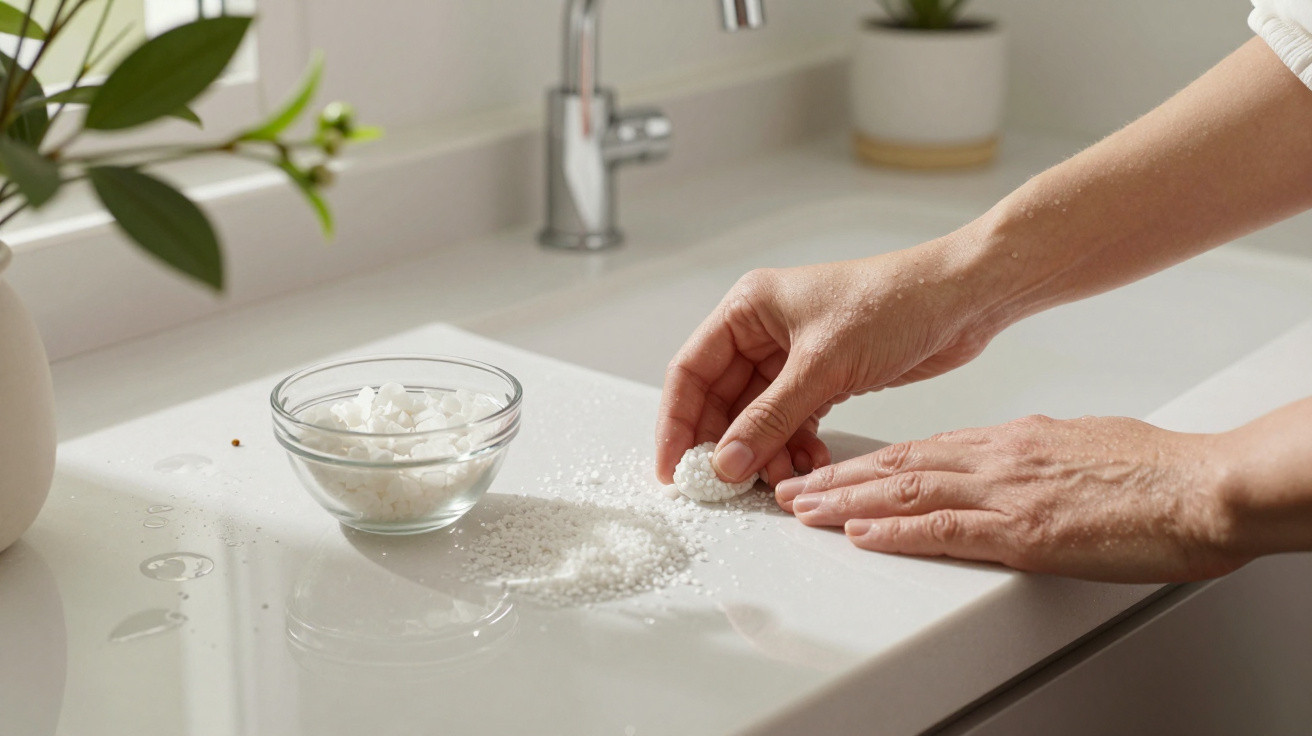
Bicarbonate of soda: help for sweat and stale smells
Bicarbonate of soda, often found in the baking aisle, neutralises odours and has a mild degreasing effect. Sportswear and heavily perspired-in T-shirts benefit especially well from it.
- How to use it: Put 1–2 tablespoons of bicarbonate of soda directly into the drum with the laundry.
- Effect: It reduces odours and supports cleaning when using only a small amount of detergent.
- Best for: Sports clothes, socks and everyday laundry.
Bicarbonate of soda is not a replacement for a full detergent when dealing with heavily soiled workwear, but it can save a considerable proportion of it for normal everyday washing.
Baking powder: brightening greyed whites
Baking powder contains bicarbonate of soda alongside other ingredients with a mildly bleaching effect. This makes it particularly suitable for pale laundry that has become dull or slightly yellowed.
Add one or two sachets of baking powder directly to the drum with white laundry, together with only a small amount of detergent. This is usually enough to visibly reduce grey dullness. Do not use it on coloured textiles with strong tones, as it may make them lighter.
Lemon: a fresh boost for light-coloured textiles
Lemon's acidity acts in a similar way to a gentle bleach while leaving a fresh scent.
- How to use it: Add the juice of half a lemon to the detergent drawer, or soak items in a bowl of hot water before washing.
- Effect: Light stains on pale fabrics are reduced and odours disappear.
- Best for: Light blouses, white T-shirts and curtains.
Use lemon juice cautiously and test it only on a small area of dark or highly colourful clothing to prevent colour changes.
How much laundry detergent can you really save?
In certain situations, washing without any detergent works – for example, with lightly worn garments that have no visible stains. Using the kitchen helpers above can significantly reduce the amount of detergent needed.
| Type of laundry | Recommended combination | Detergent saving |
|---|---|---|
| Lightly soiled everyday laundry | Half the usual detergent amount + 1 tbsp bicarbonate of soda | Up to 50% |
| Towels without stains | Only 1/3 of the detergent amount + 100 ml vinegar | Around 70% |
| Sportswear | Half the usual detergent amount + 1–2 tbsp bicarbonate of soda | Up to 50% |
| Greyed white laundry | Small amount of detergent + 1–2 sachets baking powder | 30–40% |
Conventional detergent remains useful for heavily soiled children's clothes, oily workwear, or textiles marked with blood and grass stains. Kitchen ingredients can support its effect in these cases, but cannot replace it.
Keeping colours vibrant for longer
Choose the right temperature
Many people routinely wash at 40°C, even though 30°C is often sufficient. Lower temperatures protect colours and require less detergent. Modern washing machines and detergents are designed to clean effectively at 20°C or 30°C too – particularly when paired with bicarbonate of soda or vinegar.
Less friction, less damage
The fuller the drum, the more textiles rub against one another. This roughens the fibres and causes colour pigments to wash out more quickly.
- Fill the drum only two-thirds full when washing delicate or particularly colourful garments.
- Turn clothes inside out to protect their outer surface.
- Use quick-wash programmes only if clothing is genuinely lightly soiled.
Using vinegar or lemon juice sparingly as well helps remove residues and stops colours from looking as dull.
Risks and limitations of household remedies
Useful as food-based laundry aids may be, a few points should be kept in mind:
- Vinegar: Unproblematic in normal quantities, but consistently excessive doses can damage hoses and seals.
- Lemon: Use only with care on dark fabrics, as it has a slight lightening effect.
- Bicarbonate of soda and baking powder: Use sparingly on high-tech performance fabrics, such as outdoor jackets and membrane textiles, and follow the care labels.
Anyone with sensitive skin or allergies should first test laundry alternatives on small loads. Some people react differently than expected to altered residues.
Practical everyday examples
Here is a realistic scenario: the sports bag smells, and there is hardly any detergent left. In this case, a quick programme at 30°C, one tablespoon of bicarbonate of soda directly in the drum and a splash of vinegar in the fabric-softener compartment will often be enough. In many instances, the odours disappear completely.
Or take the classic example: white T-shirts have turned grey, while expensive specialist detergents promise a lot but cost accordingly. Two sachets of baking powder and reducing the detergent quantity to one third will surprisingly often produce a more visible result than a new chemical cocktail from the supermarket cleaning aisle.
“Many kitchen ingredients are suitable not only as an emergency solution, but also as a long-term addition to normal laundry care.”
Why making the switch is worthwhile
Washing with vinegar, bicarbonate of soda, baking powder and lemon does more than save money. Significantly fewer chemicals enter wastewater, detergent supplies last longer, and many garments retain their vivid colour and remain wearable instead of ending up in the bin after a year.
Over time, an adjusted laundry routine can even change your wardrobe: when favourite pieces stay looking good for longer, you buy replacements less often. This eases pressure on the household budget – and, as a bonus, on the environment.












Comments
No comments yet. Be the first to comment!
Leave a Comment