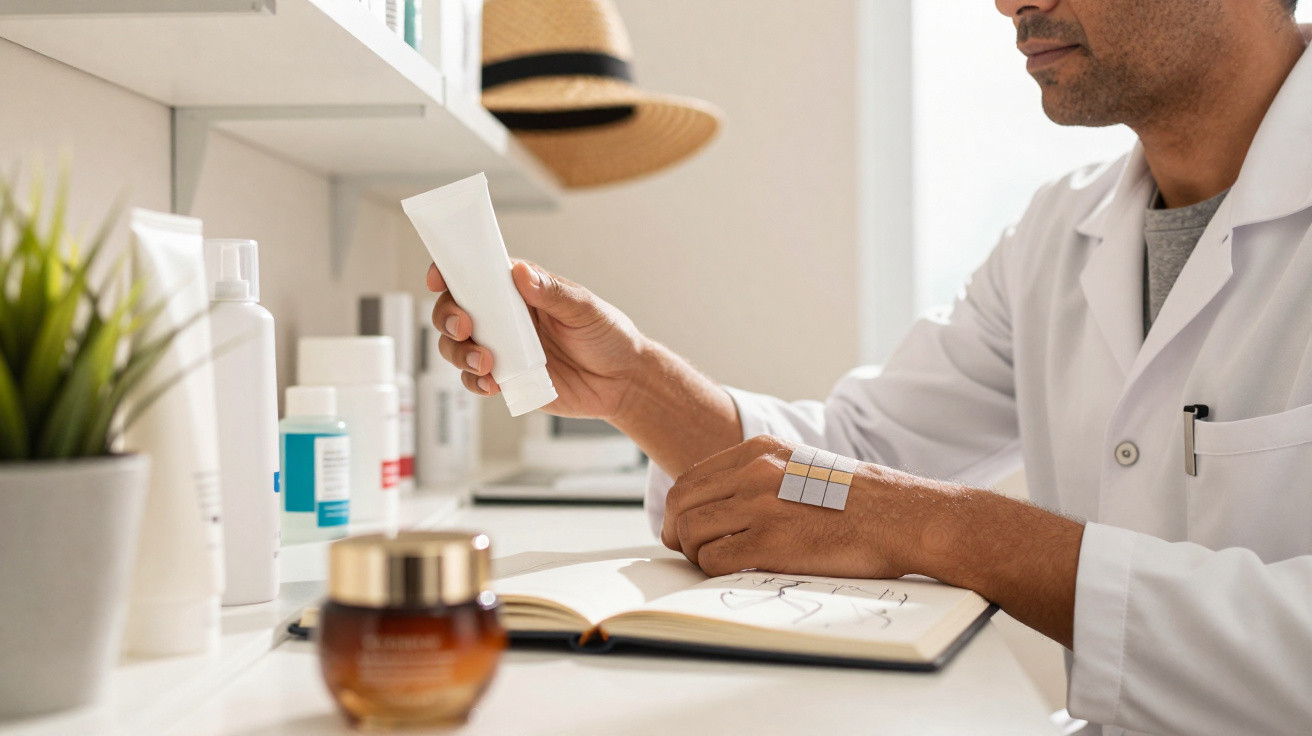
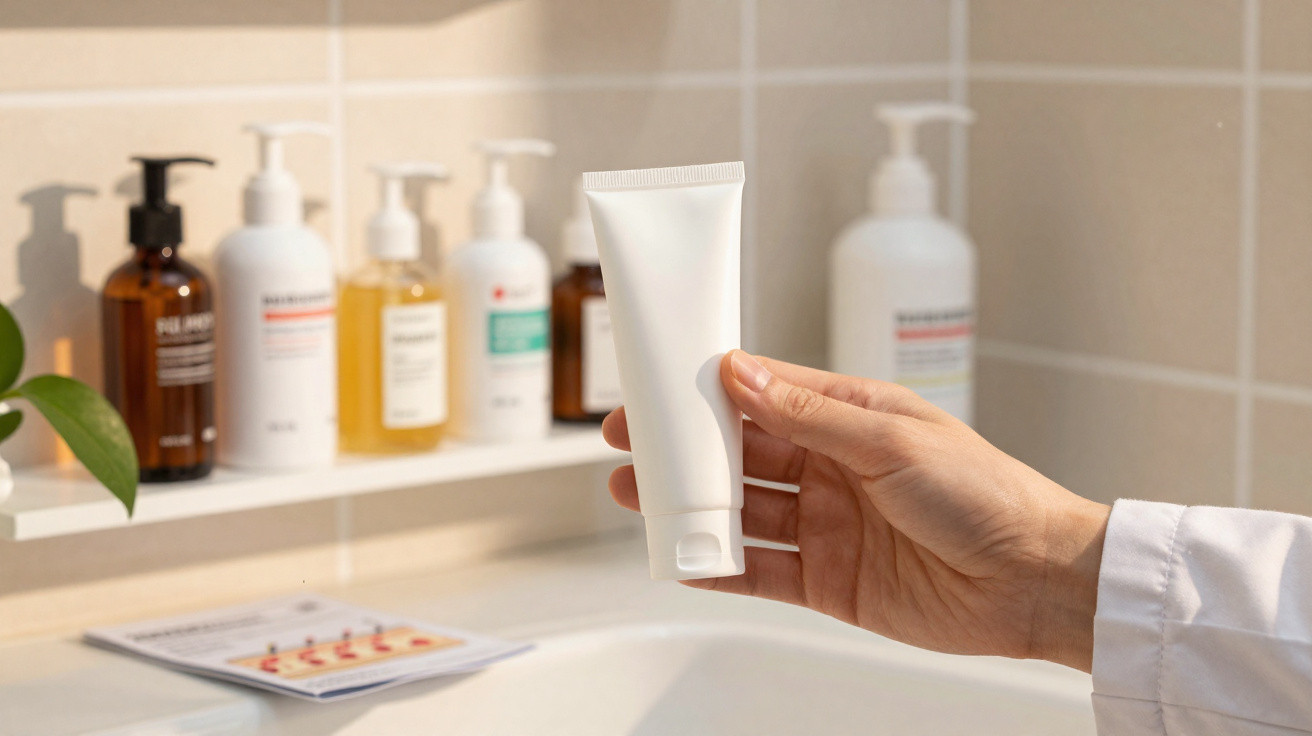
The dermatologist arranged six anonymous white tubes on a tray, with every label, logo and hint of marketing removed. Each cap bore only a small number. The atmosphere in the room was curious: these were creams the doctors believed they recognised, now reduced to unbranded formulas. One after another, they used a gloved finger to take a little product, worked it between thumb and forefinger, and spread it over the inner forearm. The quiet felt clinical, yet their expressions gave them away. One eyebrow lifted, another doctor gave an approving nod, while a third barely concealed a grimace at a formula that was sticky and overly perfumed.
When the findings were revealed, the room burst into laughter.
The “luxury” cream they had chosen was actually a £7, old-fashioned, unbranded moisturiser from the bottom shelf of the chemist.
There was no gold lid or frosted-glass pot: only a simple bottle containing a formula that did its work without fuss.
When dermatologists choose the plain white tube
Ask a dermatologist privately what they put on their own face, and it is seldom the glamorous jar featured on a billboard. More often, it is an almost dull-looking, clinically named, fragrance-free product. That was the outcome of this blind test, organised by a group of European dermatologists who wanted to find out whether branding influenced even their own advice.
They assessed six moisturisers: two luxury prestige brands, two popular mid-priced “Instagram” creams, and two very basic pharmacy formulas. All had been transferred into matching white tubes, so nobody present knew what they were testing. Their judgements could rely only on texture, fragrance, absorption and how the skin felt afterwards.
One of the basic pharmacy creams repeatedly placed in the top two. Dermatologists liked its cushioning texture, its ability to sink in without leaving residue, and the way it made skin feel soothed rather than tingly. During a week-long home-testing stage, doctors applied the coded samples morning and evening. The same unidentified cream achieved the highest average rating for hydration, comfort and “I would keep using this.”
At the final reveal, the winner proved to be a generically packaged, fragrance-free moisturiser usually found on the lowest shelf, marketed for “very dry skin” rather than “radiant glow”. It had no celebrity advertising campaign and no fashionable active ingredient. Instead, it contained glycerin, petrolatum, ceramides and a brief, traditional ingredient list that could almost fit on a postage stamp.
Why did this unbranded cream outperform prestige products costing ten times as much? Dermatologists are taught to observe how skin responds, rather than believe what packaging claims. They understand that the skin barrier benefits more from lipids, humectants and soothing ingredients than from fairy-dust extracts. Luxury formulas can contain plenty of fragrance, botanical actives and fashionable acids which feel impressive at first but may irritate sensitive or compromised skin.
The less expensive moisturiser concentrated on barrier repair and retaining water rather than creating drama. There was no powerful perfume and no thick silicone coating masquerading as “silk”. It simply provided dependable hydration that remained after the first hour. It was the skincare equivalent of a cotton T-shirt: not spectacular, but the thing you actually wear every day.
How to find a “quietly brilliant” moisturiser
To discover an understated favourite of your own, begin by turning the tube around. Pay no attention to the front. A dreamy claim about “age-defying radiance” reveals very little. The important information is on the back, in the small-print ingredient list. Seek a straightforward, balanced combination: humectants such as glycerin or hyaluronic acid, occlusives such as petrolatum or mineral oil, and barrier-supporting ingredients such as ceramides or cholesterol.
Next, test it on your own skin. Smooth a pea-sized amount over clean, slightly damp skin, then wait ten minutes. Your face should feel at ease: neither tight nor tacky, and not excessively shiny. If your skin feels like itself, only softer, you are likely close to the ideal result.
A lot of people undermine an otherwise good skincare routine by pursuing a sensation instead of an outcome. That strong “cooling” or “tingling” feeling is often caused by fragrance or irritants, rather than effectiveness. The slippery, silky finish that pills beneath make-up usually means the formula contains more silicone than your skin type needs. Let’s be honest: nobody really reads labels line by line every single day.
Use a few simple shortcuts instead. If your skin is prone to flushing or stinging, avoid moisturisers that smell like a perfume counter. Treat jars promising to do everything at once - exfoliate, brighten, plump and resurface - with caution. That is a great deal to ask from a product intended to act as your face’s daily blanket. A moisturiser does not need superpowers; it needs to perform reliably without causing problems.
The dermatologists in the blind test kept returning to one message: skin values consistency over novelty. One doctor expressed it in a particularly memorable way:
“Give your skin a calm, predictable environment, and it will often look better than with the fanciest active-packed cream. Barrier first, bells and whistles later.”
In practical shopping terms, use a short checklist that you can run through while standing in a brightly lit, slightly overwhelming chemist aisle:
- A short, understandable ingredient list - ideally with water, glycerin and an emollient among the first three ingredients
- Fragrance-free or only lightly scented, particularly if you experience redness or breakouts
- References to “sensitive skin”, “barrier repair” or “dermatologist-tested”, without loudly making 15 different promises
- Tube or pump packaging rather than a wide, open jar, to reduce contamination
- A comfortable feel on the face for at least four hours, without itching, stinging or a sudden outbreak of shine
When a product quietly meets these criteria, it makes no difference if its branding looks rather 1998. Your skin cannot read the label.
Luxury jars, plain tubes and the stories we tell our skin
There is something slightly embarrassing about learning that the cream treated as a standby product may outperform the one displayed proudly on the bathroom shelf. Most of us know that moment: the expensive purchase disappoints, while the unglamorous option simply works. The dermatologists’ blind test removed the story and left the basic reality: either a formula supports the skin barrier or it does not.
Once you understand that, your relationship with skincare can change completely. You no longer feel guilty about missing the latest launch. Instead, you notice how your skin behaves three hours after application, rather than focusing on the first thirty seconds after applying a cream.
You may also develop a more subtle kind of confidence: the confidence of knowing that you can interpret your skin and do not need a marketing department to decide what is “right” for your face. The chemist aisle stops seeming like a wall of noise and begins to resemble a range of possibilities. Luxury certainly has a role: some premium formulas are beautifully made, carefully researched and genuinely enjoyable to use.
However, the blind test reminded everyone of one simple fact: skin can’t see price tags. It responds only to what touches it, day after day. Texture, ingredients and tolerance are much more important than whether your jar looks good in a photograph beside your toothbrush.
From there, the discussion broadens. Perhaps you keep one indulgent cream because you enjoy its evening scent and ritual, then pair it with an unbranded workhorse in the morning. Perhaps you point a friend with reactive skin towards the simple pharmacy staple that surpassed glossy brands backed by million-pound advertising campaigns.
The dermatologists involved in the test returned to their clinics with something unexpected: not a new product range to promote, but renewed appreciation for the basics. That is the message worth passing on. Your best moisturiser may already be sitting on the lower shelf, slightly dusty and quietly waiting for somebody to realise that it simply does the job. No fanfare, just calmer, happier skin.
| Key point | Detail | Value for the reader |
|---|---|---|
| Ignore the front label | Concentrate on the ingredients and how your skin feels after 10–20 minutes | Helps you select products that genuinely suit your own skin rather than marketing claims |
| Prioritise barrier-supporting formulas | Look for humectants, occlusives and ceramides with minimal fragrance | Reduces irritation, dryness and flare-ups while supporting long-term skin resilience |
| Price ≠ performance | Blind tests show that inexpensive, simple moisturisers can outperform luxury creams | Saves money and stress, while allowing you to value straightforward, effective products |










Comments
No comments yet. Be the first to comment!
Leave a Comment