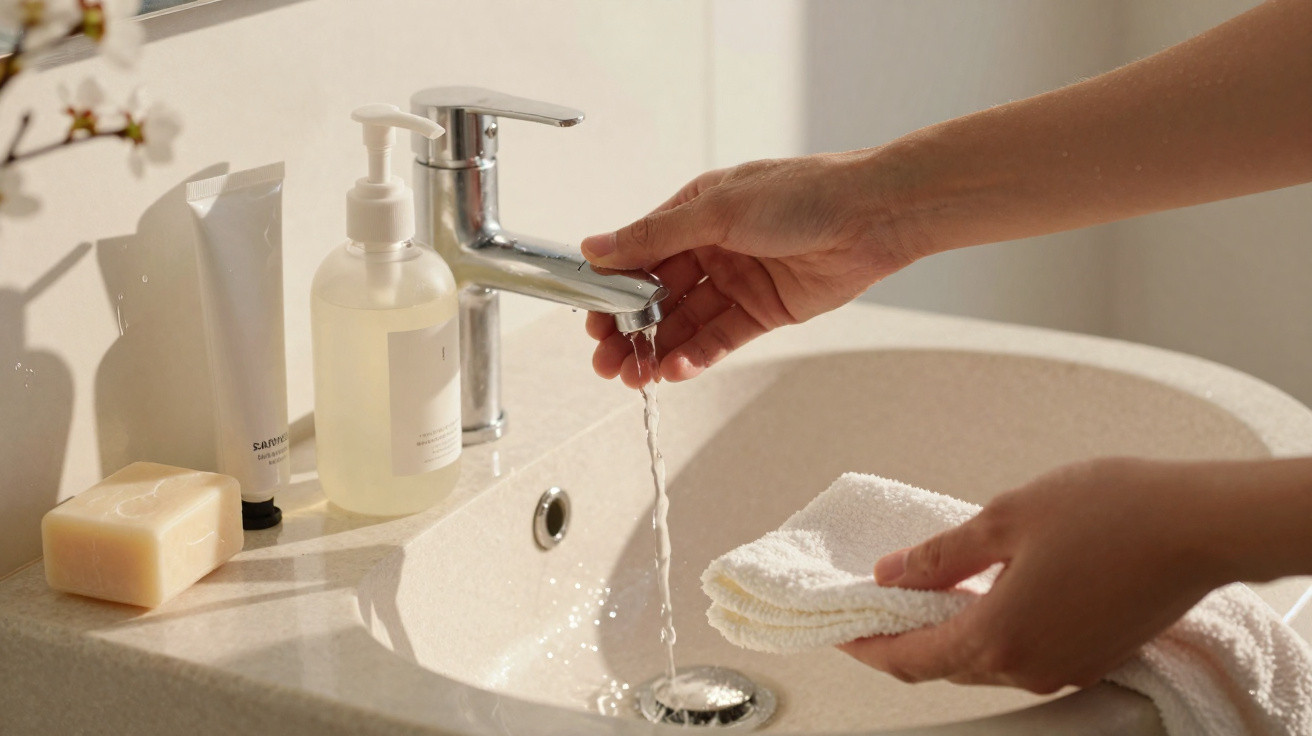
The real game-changer is often not in the tube at all, but beside the sink.
During winter and spring, many people spend a small fortune on hand creams, only to be frustrated when their skin still feels tight, stings and cracks. The explanation is surprisingly simple: in most cases, it is not the wrong cream causing the problem, but an unhelpful hand-washing routine. Adjusting a few elements of that routine can greatly reduce the need for skincare products – and often leaves hands softer than before.
The misconception that “more is better” for dry hands
When hands become dry, most of us instinctively reach for more oil, more cream and more products. There is a tube in the car, another by the bed and one at work – yet the knuckles still crack and the skin remains rough.
This constant application is based on a misunderstanding: we notice only the outcome – dry, tight skin – and respond with increasingly rich formulations. In the process, it is easy to overlook the fact that the skin has a highly sophisticated protective layer of its own.
The skin has its own protective barrier. If you destroy it every day while washing, no cream in the world can restore it permanently.
Known as the hydrolipidic film, this barrier is made up of water and fats. It keeps moisture inside the skin while shielding it from irritants. Repeatedly stripping it away creates a vicious circle:
- harsh washing removes fats and weakens the barrier
- the skin feels dry and tight
- cream is applied, bringing short-term relief
- the next wash damages the barrier all over again
As a result, the skin becomes accustomed to an artificial “lipid top-up” and seems increasingly sensitive without cream. Addressing the cause instead – namely, the way hands are washed – can break this cycle.
Water that is too hot, hands that are too dry: what research says
One frequently overlooked factor is right at the sink: the temperature control. Many people turn the tap almost fully towards hot because warm water feels “cleaner”. Others use icy water, either to save money or as a matter of principle. Neither extreme is kind to the skin.
Research bodies such as the French Inserm institute recommend a temperature of around 30 to 35 degrees for hand hygiene. Within this range, soap, water and skin interact in the gentlest possible way.
Gentle hand care starts with lukewarm water – not with the most expensive cream.
What happens when the water temperature is wrong:
- Water that is too hot (above roughly 35–40 degrees): removes lipids from the uppermost layer of skin, leaving the barrier permeable; moisture evaporates more quickly and the skin becomes brittle.
- Very cold water: preserves fats slightly better, but makes soap lather less effectively. This leads people to rub harder and for longer, mechanically irritating the skin.
The simplest step towards healthy hands is therefore to set the water to a comfortably lukewarm temperature. It should neither burn nor feel cold. This small adjustment significantly lowers stress on the skin with every wash.
The right washing routine: why not all soap is the same
The choice of cleansing product matters just as much as temperature. Traditional highly degreasing soaps with a high pH may clean thoroughly, but they also remove virtually all of the skin’s natural oils.
For this reason, dermatologists increasingly recommend so-called replenishing soaps. These cleanse without completely stripping away the skin barrier.
A good bar of soap can do more for your hands than three different luxury creams.
Replenishing soaps generally contain additions such as:
- oils, for example almond oil or olive oil
- plant butters, such as shea butter
- glycerin to retain moisture
During washing, these ingredients form a light protective film over the skin. Studies indicate that this can reduce moisture loss after washing by up to half.
How to identify a skin-friendly soap
It is worth taking a quick look at the packaging. Useful signs include:
- surfactants that are as mild as possible, rather than harsh staples such as Sodium Lauryl Sulfate
- a pH close to the skin’s natural level
- no “squeaky” feeling after rinsing – skin should feel smooth rather than squeakily dry
Following these criteria takes pressure off the skin every time you wash. The result is that you naturally reach for hand cream less often, because your hands are no longer constantly “calling” for help.
After washing: the underestimated mistake of drying hands
The next crucial point comes after the final drop of water. Many people rub their hands vigorously dry with a towel, believing this is more “thorough”. For the skin, however, it is a stress test.
When wet, the outermost layer is more vulnerable because its cells are slightly swollen. Vigorous rubbing can then cause tiny areas of damage that build up over time.
Anyone who rubs their hands dry every day is working against their own skin barrier – regardless of which cream they use afterwards.
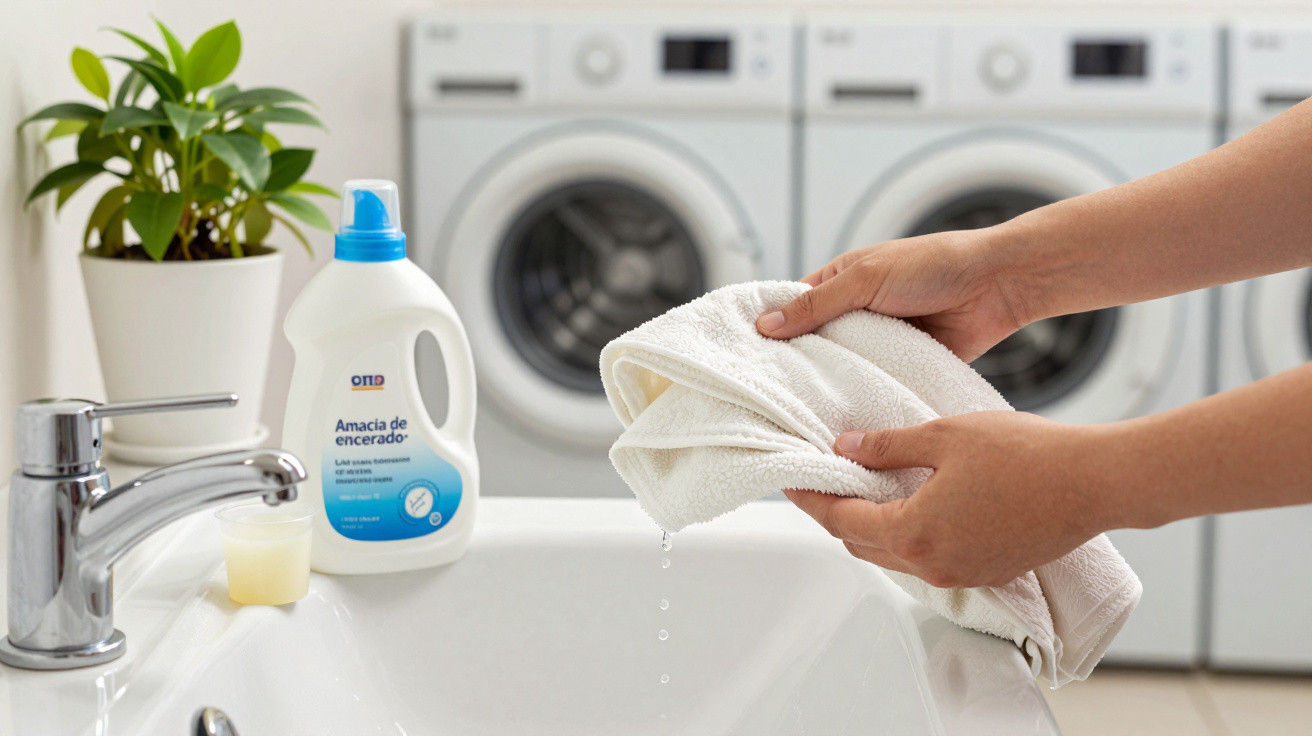
A gentler option is to pat rather than scrub. It may sound trivial, but it makes a noticeable difference. A kinder approach is to:
- use a clean, soft towel
- press the hands lightly instead of rubbing them back and forth
- dry between the fingers thoroughly but gently
It is important not to leave hands to dry in the air. As water evaporates, it also takes some of the body’s own moisture with it, drying the skin further. Anyone who is prone to cracks between the fingers benefits particularly from careful yet gentle drying.
Why spring quietly puts hands under strain
Once winter has passed, many people breathe a sigh of relief and mentally put hand care aside. That is a mistake: dry hands often become more pronounced again in spring.
The reason is the changeable environment: chilly mornings, warmer afternoons, wind and the first longer periods outdoors. Gardening, walks with a pushchair and sport in the park mean that skin suddenly has to cope with soil, pollen, tools and more contact with water.
In a clinical observation of hand care in spring, just under nine out of ten participants said their hands had improved noticeably simply through gentler washing and drying habits – even before they used additional skincare products consistently. Careful handling of water, soap and towels therefore has a measurable effect.
A minimalist routine: one product, clear steps
Once these habits become second nature, there is no need to abandon skincare completely; instead, it can be used very selectively. This saves money, time and tubes cluttering up the bathroom cabinet.
One possible minimal routine:
| Step | What happens? |
|---|---|
| 1. Wash hands with lukewarm water | The barrier is not overheated and lipids remain more stable. |
| 2. Use mild, replenishing soap | Cleanses while maintaining a thin protective film. |
| 3. Pat dry gently | Prevents micro-injuries and reduces evaporative moisture loss. |
| 4. Apply a glycerin cream in the evening | Retains moisture overnight and supports regeneration. |
For many people, a simple glycerin cream is entirely sufficient to keep hands supple for 24 hours – provided the skin is not under continual strain during the day. On an intact barrier, glycerin can hold water effectively without needing to be reapplied every few hours.
When extra hand care makes sense – and when it does not
Even with a minimal routine, some situations call for additional support: frequent disinfection in healthcare, substantial occupational contact with solvents, or existing skin conditions such as eczema. In these circumstances, dermatological advice should establish which products are genuinely required.
By contrast, continually “over-caring” for skin that is not actually under strain offers little benefit. Using several hand creams at the same time, particularly those containing fragrances, alcohol or drying ingredients, can irritate the skin further. Simplifying the routine often reveals that fewer types of product lead to more stable skin.
What terms such as barrier, glycerin and pH actually mean
A few technical terms come up repeatedly in relation to hand care, and they can quickly seem abstract. Understanding them makes it easier to assess your own routine.
- Skin barrier: the outermost layer of the skin, made up of cells and fats, much like a brick wall with mortar. If the “mortar” is missing, moisture escapes and irritants can penetrate more easily.
- Glycerin: an ingredient found in many skincare products that binds water. It works especially well when the barrier is not being repeatedly damaged.
- pH: a measurement of acidity. Skin is slightly acidic. Strongly alkaline soaps disrupt this balance and may weaken the skin’s defences.
Keeping these three factors in mind when looking at your own sink will usually lead to smarter choices automatically. A slightly more expensive mild bar of soap can achieve more in the long term than an entire army of hand creams.
Ultimately, it comes down to one simple principle: hands are not saved by the most spectacular skincare, but by treating water, soap and towels with respect. Those who take care with these basics often notice within a few weeks that their collection of tubes is gathering dust – while their hands look better than they did before.









Comments
No comments yet. Be the first to comment!
Leave a Comment