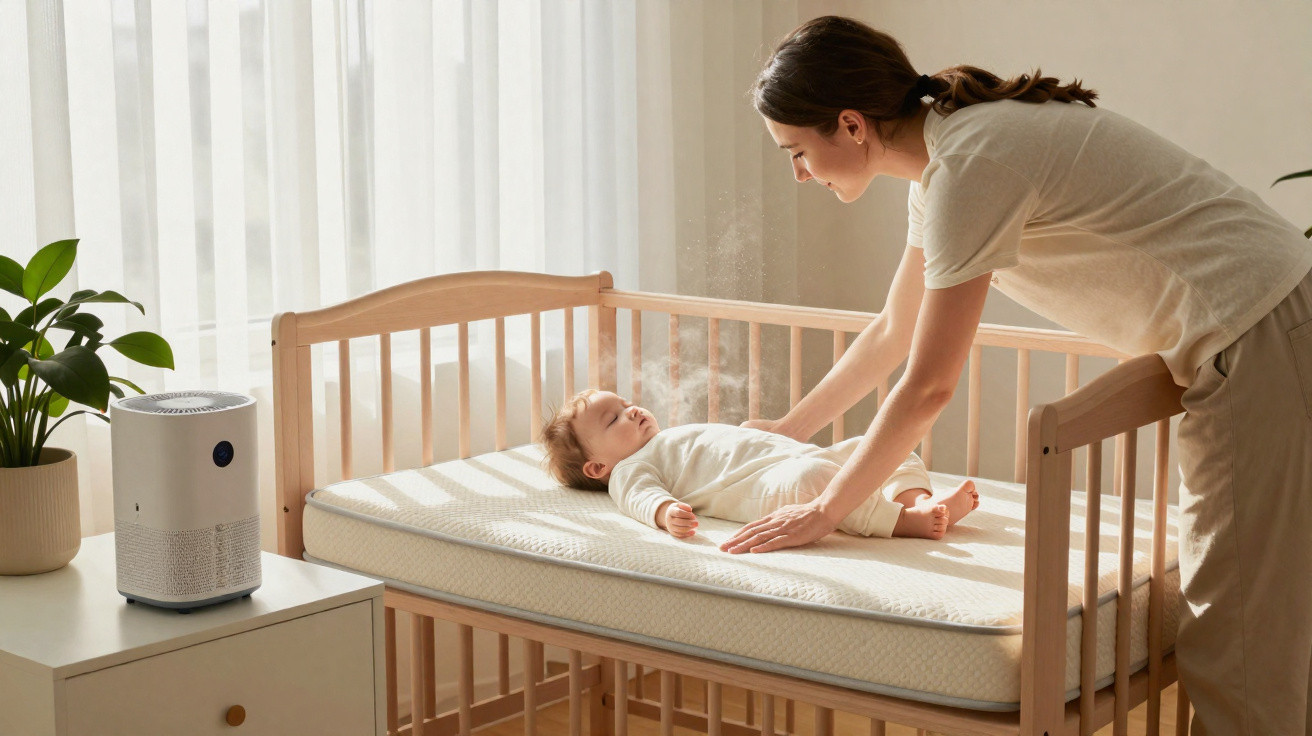
Chemical additives widely used in baby mattresses can enter the air immediately surrounding where young children sleep.
This exposure builds up over extended periods of rest, at an age when children’s bodies are developing quickly.
Additives in the baby mattress
New children’s mattresses available from large retailers contain chemical additives within both their foam cores and outer covers.
Miriam L. Diamond, Ph.D., of the University of Toronto documented this pattern. Her team tracked the release of these substances into the surrounding air under ordinary sleeping conditions.
The results indicate that exposure is not reliant on a mattress being old, damaged or worn: new products emit chemicals in normal use.
It is still unclear how far these low-level, repeated exposures add to overall risk. This makes it important to assess how emissions change when a child is lying on the mattress.
Heat and pressure raise emissions
Heat and weight altered the release of semi-volatile organic compounds from mattresses. These chemicals can gradually escape from products into air and dust.
Skin warmed to nearly 100 degrees Fahrenheit (37.8 degrees Celsius), combined with around 17 pounds (7.7 kilograms) of pressure, increased emissions. Heat accelerated molecular movement, while pressure forced trapped air outwards.
Researchers identified 12 target compounds at room conditions, whereas simulated sleeping conditions resulted in detections of 21 substances.
This rise is significant because families cannot detect these emissions by smell, and a lack of odour does not mean a product is cleaner.
A still sleeping zone
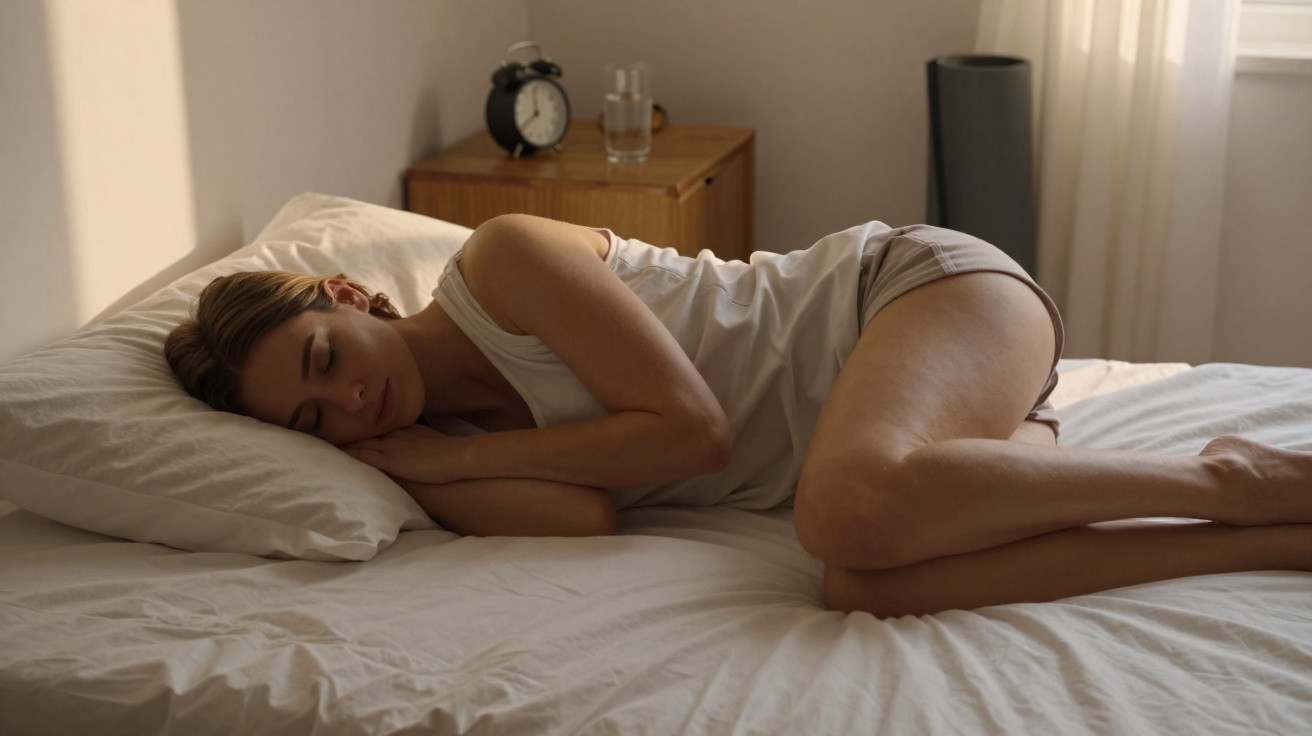
A cot contains a small volume of air, and a child’s sleeping microenvironment - the nearby air and surfaces - remains particularly still.
Infants may spend up to 18 hours each day on a mattress, while air only a few inches from foam circulates more slowly than the wider room air.
The researchers measured air above the mattress against air elsewhere in the room and found that elevated concentrations remained nearer the bed.
Consequently, ventilating the room may not remove exposure during sleep, as the warmest air stays directly beneath the child.
Chemicals in mattress covers
Mattress covers contained several additives, including phthalates - plasticisers used to soften plastic in many consumer goods - alongside other chemical treatments.
As manufacturers do not chemically bind these substances into the materials, they may transfer to dust and adhere to skin oils and fabrics.
The team also detected UV filters, which are used to protect fabric dyes from sunlight, and one mattress surpassed a regulatory limit of 0.1 percent.
A further five exceeded 0.1 percent thresholds applied to toys, illustrating how mattresses can fall outside regulations designed for smaller products.
Mattress foam and flame retardants
The foam also contained organophosphate esters, which are used as flame retardants or softeners, with some mattresses containing them at percentage levels.
Although these compounds can help foam resist smouldering, heat and pressure can cause them to escape as air pockets are compressed.
The team found tris(2-chloroethyl) phosphate in one mattress, despite its prohibition in Canadian children’s foam products under Schedule 2.
This result indicates that banned additives may reach new products when manufacturers do not consistently test and verify their materials.
What chemicals do in bodies
The National Toxicology Program identifies di(2-ethylhexyl) phthalate as reasonably anticipated to be a human carcinogen.
Certain phthalates may disrupt the endocrine system, affecting the hormones that direct growth and influence developmental timing.
A 2013 review brought together evidence associating particular phthalate exposures with asthma, reproductive effects and changes in child behaviour.
These associations do not identify any individual mattress as the cause, but they reinforce calls to eliminate additives that are not needed.
Rules that lag products
In the United States, the Consumer Product Safety Commission limits several phthalates in children’s toys and child-care articles.
The restriction centres on hand-to-mouth exposure because babies often put bedding in their mouths and consume dust that has collected chemicals from soft materials.
Mattresses can nevertheless pass through regulatory gaps, as limits may vary by product category and manufacturers seldom publish complete ingredient lists.
Where regulations fail to keep pace with product design changes, enforcement becomes reactive and prioritises speed over safety.
Limits of green labels
Consumers often seek out green certifications, but the research found that comparable mattresses could have different formulations only a few years later.
If a manufacturer changes a cover material or foam supplier, its package of additives may also change despite the brand name remaining the same.
In the study, six duplicate pairs purchased roughly two years apart had different chemical profiles, in some cases moving in opposite directions.
Such changes mean that one-off testing and individual certifications are unreliable indicators, particularly for families with limited budgets.
Steps that cut exposure
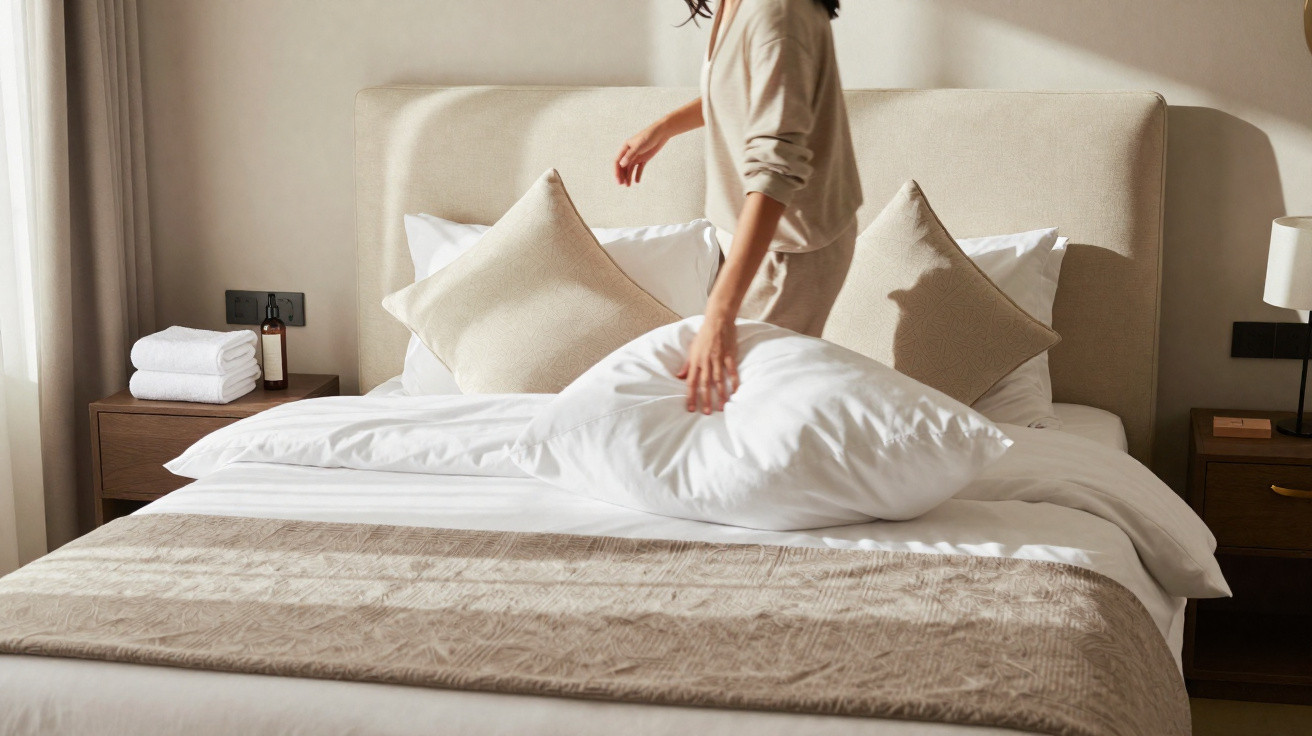
Parents cannot inspect an unavailable ingredient list, but they can limit contact by controlling dust and using washable layers.
Regular wet cleaning, handwashing and washing sheets can remove dust containing these chemicals, as they adhere to particles.
“We were really shocked to find what was in the mattresses,” said Diamond. Consumers are rarely given enough information to prevent such a surprise.
What a safer mattress market needs
The findings link mattress ingredients with the air a child breathes while sleeping, where normal warmth and body weight increase chemical emissions.
Stronger standards, more transparent labels and regular compliance testing would achieve more than consumer advice alone, particularly for lower-cost products.



Comments
No comments yet. Be the first to comment!
Leave a Comment