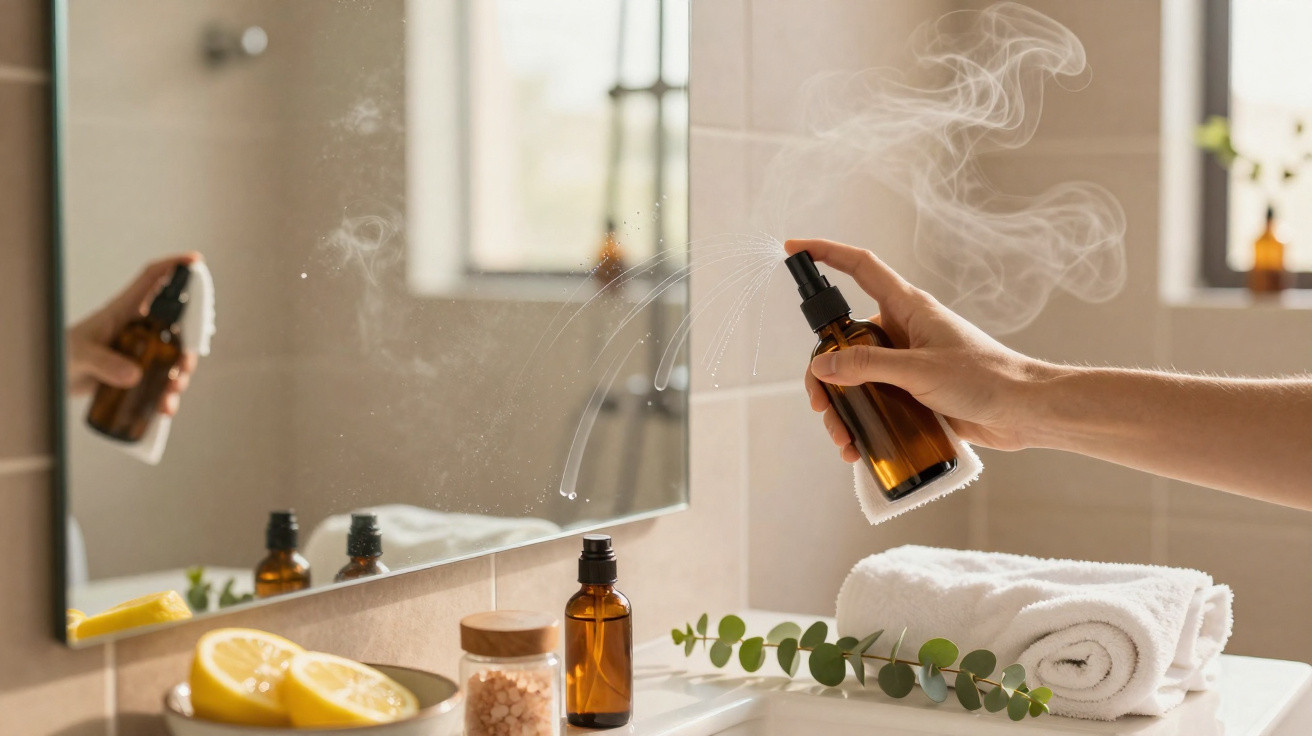
A faint film of old streaks, fingerprints and pale rings from previous cleaning attempts covers the surface. Then hot water strikes the tiles, steam fills the room, and within three minutes the bathroom becomes a miniature tropical cloud in which your face simply… vanishes.
You run a hand over the glass and create a smear. A towel leaves fluffy residue behind. You reach for the old hairdryer trick, but on a weekday morning, who genuinely has time for that?
At a small spa hidden behind a hotel reception, I saw a different approach in action. A therapist cleaned a mirror once with an uncomplicated natural mixture. Even after four showers, it had not steamed up. She smiled and said, “We stopped fighting the steam. We changed the glass.”
Why spa mirrors seem magically fog-free
Step into any reasonably good spa after a busy run of hot showers and something stands out. The air is dense, warm and scented with eucalyptus, but the mirrors are not covered in fog as they would be at home. Their edges may appear soft and slightly hazy, yet you can still see your face clearly enough to tidy an errant eyebrow or arrange your hair.
It hardly appears to be a high-tech solution. There are no flashing devices or whirring fans, only calmly clear glass in a room that ought to be full of steam.
That serene mirror effect is not created by an expensive, salon-exclusive spray tucked away in a cupboard. At many smaller spas, the answer is an old-fashioned mixture kept in an unglamorous plastic bottle. Its value is in the way it alters water's behaviour on glass.
A spa owner in Brighton told me that she had nearly lost hope with her mirrors. “We were wiping them every 20 minutes,” she said, laughing. “Staff were exhausted, guests were annoyed, and the glass always looked tired.” An older therapist who had worked on cruise ships then took out her notebook and wrote down a three-ingredient formula.
They tried it on just one mirror. Following a day of fully booked steam sessions, that was the only mirror clear enough for guests to put on lipstick. Within a week, every glass surface in the wet area had been treated.
Housekeeping took less time, while guest complaints about “dirty mirrors” disappeared. Instead of constantly wielding microfibre cloths, staff only needed an occasional quick spray. The owner estimates that mirror-cleaning time fell by almost 60%. For a small business where every staff minute matters, that is not merely cosmetic; it is survival.
The spa method makes immediate sense once you know what occurs when a mirror fogs. Fog is not grime: it is made up of thousands of minuscule droplets clinging to microscopic flaws in the glass surface. Every droplet scatters light, disrupting your reflection in millions of places simultaneously.
Natural spa mixtures do not attempt to “fight” steam. Instead, they alter the water's surface tension, meaning that rather than beading into tiny droplets, it spreads as a very fine, nearly invisible layer. Light travels through it more evenly, so your face does not disappear behind a grey haze.
The mixture also deposits an almost imperceptible protective coating on the mirror. Applied properly, it does not feel greasy, but it makes condensation less able to cling to the surface. One treatment can therefore remain effective through several hot showers, without repeated mirror wiping.
The natural blend that keeps mirrors clear in one go
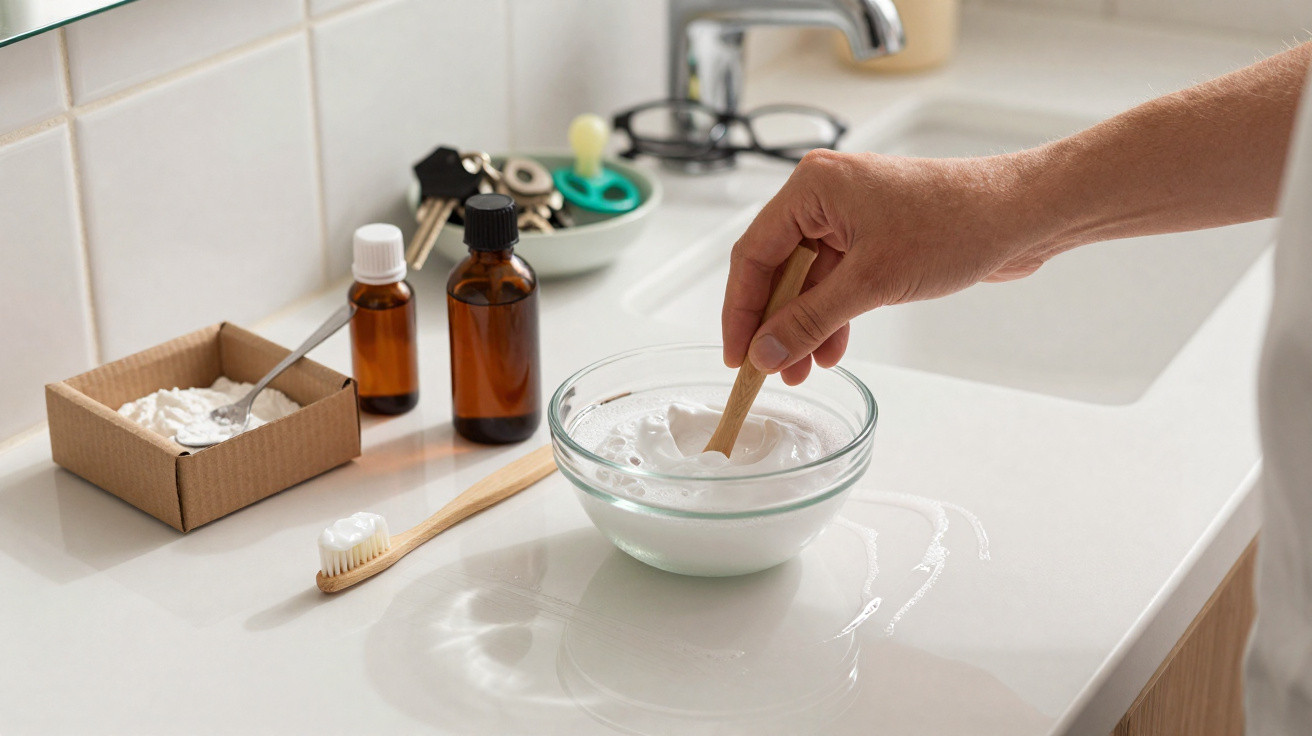
The spa mixture mentioned most often is remarkably straightforward: equal quantities of white vinegar and water, with a restrained squeeze of clear natural liquid soap. Some spas use a teaspoon of diluted food-grade glycerin in place of the soap for an even silkier finish, although the foundation remains unchanged: water, vinegar and a surfactant to reduce surface tension.
Put the ingredients into a spray bottle, shake it gently, and it is ready to use. The real technique lies not in the bottle, but in the application to the glass.
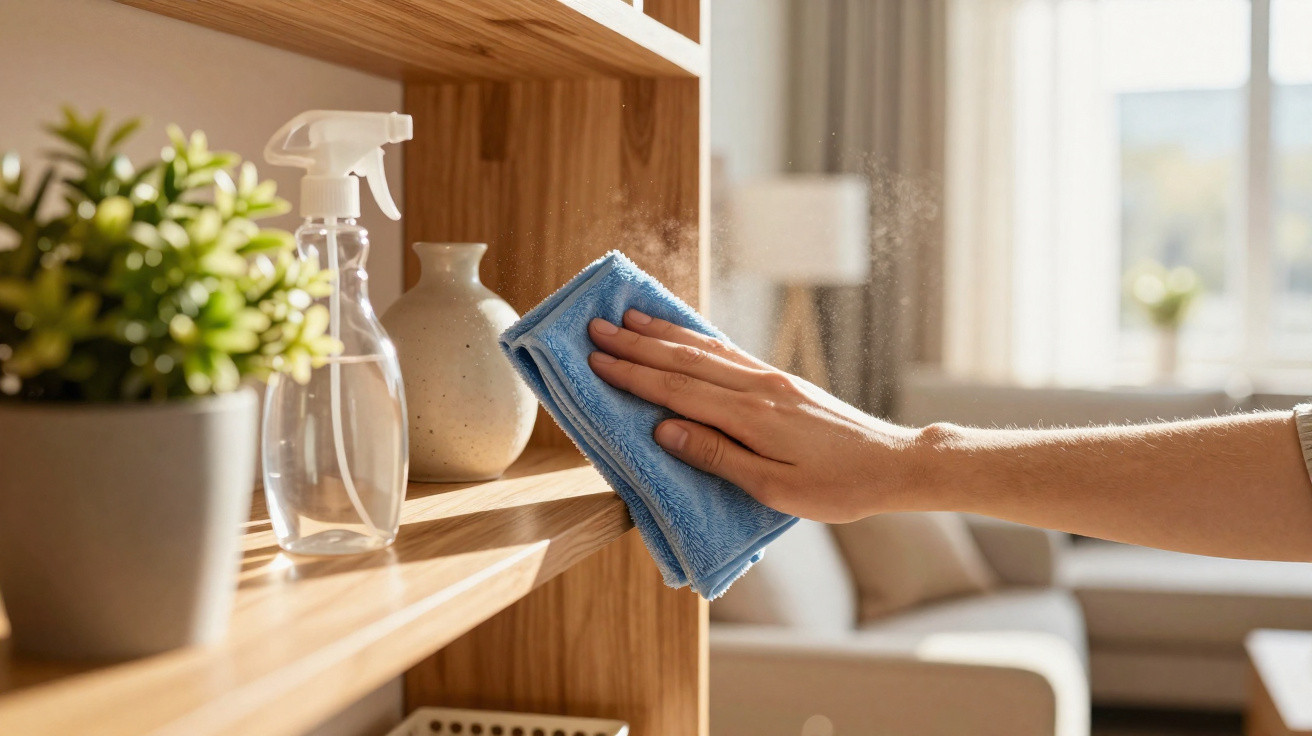
Begin with a dry, clean mirror. Apply a fine mist rather than soaking it. Next, use a soft microfibre cloth to distribute the mixture in broad, overlapping passes. Continue until the glass is transparent and no streaks remain. This final buffing stage creates that “once and done” result.
A spa therapist in Lisbon recalled using the mixture at home for the first time. “I treated half my bathroom mirror and left the other half alone,” she told me. After showering, one half resembled a steamy crime scene and the other looked untouched. She called her partner in simply to make sure she was not imagining it.
At home, there may not be the relentless volume of steam found in a spa, but the outcome remains unexpectedly satisfying. Prepare the mirror one evening, apply the mixture once, and for days you can take hot showers without drawing shapes through the condensation just to locate your own eyes.
Comparable recipes circulate on social media in slightly altered forms: a drop of baby shampoo instead of soap, a spoonful of glycerin instead of vinegar, or essential oil added solely for fragrance. The principle does not change. A basic natural blend changes the way water meets glass, and one careful application lasts far longer than expected.
A few mild guidelines ensure this spa trick feels magical rather than leaving a streaky disaster. Use soap or glycerin sparingly. Overdo it and the mirror will appear to be covered by a greasy filter. One or two drops in a small spray bottle are enough to cover the glass when the cloth does its job.
Avoid abrasive fabrics. Old T-shirts and paper towels often deposit lint or cause fine scratches that later attract fog again. A good microfibre cloth is genuinely worthwhile here. Let us be honest: nobody really does this every day. That is why both the mixture and your method of spreading it must do the hard work for more than a single shower.
One further point: avoid spraying directly on to the mirror frame, particularly if it is wooden or metal and does not tolerate vinegar well. If your aim is uncertain, spray the cloth instead. A few additional seconds of care now can prevent warped edges and small rust marks later.
“We had so many guests asking for the ‘no-fog mirror spray’ that we ended up bottling our blend in little 50 ml travel sizes,” said Clara, who runs a small mountain spa in the Alps. “It’s the cheapest thing we sell, but it’s the one they talk about the most when they come back.”
There is something almost childishly satisfying about seeing steam fail to cling to glass you prepared yourself. It feels a little like bypassing the rules of the bathroom, with none of the harsh chemical scent lingering after a shower.
- Basic formula: 1 part white vinegar, 1 part water, 1–2 drops natural liquid soap (or glycerin).
- Application: spray lightly, spread with microfibre, buff until crystal clear.
- Rhythm: reapply every few days, or when you notice fog returning.
- Bonus touch: add one drop of essential oil (lavender, eucalyptus) if you enjoy a spa-style fragrance.
Clear mirrors, clearer moments
A small psychological change takes place when the bathroom mirror does not disappear every morning. Rather than beginning the day by battling condensation with your forearm, you look up and see your own face: sharp and present, even while steam still wraps around the room. On a hectic weekday, that little moment of ease can feel unexpectedly luxurious.
We have all experienced stepping out of the shower late, finding the mirror reduced to a white wall, and squinting at a reflection through a small circle just wiped with a hand towel. It is only a minor irritation, but it accumulates. A simple mixture that works through several showers is less about the mirror itself and more about removing one small daily source of friction: the sort you notice only when it has gone.
What makes this spa practice particularly appealing is how easy it is to share. The formula can be sent to a friend in a single message. You can prepare a bottle in minutes and discreetly treat the mirror before weekend guests arrive. You can also experiment, changing the water-to-vinegar ratio until you discover the ideal balance between shine and lasting power.
For anyone keen to explore further, there is room for debate. Does glycerin remain effective for longer than soap on your mirror? Does the bathroom's ventilation alter how frequently the treatment needs reapplying? Could one drop of essential oil make you look forward to an evening shower just a little more?
None of this is life or death, and that is part of its appeal. It is a small act of care that can turn a rushed, foggy morning into something slightly calmer and more deliberate. The mirror remains clear. The steam can do as it pleases. You have quietly changed the rules of the room.
| Key point | Detail | Benefit for the reader |
|---|---|---|
| Natural spa blend | A mixture of water, white vinegar, and a drop of soap or glycerin | Easy to make at home using inexpensive ingredients |
| Single-application effect | One careful treatment keeps mirrors clear through several showers | Less everyday effort and fewer hurried “mirror battles” after hot showers |
| Gentle, low-tox routine | No harsh chemical sprays; the scent can be customised with essential oils | Makes the bathroom feel more like a spa and less like a cleaning-products aisle |






Comments
No comments yet. Be the first to comment!
Leave a Comment