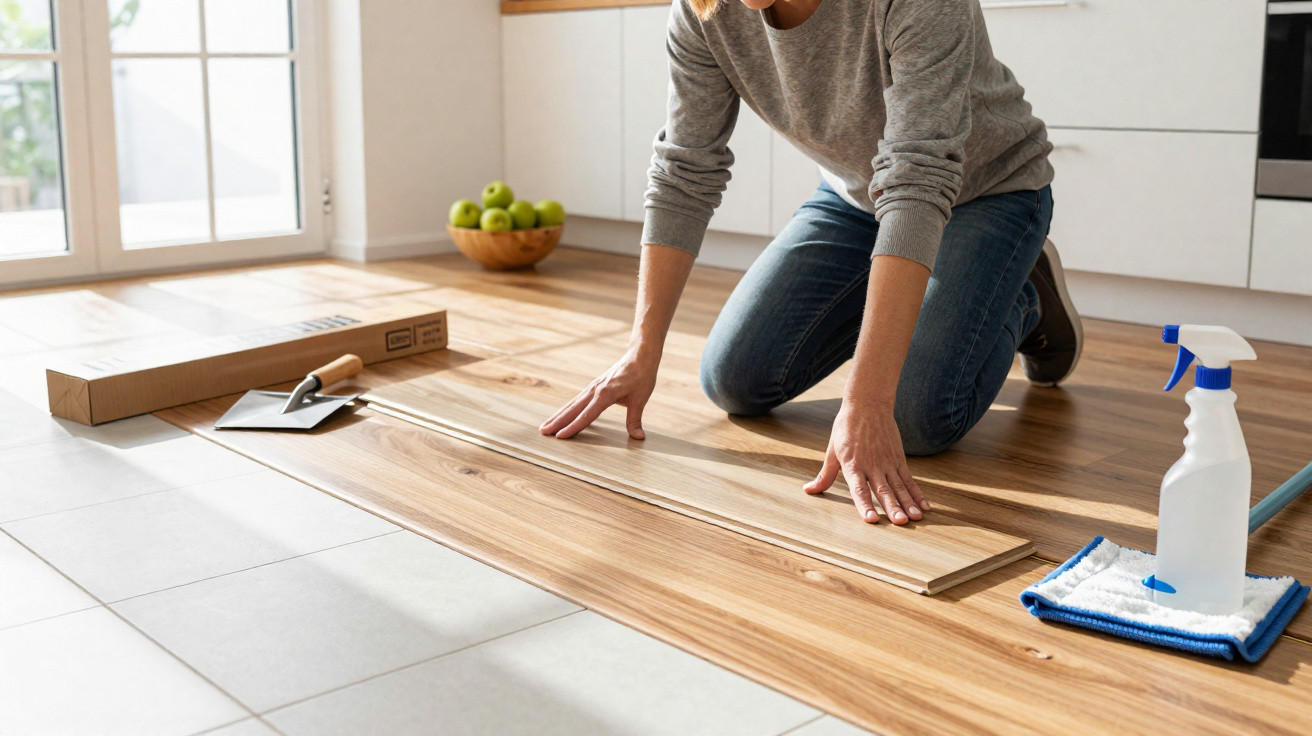
Replacing traditional rigid flooring with modern coverings makes a kitchen renovation quicker. Glued vinyl flooring stands out as a lightweight, practical alternative, delivering an elegant, low-maintenance finish without requiring lengthy work at home.
Why is vinyl flooring ideal for the kitchen?
Choosing vinyl flooring changes the kitchen by removing the excessive weight associated with conventional coverings. Its PVC composition provides structural lightness, making it easier to handle while modernising the home space.
As well as reducing the load on the structure, the material offers greater thermal comfort for everyday use. Residents benefit from a comfortable surface underfoot, bringing together refined style and everyday practicality while retaining the desired visual elegance.
What makes vinyl flooring the ideal choice for replacing old tiles?
This innovative technology makes it possible to refresh rooms without breaking anything, ensuring remarkable convenience and an immaculate appearance throughout… Read more
How does installation over the old floor simplify renovation work?
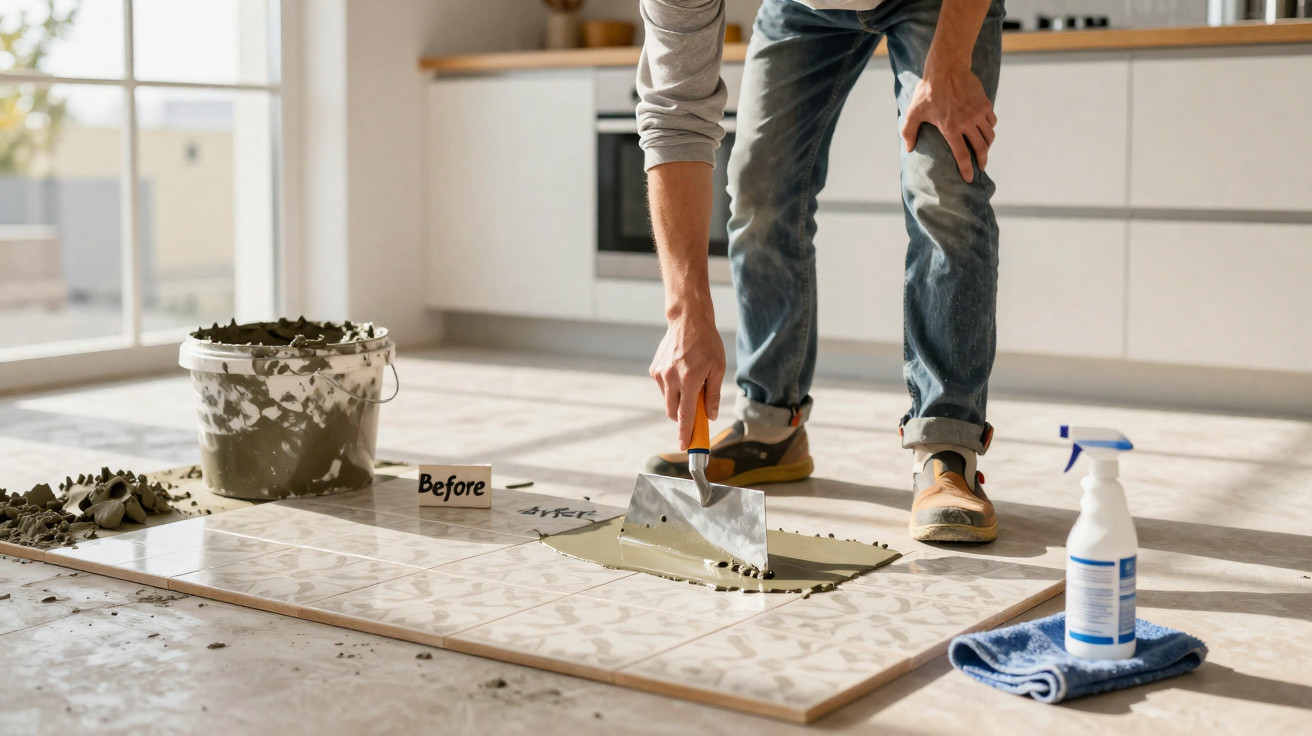
Being able to fit the planks directly over existing surfaces cuts both costs and waste. Installation only requires prior levelling with self-levelling screed, ensuring the base is completely smooth and even before bonding.
With no need to remove old coverings, the project timetable becomes exceptionally fast. Quick installation reduces disruption at home, so the family can use the space without extended interruptions or an excessive build-up of dust in the room.
Below is a video from Tarkett Brazil’s YouTube channel that explores the points discussed in this topic in greater depth:
What are the cleaning benefits of vinyl flooring?
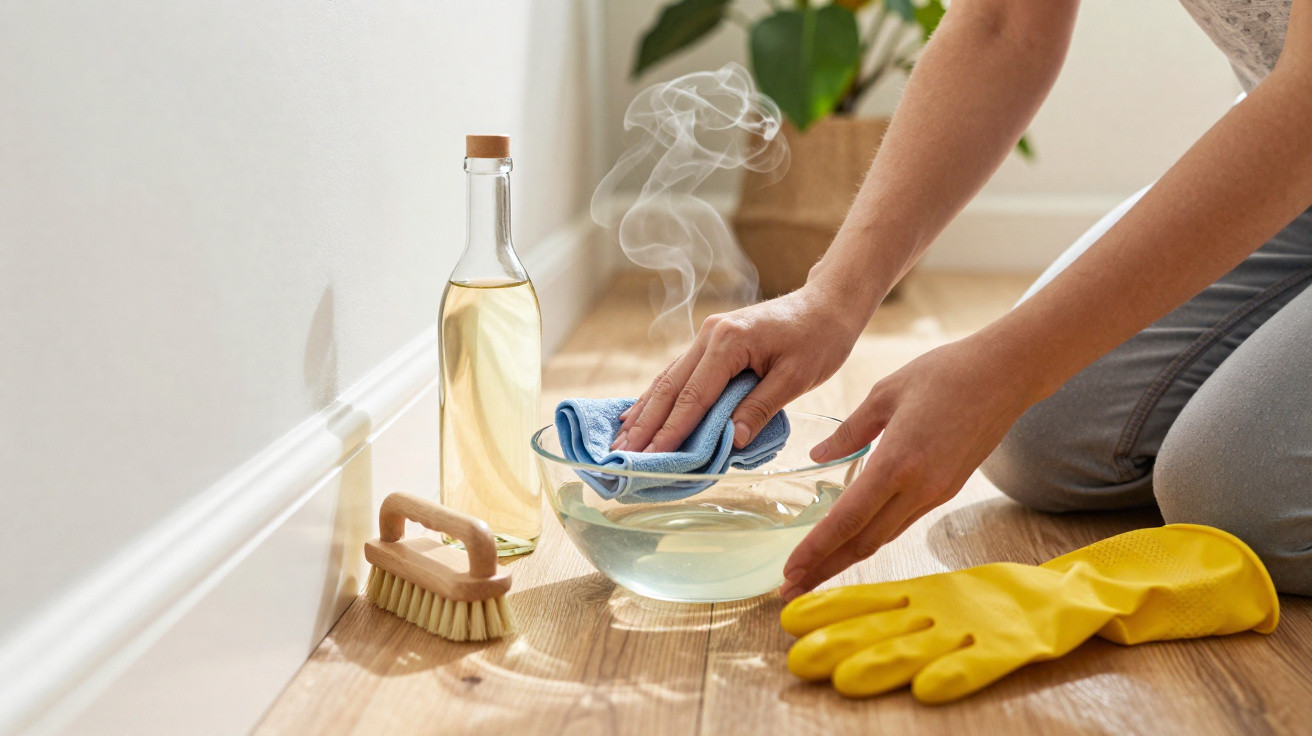
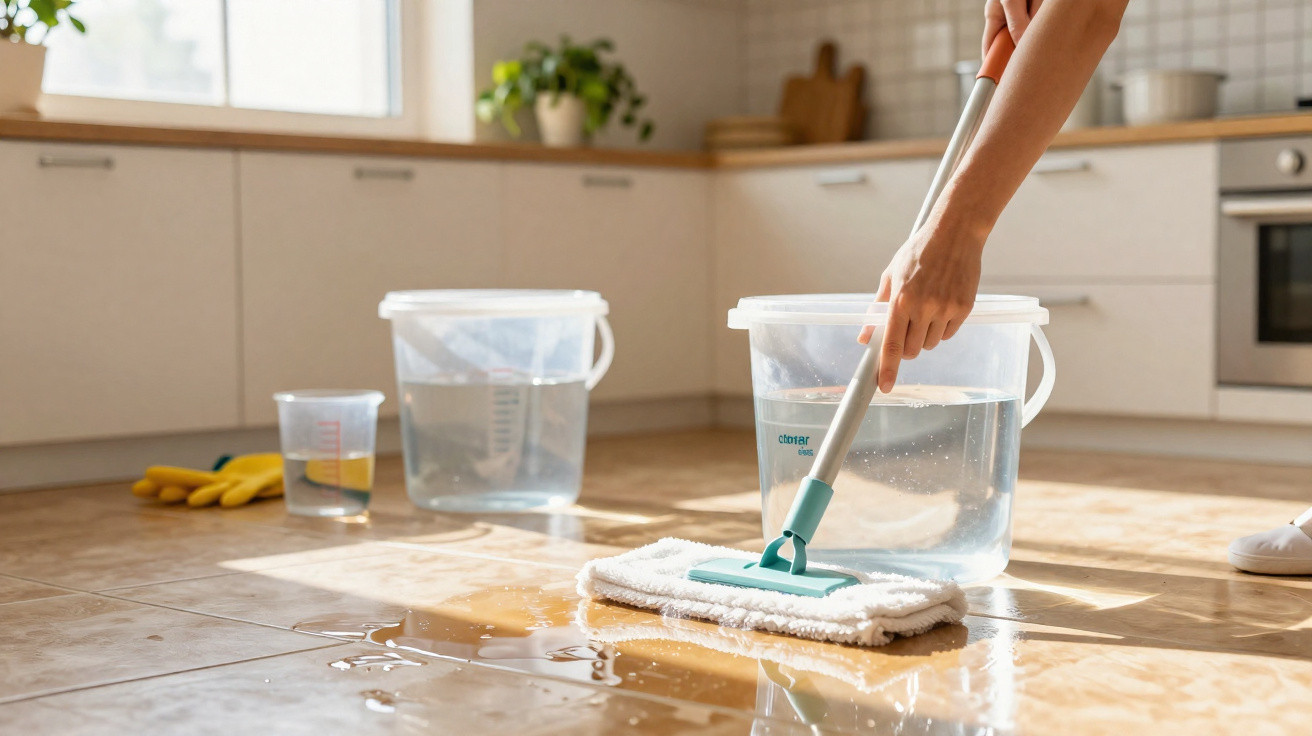
Everyday care for this covering is straightforward and does not require harsh chemicals or waxes. Effective cleaning only calls for neutral detergent diluted in water, removing residue without harming the surface installed in the kitchen.
Unlike ceramic tiles with wide grout lines that readily collect grease, glued vinyl planks have precise joins. This feature prevents deep dirt build-up, making the household cleaning routine more practical.
Essential kit for renovating a kitchen with vinyl flooring
Essential items
See the resources needed to ensure a clean, efficient installation for your project:
- Self-levelling screed to prepare the subfloor surface without residue;
- High-bond adhesive designed specifically for glued vinyl flooring;
- Neutral detergent for simple, regular cleaning of the surface.
What ensures vinyl flooring withstands daily use?
The durability of flooring in high-traffic areas is linked to its protective surface layer. This technology forms a barrier against accidental spills of sauces, oils and drinks commonly used when preparing daily meals.
Its high stain resistance prevents dark pigments from penetrating the material over time. As a result, the covering retains its original colour and refreshed appearance, even under constant, intensive use in the family routine.
Below are the key factors that increase the durability of kitchen flooring:
- A highly resistant protective layer against stains and scratches caused by everyday use;
- A flexible PVC structure that absorbs light impacts without cracking or chipping;
- A surface treatment that prevents grease and pigmented liquids from penetrating.
What care prevents water from building up on the covering?
Although vinyl flooring is highly durable, standing water should not be left on it for long periods. A continual build-up of liquid can affect the bonding adhesive, so any splashes should be dried promptly to protect the floor.
Strictly following the manufacturer’s recommendations and always keeping a dry cloth nearby ensures excellent preservation. In this way, the kitchen remains functional, attractive and protected from premature wear through many years of continuous, efficient use.

Comments
No comments yet. Be the first to comment!
Leave a Comment