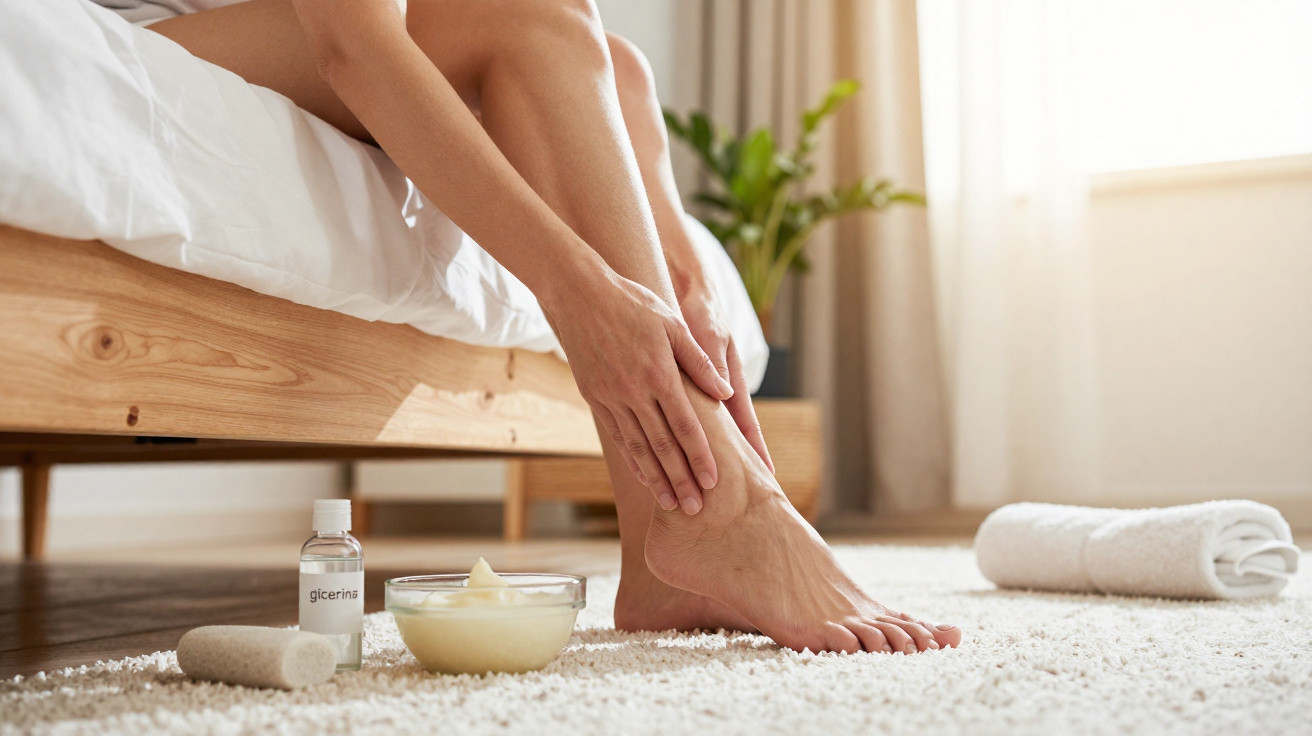
Homemade cream for cracked heels has become increasingly popular because it combines simple ingredients that boost moisturisation and help restore the softness of dry skin.
Why do heels commonly crack?
Severe dryness is among the leading reasons for cracks in the feet. Walking barefoot, wearing open shoes and spending long periods standing can all encourage these fissures to develop.
As the skin loses water, it becomes thicker and less flexible. Without regular moisturising, minor cracks may widen and make everyday activities uncomfortable.
Does the glycerine, saline solution and moisturiser mixture work?
A blend of glycerine, saline solution and either a body moisturiser or a foot cream is widely used to improve the skin's ability to retain moisture.
Glycerine draws water towards the skin's surface, while saline solution supports hydration. The moisturising cream then forms a protective layer that limits water loss throughout the day.
How should it be applied for the best results?
Ideally, apply a generous layer of the cream to the heels before bed, massaging it in until the skin has absorbed the product.
To enhance moisturisation, many people wear cotton socks overnight. This keeps the product against the skin for longer and can promote a softer feel upon waking.
How do you make the ultra-moisturising homemade cream?
The recipe is straightforward and uses products that are readily available from pharmacies and supermarkets. Before applying it, wash and dry your feet thoroughly to help the ingredients absorb more effectively.
A practical way to make the mixture is to use the following amounts:
- 1 tablespoon of liquid glycerine;
- 1 tablespoon of saline solution;
- 2 tablespoons of your preferred moisturiser.
What care can help prevent further cracks?
Alongside frequent moisturising, certain habits can help keep feet healthy. Avoiding very hot showers and removing excess hard skin only when needed also helps protect this area.
If the fissures are deep, cause severe pain, bleed or show signs of infection, seek assessment and appropriate treatment from a dermatologist or another healthcare professional.








Comments
No comments yet. Be the first to comment!
Leave a Comment