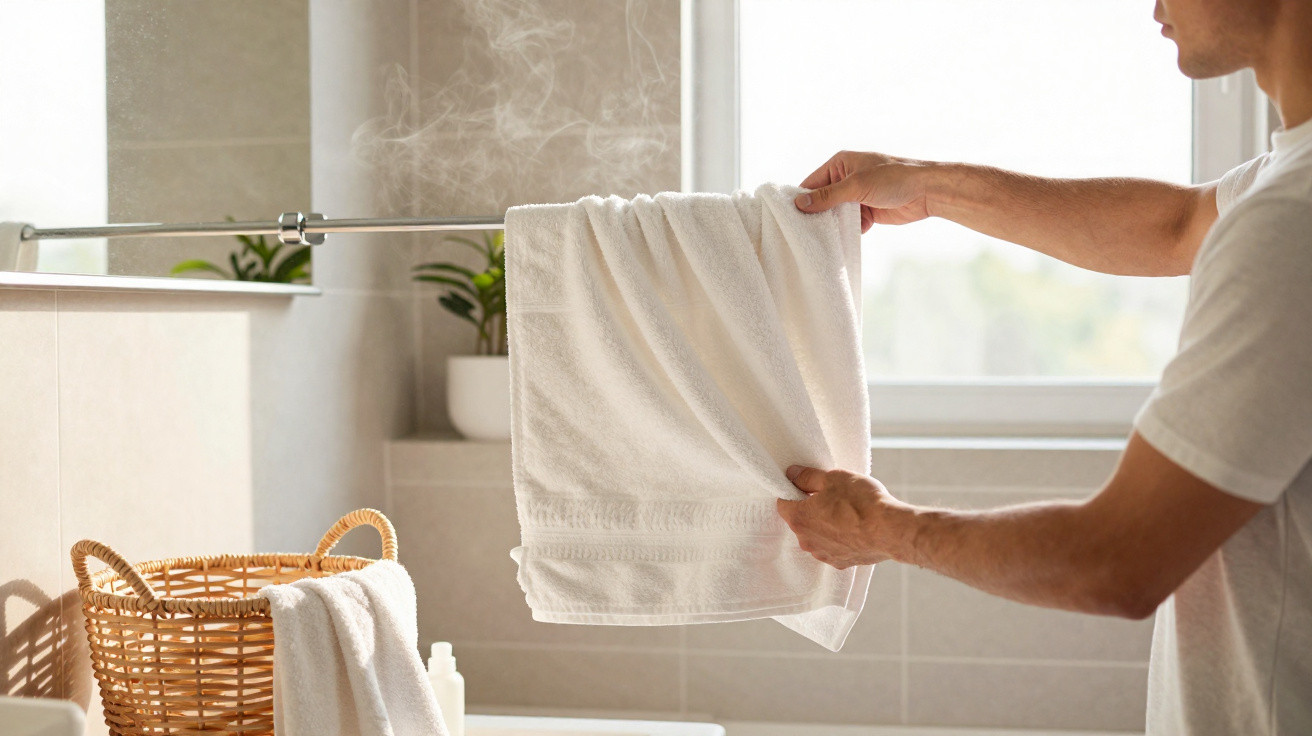
A bath towel may look clean after drying a freshly washed body, yet every use leaves it holding moisture, dead skin cells and microorganisms. As a practical guideline, it can be changed at least once a week if it is able to dry fully between showers. In particularly humid settings, however, it should be replaced more often.
Why is one week a sensible guide for changing a towel?
For a healthy person using an individual towel that dries completely after showering, a fresh towel every other day is not generally required. Conversely, leaving it for ten days or longer extends the time that residue, moisture and microorganisms build up within the fibres. Changing or washing it at least weekly is a practical middle ground between these two extremes.
This timing is not a fixed expiry date. An unpleasant smell, visible dirt or a towel that stays damp for many hours are all reasons to wash it sooner, even when a week has not yet passed.
- Change the towel at least once a week under normal conditions;
- Wash it earlier if it develops a damp smell;
- Do not wait seven days if the fabric never dries fully;
- Use an individual towel whenever possible;
- Wash it straight away if there is visible dirt.
What happens to the fabric after every shower?
When it dries the skin, a damp towel absorbs water, dead cells, natural oils and microorganisms that are naturally present on the body. The issue becomes greater if it remains wet, as a damp environment prolongs survival and encourages the growth of bacteria, fungi and yeasts within the fibres.
Why can bathroom humidity mean changing towels more often?
In an enclosed bathroom with plenty of steam and limited airflow, a towel takes longer to dry. Reusing it every day in these circumstances means wetting it again before the previous moisture has disappeared entirely. In very humid homes, it may need washing two or three times a week.
How it is hung also makes a difference. Spreading the towel fully over a rail exposes more of its surface to the air and helps moisture evaporate. Leaving it folded, bunched up or held by only one small point makes drying more difficult.
- Spread the towel out completely after showering;
- Choose a spot with good air circulation;
- Avoid leaving it wet on the bed or in the laundry basket;
- Do not pile several damp towels together;
- During very humid periods, change it more frequently.
Does sharing the same towel alter how often it should be washed?
Yes. A shared towel collects microorganisms and residue from more than one person, and it is also usually used more often over the same period. Ideally, everyone in the household should have their own towel, especially if somebody has a skin infection, fungal infection or another potentially transmissible condition.
- Keep one towel for each person in the household;
- Do not share towels during skin infections;
- Wash towels used at the gym more frequently;
- Avoid storing a still-damp towel inside bags or rucksacks.
The best interval also depends on how the towel dries
The one-week guideline is intended for an individually used towel that remains clean and can dry between showers. If the bathroom is humid, the towel stays continually wet or it starts to smell, it should be changed earlier. For this reason, two days may be unnecessarily frequent in some homes, while seven days may be too long in others.
Rather than strictly counting the days, it is more important to check the condition of the bath fabric. Keeping the towel spread out, promoting ventilation and washing it as soon as an odour or persistent dampness appears reduces the time its fibres remain favourable for microorganisms to multiply. Under normal conditions, changing it weekly provides a straightforward benchmark for organising this routine.





Comments
No comments yet. Be the first to comment!
Leave a Comment