
Removing sweat stains from clothing is a frequent everyday challenge, particularly with light-coloured garments and delicate fabrics. Warm weather increases perspiration and, when combined with deodorant, it can create yellow marks under the arms, around collars and across the back. Of the household remedies available, white vinegar is a straightforward, affordable option widely used for home care.
Why is vinegar effective for removing sweat stains?
White distilled vinegar has a moderate acidity that can reach the fabric fibres and help break down the residue responsible for sweat stains. It can also neutralise odours produced by bacteria in perspiration, helping frequently worn clothes feel fresh again.
As well as tackling the visible stain, vinegar helps loosen deodorant residue and mineral salts from sweat. These can build up over time and make the underarm area feel stiff. It generally works well on synthetic materials such as polyester, although particularly old stains may need more than one treatment.
How do you use vinegar to remove a sweat stain from clothing?
Using vinegar to remove a sweat stain is easy, but you should follow the garment care label, particularly for delicate items such as silk or fabrics with sensitive dyes. If you are unsure, test the solution on a concealed area before treating the main stained section.
This basic method helps make the most of the cleaning properties of white distilled vinegar without harming the fabric fibres:
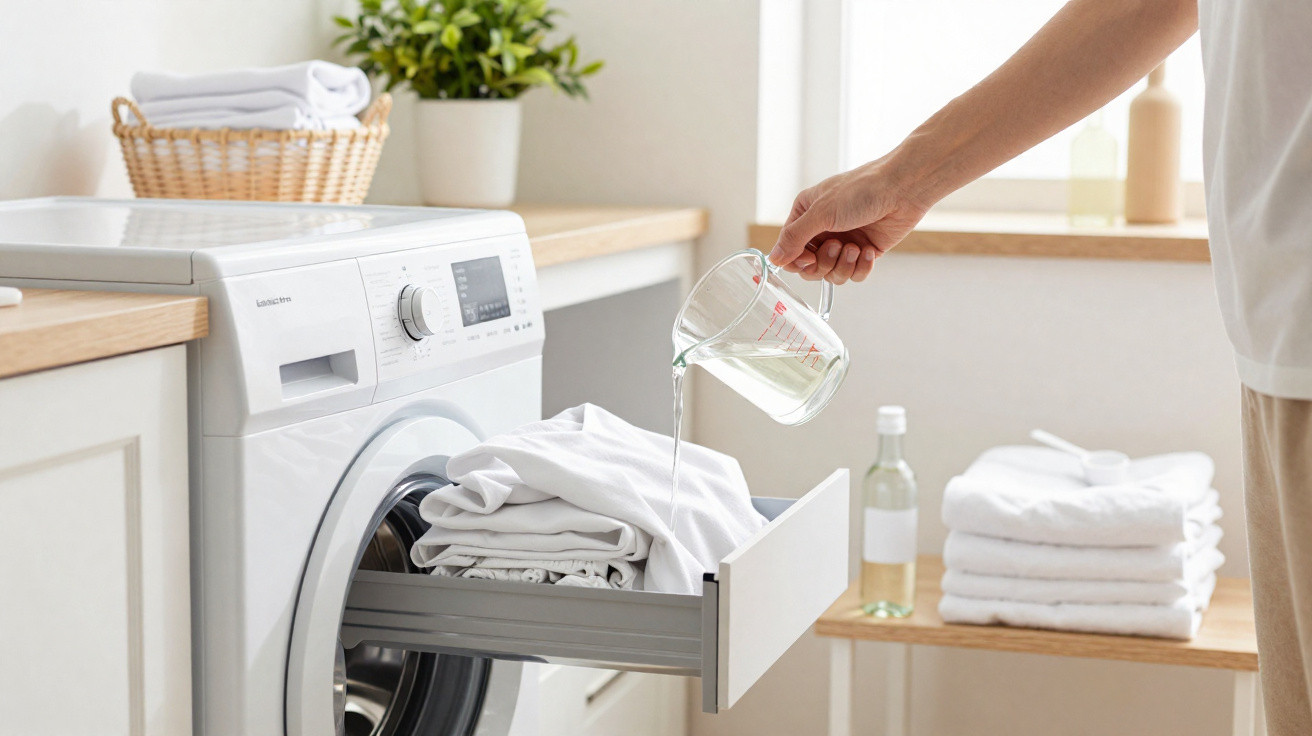
- Make the solution: combine equal parts water and white distilled vinegar in a clean container.
- Wet the stained area: ensure the sweat-marked section is completely covered by the mixture.
- Soak the garment: leave the item immersed for 20 to 30 minutes, allowing the liquid to work through the fibres.
- Check the result: once the waiting time has passed, see whether the stain has visibly lightened.
- Wash as usual: put the garment in the washing machine or hand-wash it with your normal detergent.
Does vinegar remove sweat stains from every type of fabric?
Fabrics do not all respond to vinegar in the same way, so its use should be adapted to the material. Cotton and cotton-polyester blends usually give the best results, whereas very delicate garments may require gentler methods.
The following practical precautions can reduce the risk of damage and improve the results of using vinegar on sweat stains:
- Always dilute it: do not use neat vinegar; mix it with water to make it less harsh.
- Avoid vigorous rubbing: heavy friction can harm fibres, especially in fine knitwear.
- Test coloured clothing: for dark or patterned garments, always carry out a patch test in a hidden area.
- Use it as a pre-treatment: vinegar prepares the fabric but does not replace detergent in the final wash.
What care should you take after using vinegar to remove a sweat stain?
After applying vinegar, rinsing properly is essential to remove any excess product and prevent its distinctive smell from lingering in the garment. Washing with your usual detergent is normally enough to neutralise the odour and complete the cleaning process.
When drying, choose a well-ventilated shaded place and avoid strong direct sunlight on the treated area, especially on white clothing. The combination of sweat residue, cleaning product and intense sunlight can change the fabric colour. Simple care like this can help garments last longer and reduce premature disposal caused by unwanted stains.










Comments
No comments yet. Be the first to comment!
Leave a Comment