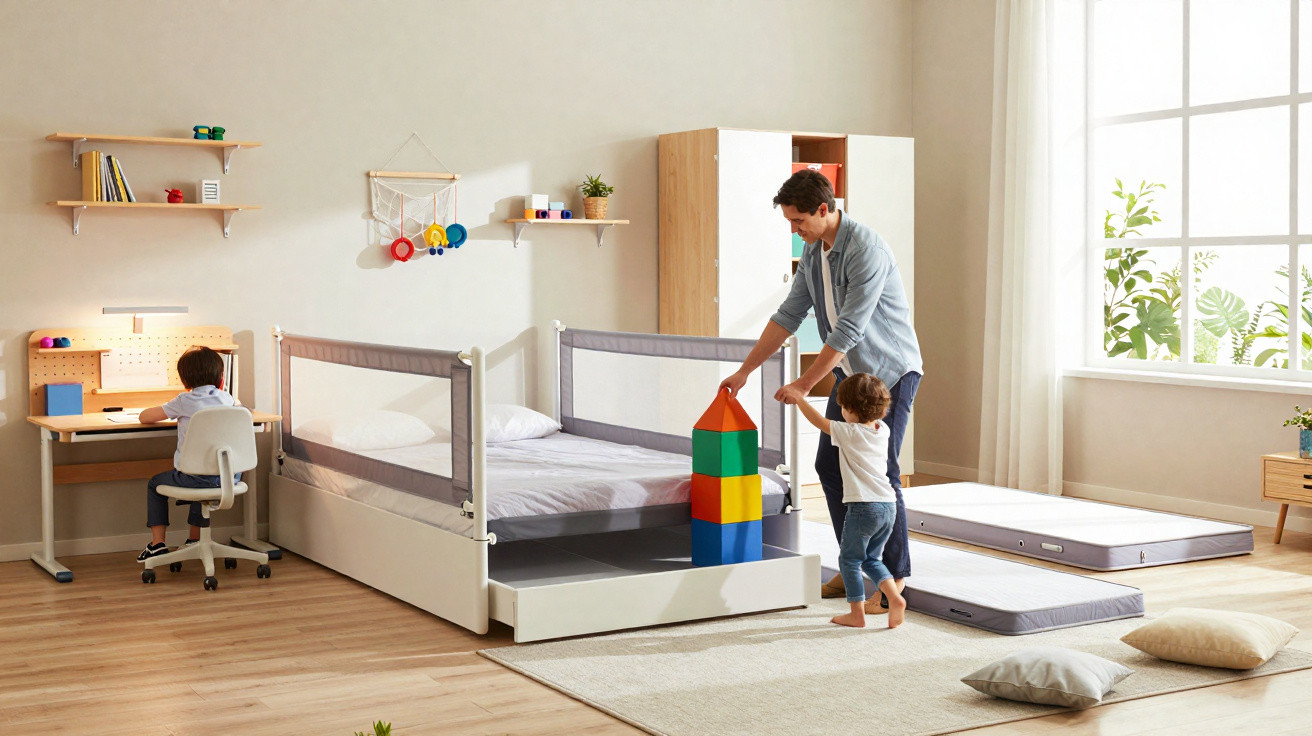
A child’s bedroom can serve several purposes throughout childhood, evolving with changes in the child’s routine and needs. As well as providing a comfortable place to rest, it must offer room for play, study and keeping everyday belongings organised, without sacrificing practicality. As rooms become increasingly compact, planning should take account not only of what fits within the space, but also of how furniture and different areas can be used as the child grows.
According to Priscilla Hatsue Kawagoe, Head of Creation and Product Design at MadeiraMadeira, factoring in these changes from the outset helps prevent the room from quickly becoming unsuitable for the family’s routine. “The bedroom needs to keep pace with the different stages of childhood. Considering flexible solutions makes it possible to adapt the room over time and make better use of the available space,” she says.
Below, the specialist shares five tips to support this planning. Take a look.
1. Choose furniture that combines several functions
In smaller bedrooms, allocating a separate item to every need can restrict movement and reduce the free area. One option is to prioritise multifunctional furniture, such as trundle beds that also include a wardrobe, cubbyholes or drawers. This allows sleeping and storage to occupy the same part of the room.
2. Plan the bedroom for the next stages of childhood
A child’s requirements shift quickly throughout childhood. A room initially intended for playing, for instance, may need to accommodate a study area a few years later. Before selecting furniture, it is therefore important to consider which pieces can grow with the child and which will need to take on new roles as the routine changes.
“When furniture can be adapted, the use of the bedroom can be transformed without having to replace the entire setup at every new stage,” explains Priscilla Hatsue Kawagoe.
3. Make use of the room’s height, not just its floor area
The height of the room can also be put to use, especially where only a limited number of square metres are available. Raised beds, for example, free up the space beneath them for a range of purposes, including storage, play or a desk. In this way, the same area can perform more than one function.
4. Prioritise flexible bedroom layouts
A bedroom does not need to retain the same layout over the years. Modular furniture and pieces that can be added or replaced make it possible to reorganise the room as new needs emerge, without requiring a complete overhaul. This flexibility also makes it easier to plan the space in stages, adapting the arrangement to the routine and the roles the bedroom comes to fulfil.
5. Consider safety and functionality in the details
Space optimisation should not be the only consideration. In a child’s room, it is important to assess features that affect everyday use, such as rounded corners, which help reduce the risk of knocks, and soft-close hinges, which allow doors to shut gently.
Drawers, doors and other components must also be designed to withstand regular opening, closing, movement and use. “Making intelligent use of space needs to go hand in hand with everyday functionality,” concludes Priscilla Hatsue Kawagoe.
By Mariana Kovelis












Comments
No comments yet. Be the first to comment!
Leave a Comment