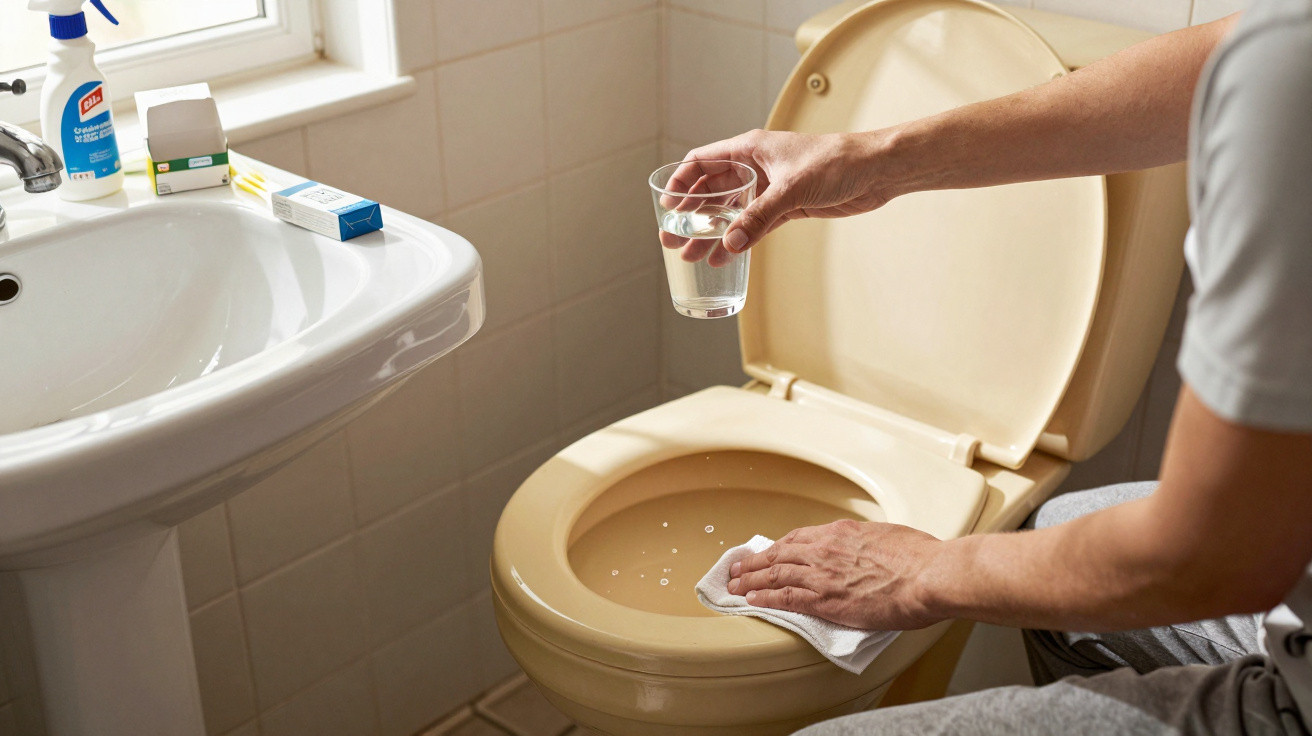
More people across Europe are discreetly replacing harsh chemicals with everyday cupboard ingredients to revive tired toilets and basins. A handful of straightforward mixes, frequently using just half a glass, can remove years of deposits and bring back a clean, bright finish without resorting to industrial cleaners.
Why old toilets and sinks begin to look beyond saving
After several years, even a carefully maintained bathroom can start to show its age. Its glossy finish becomes dull, staining develops around the waterline, and the toilet bowl or basin can appear grey instead of white.
- Hard water creates limescale rings and hardened deposits.
- Tap water with a high mineral content may leave yellow or brown stains.
- Tiny scratches in porcelain and enamel collect dirt.
- Some cleaning products react with minerals, making stains darker.
Many people then turn to increasingly powerful cleaners. However, this can create another issue: harsh acids and chlorine may harm seals, rubber parts and even the finish on older porcelain.
Smart bathroom care is less about brute force and more about using the right small dose in the right place.
The “half-glass” method: a little goes a long way
In household tips passed around German and Eastern European homes, “ein halbes Glas” – half a glass – is a familiar measurement. It provides enough product to work effectively without being excessive.
Half a glass of vinegar for hidden mineral deposits
Used sparingly, white household vinegar is a dependable bathroom cleaner.
For limescale in a toilet bowl:
- Flush the toilet once to dampen the bowl.
- Slowly pour roughly half a glass of warm white vinegar around the rim, allowing it to run across every stained section.
- Leave it for at least 30 minutes, or overnight where scale is severe.
- Scrub with a toilet brush, concentrating on the waterline and beneath the rim, before flushing once more.
Acidic liquids like vinegar loosen limescale most effectively when they sit undisturbed on the surface for a while, not when they are immediately scrubbed away.
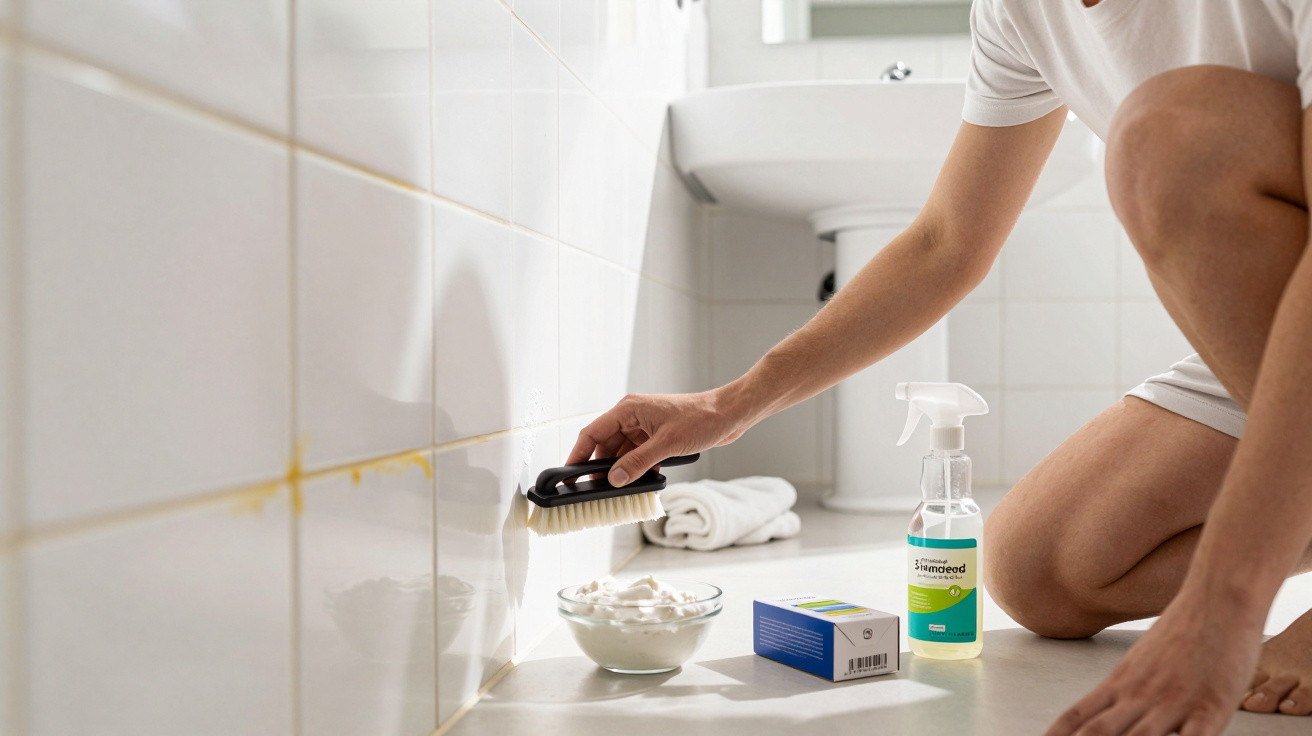
The same amount can be used for a bathroom sink or basin. Plug the drain, pour half a glass of vinegar over the stained section, then add a spoonful of bicarbonate of soda. The resulting foam can lift concealed deposits lodged in fine scratches.
Half a glass of baking soda for smells and dull finishes
Bicarbonate of soda, also known as baking soda, is gently abrasive and particularly good at absorbing odours.
For a toilet that looks tired:
- Scatter half a glass of baking soda evenly around the bowl.
- Use the brush to work it beneath the rim and into the u-bend.
- Leave it for 20–30 minutes, brush again and flush.
This easy treatment can often clear lingering odours held within the porcelain. It is especially helpful in older toilets that always seem musty.
Restoring a “hopeless” toilet bowl
Where a toilet has been neglected, or is in a hard-water area, limescale may seem as solid as stone. At this point, people may think about replacing the entire toilet, but a series of treatments can postpone that expense for years.
Three-step deep clean for stubborn limescale
| Step | Product | What it does |
|---|---|---|
| 1 | Half a glass of vinegar | Softens mineral crust and scale |
| 2 | Half a glass of baking soda | Foams to disturb buildup and neutralise odours |
| 3 | Targeted scrubbing | Removes loosened deposits without scratching |
Begin in the evening. Add the vinegar and leave it in place, then put in the baking soda before going to bed. Keeping the mixture in contact overnight allows it to work into the hard grey limescale band at the waterline. By morning, firm brushing will usually lift a surprising quantity of buildup without strong chemical fumes.
On very old bowls, repeating this quiet routine once a week for a month often does more than a single aggressive chemical shock.
When a specialist cleaner may still be necessary
Natural mixtures have difficulty dealing with some types of staining:
- Brown or rust-coloured streaks from ageing iron pipes.
- Blue or green staining caused by copper in plumbing.
- Old dye marks left by toilet blocks or coloured cleaning products.
For these problems, a purpose-made descaler or rust remover for bathroom ceramics may be useful. Check that it is suitable for enamel, and never combine it with vinegar or bleach because dangerous gases can be released.
Reviving basins, baths and taps
The half-glass approach is not limited to the toilet bowl.
For sinks and basins that never seem properly clean
Bathroom basins commonly develop tiny scratches from jewellery or abrasive sponges. These small marks retain grime and hard-water staining.
A straightforward method:
- Rinse the basin using warm water.
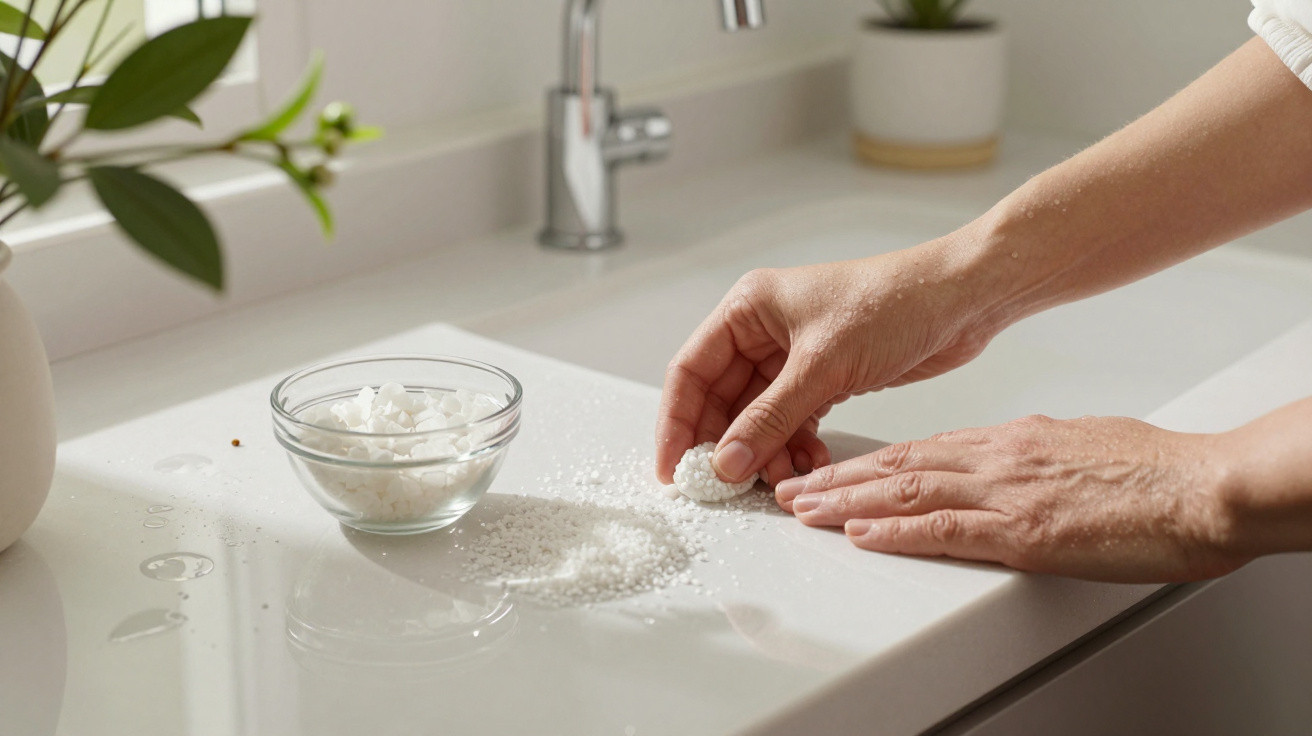
- Apply two or three tablespoons of baking soda to the most heavily stained areas.
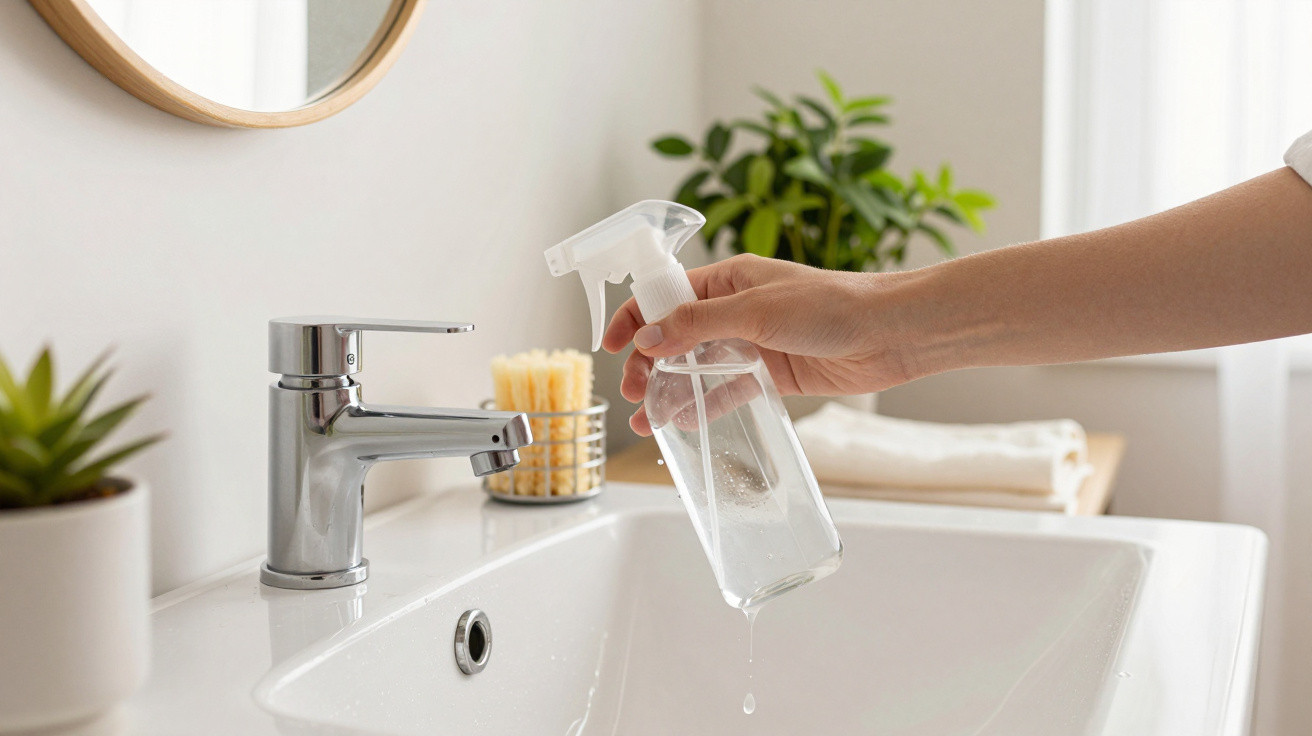
- Pour around half a glass of vinegar over it to create controlled fizzing.
- Once the fizzing eases, rub gently in circular movements with a soft cloth.
- Rinse well and dry with a towel to stop fresh water marks forming.
Drying afterwards may seem minor, but it has a major effect. Without droplets left sitting on the surface, fewer mineral rings return the following day.
Shower trays and baths: consider the material
Older enamel baths generally cope reasonably well with mild acids such as vinegar. Acrylic and plastic shower trays, by contrast, can turn cloudy if cleaned too aggressively.
For acrylic, avoid baking soda and use diluted vinegar instead: half a glass mixed into a litre of warm water, applied with a soft cloth. Rinse promptly, and do not leave concentrated mixtures on the material for several hours.
Check what your shower tray is made of before you start. The wrong cleaner can dull an acrylic surface permanently, even if it removes the stain.
Hidden risks: when homemade cleaners cause problems
Household ingredients may seem safer, but careless use still involves risks.
- Combining vinegar and bleach produces toxic chlorine gas.
- Scraping limescale with sharp implements can crack porcelain or chip enamel.
- Allowing strong acids to sit on silicone seals can damage the sealant and lead to leaks.
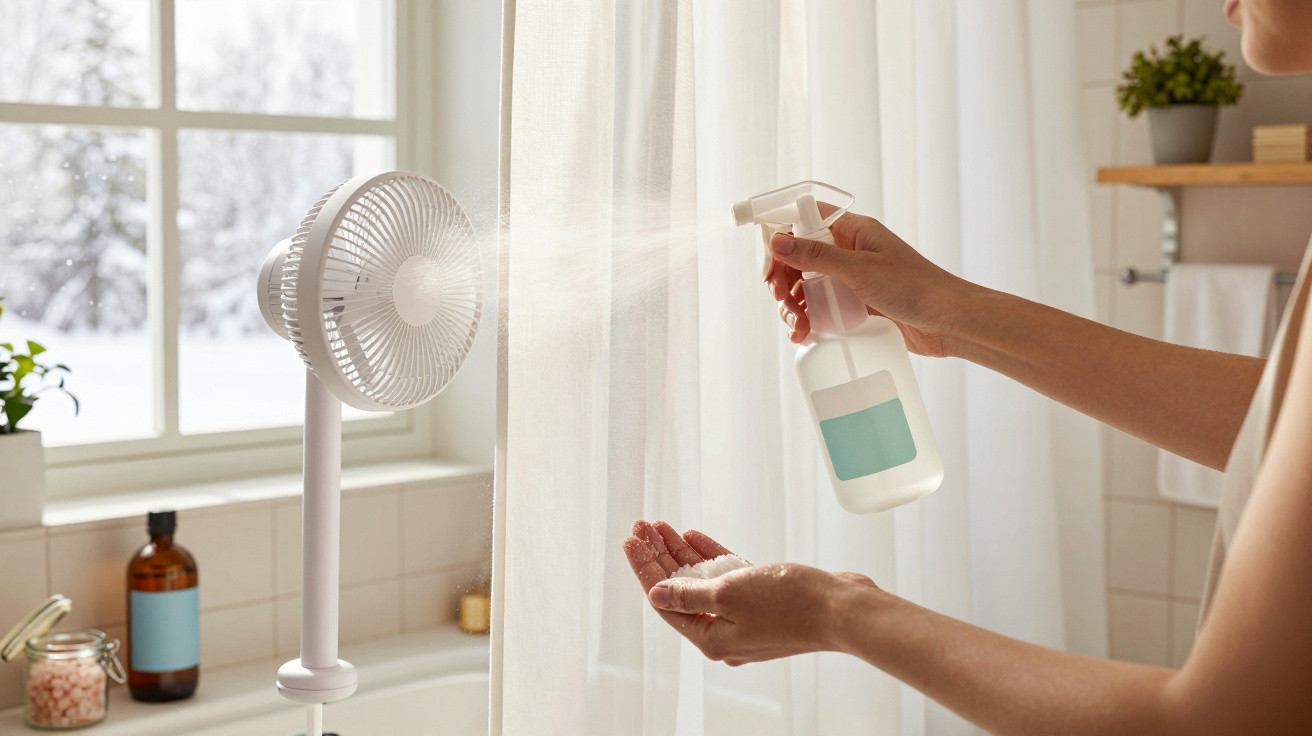
A sensible approach is to use only one cleaning agent at a time, rinse thoroughly, and wait before applying another. Ventilation is important too: in enclosed bathrooms, steam and fumes from even “mild” products can irritate the lungs.
How often should old sanitaryware be refreshed?
Frequent gentle cleaning is generally more effective than occasional heavy scrubbing. For busy homes, this basic routine can work well:
- Weekly: a quick baking soda treatment and brushing for the toilet, together with wiping down the basin.
- Monthly: a half-glass vinegar treatment to deal with scale before it hardens.
- Seasonally: inspect seals, under-rim sections and the space behind the toilet for concealed grime.
Many plumbers say bathrooms cared for in this way need fewer repairs. Rubber components in the cistern and beneath the bowl’s fixing points are exposed to less chemical damage, helping fittings last longer.
Why these methods matter beyond hygiene
Bathroom fittings require substantial resources to make and are hard to recycle. Keeping an existing toilet or sink in service for an extra five years avoids the energy involved in producing and transporting a replacement, as well as the disruption of fitting it at home.
These methods can also help tenants safeguard their deposits. Landlords place great importance on visibly clean areas around toilets and basins. Clearing a grey waterline and brightening a dull bowl with half a glass of the appropriate mixture can make a bathroom look “well cared for” rather than “worn” in one evening.
Small, measured amounts of familiar ingredients can revive old porcelain and enamel, cut chemical use and delay the moment you feel forced to replace everything.
With patience and a little common sense, the half-glass approach can change an ageing toilet or sink from an embarrassing part of the home into something you hardly notice again – exactly how a bathroom ought to feel.

Comments
No comments yet. Be the first to comment!
Leave a Comment