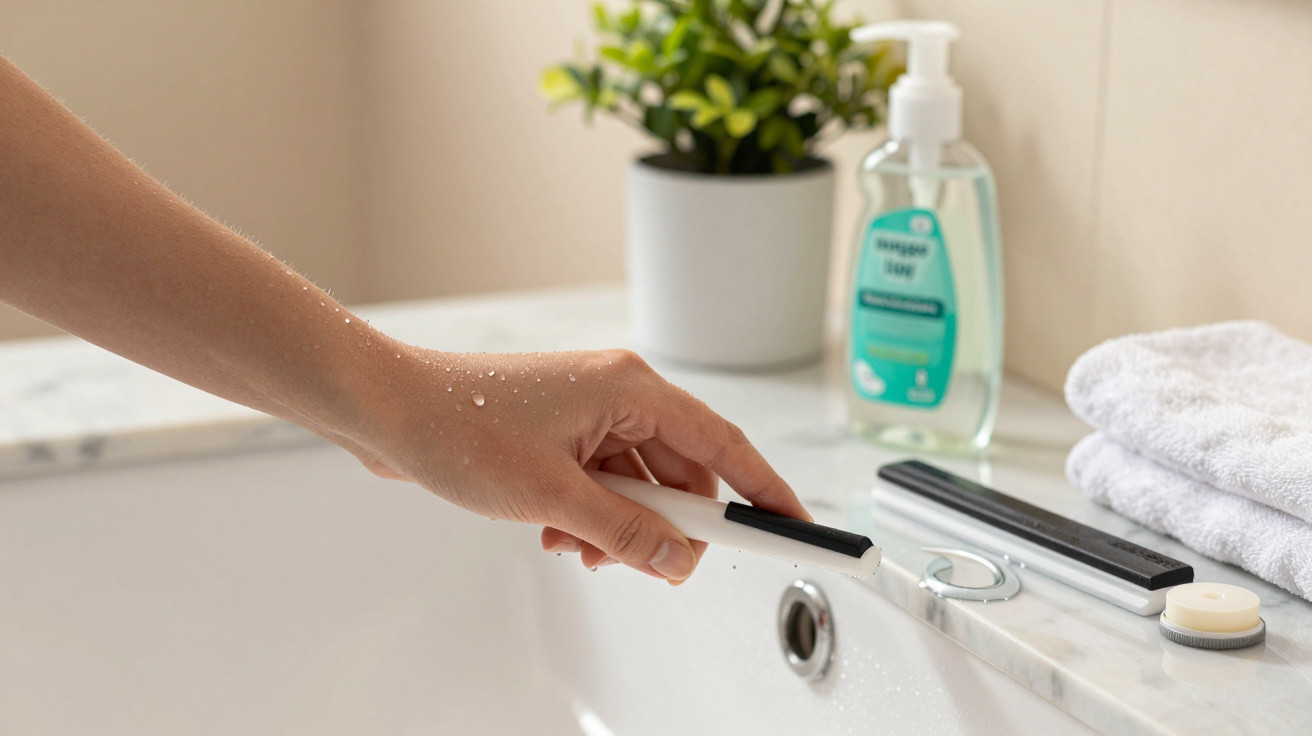
The first thing that catches your eye is not the clutter but the ring.
It is that faint, chalky halo around the bath drain, seemingly becoming a little whiter every week. You scrub, rinse and promise yourself you will keep on top of it this time - then, seemingly without warning, the taps and shower head appear to have aged a decade in a month.
The odd thing is that you have not knowingly changed anything: the same products, water and routine. At least, that is what you assume, until somebody points out one small bathroom habit you repeat daily without noticing any more.
That is the habit quietly accelerating limescale in your home.
The tiny daily habit that supercharges limescale
The culprit is allowing bathroom water to dry naturally after every shower or bath. It happens on tiles, glass, taps and the shower head. You turn off the water, step out and reach for your towel, while droplets remain in place and gradually evaporate several times a day. Every drop leaves a minute ring of mineral salts, with those rings accumulating like coats of paint.
You will not notice it at first. Then, one morning, the mirror edges seem dusty, the chrome taps have developed cloudy marks, and the shower screen never appears completely “clean”, even after you have wiped it. That is not grime: it is limescale quietly accumulating whenever the bathroom is left to dry itself.
In a recent survey of UK households in hard-water areas, homeowners who “let things air-dry” after showering said they had to tackle heavy limescale every 7–10 days. For those who quickly wiped surfaces dry, this increased to 3–4 weeks. That is a substantial difference when you consider the time spent scrubbing grout or descaling taps. One London couple monitored the issue for a month: they recorded roughly 80 shower uses, did zero wipe-downs and discovered a rough, chalky build-up inside the shower head that reduced water pressure by almost a third.
On a less dramatic level, it appears as the familiar white specks on black taps or dark tiles. Initially, they seem harmless - simply “water spots”. Leave them for a season, however, and they alter the texture of silicone seals, mark the toilet base and form that pale line at the water level in the loo. We often blame “old plumbing” or “cheap fixtures”, but it is frequently just the result of months of evaporating water being left undisturbed.
The chemistry behind it is straightforward. Hard water contains dissolved minerals, principally calcium and magnesium. Once the water evaporates, those minerals do not disappear; they crystallise. The more often a surface becomes wet and then air-dries, the more mineral layers collect on it. A hot, steamy bathroom speeds up evaporation, creating more regular deposit cycles. That is why the same tap in the kitchen can look fine, while the one in the bathroom looks ten years older.
Picture every droplet as a small delivery van unloading chalk. One delivery makes no difference. Hundreds of them each week, landing repeatedly in the same places around the basin and shower, are how gleaming chrome becomes dull and white surprisingly quickly. The problem is not “taking showers”; it is repeatedly leaving all that water to sit and dry.
How to break the limescale cycle without constantly holding a cloth
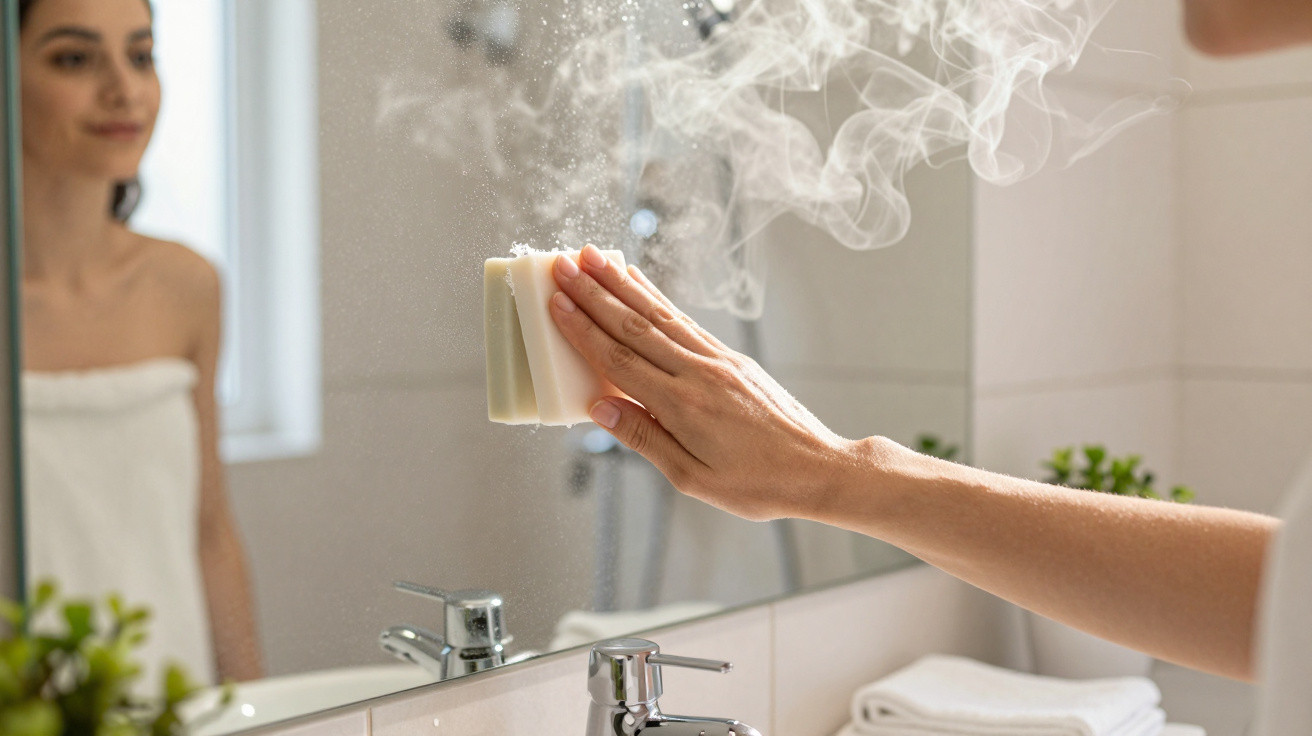
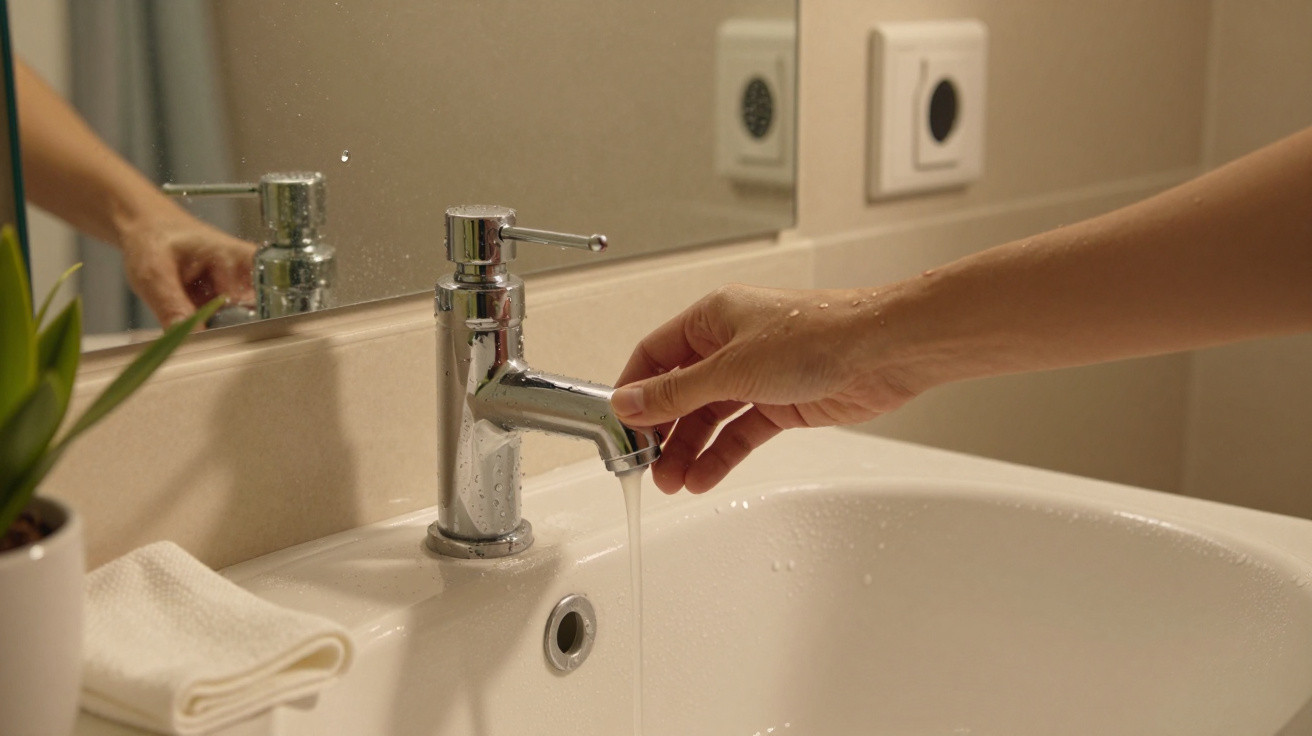
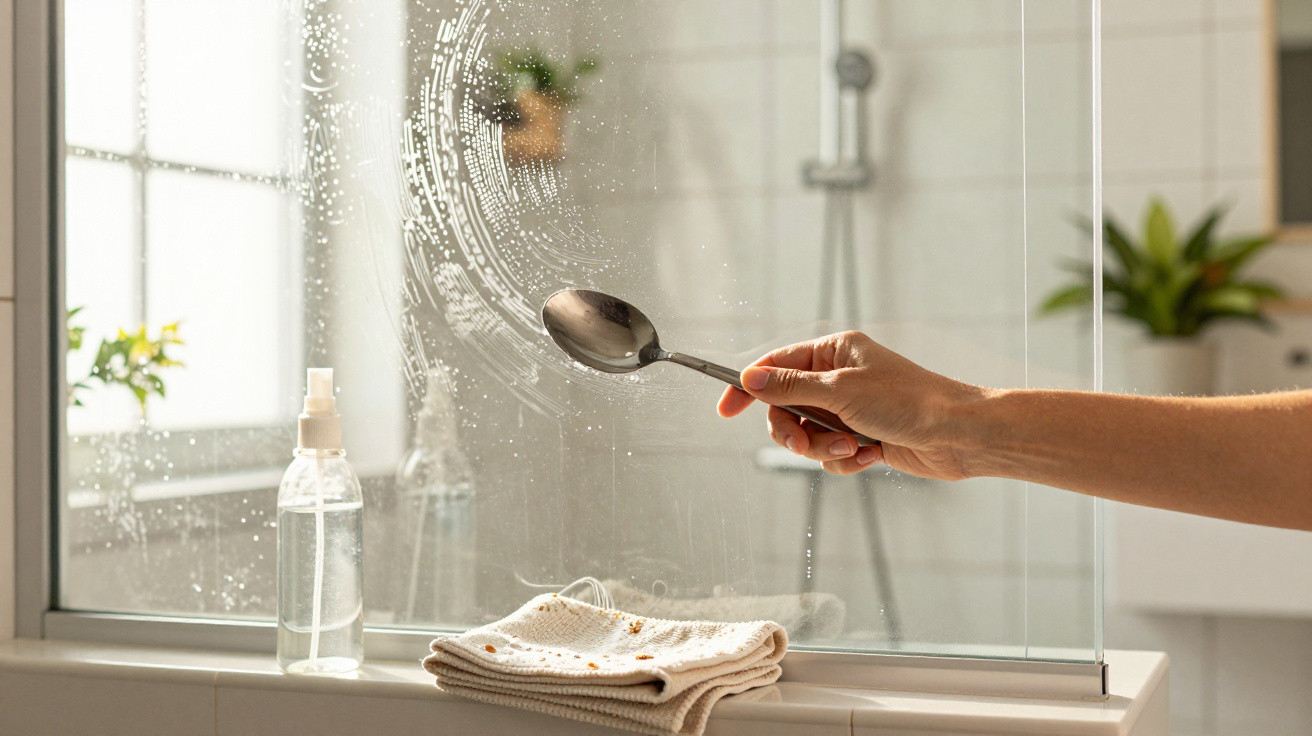
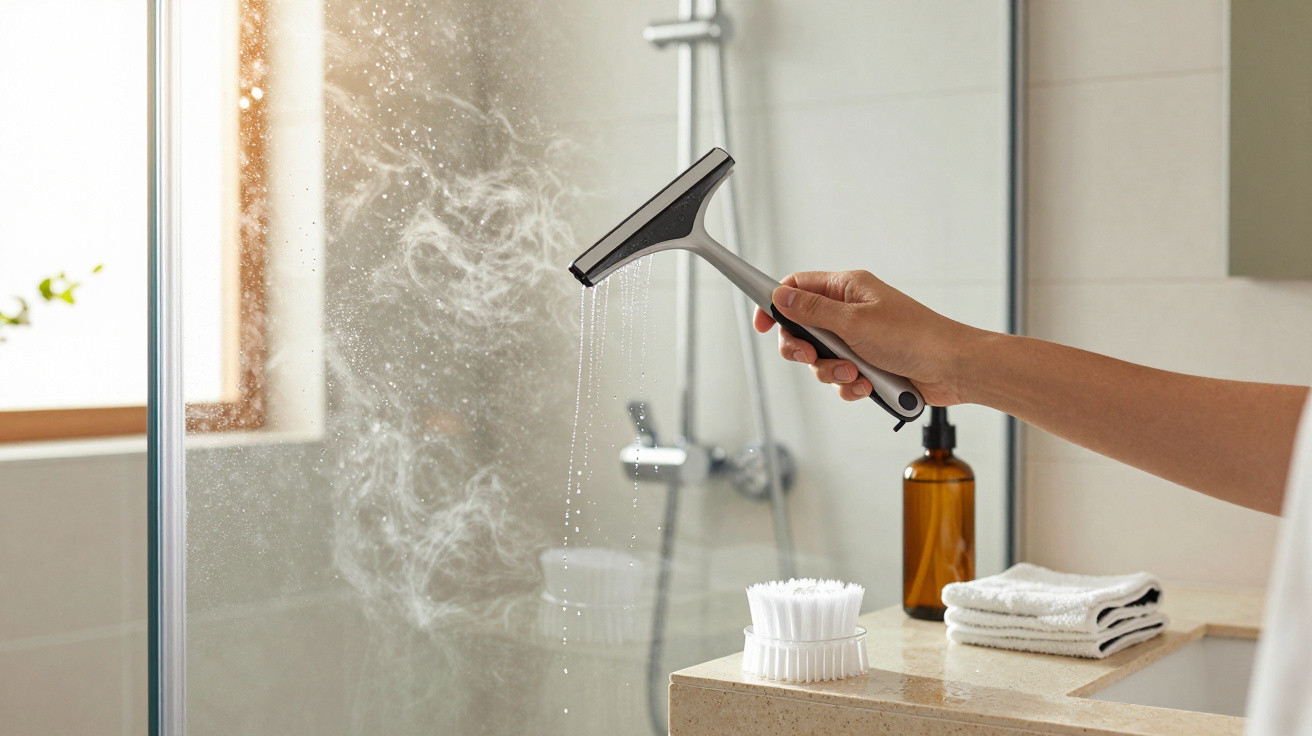
The most effective step is simple: interrupt the drying stage. Following each shower, use an inexpensive squeegee over the glass and tiles, then give metal fittings a quick wipe with a small microfibre cloth. It takes two minutes and requires no cleaning products - only removing 80–90% of the water before it can evaporate naturally. That small action reduces the mineral “delivery trucks” by more than half.
If that feels excessive, concentrate only on the worst areas: the shower screen, tap bases and the area around the basin drain. These are the places where limescale takes hold and spreads. A brief cold rinse over surfaces at the end of a hot shower can also help by lowering the temperature, allowing the water to evaporate a little more slowly. It is not a miracle solution, but it provides another small interruption to the cycle.
Let us be honest: hardly anyone truly does this every day. You leave the shower half-awake, running late for work, with children knocking on the door. During a hectic weekday morning, a “surface-drying routine” is unlikely to be your priority. The answer is to reduce the “friction”. Hang the squeegee within the shower, where your hand naturally reaches. Put a small cloth for each person on a hook by the basin instead of hiding it in a cupboard. When an item is immediately available, you are much more likely to give a surface a quick swipe.
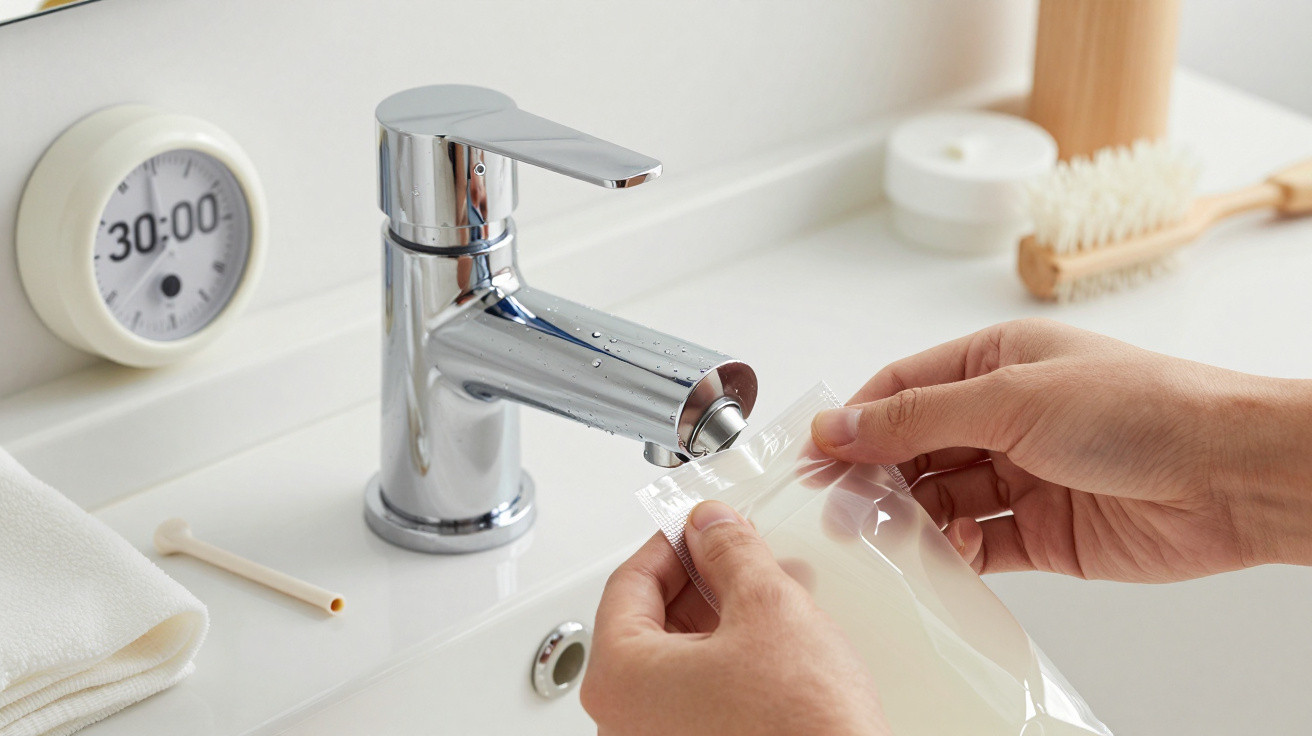
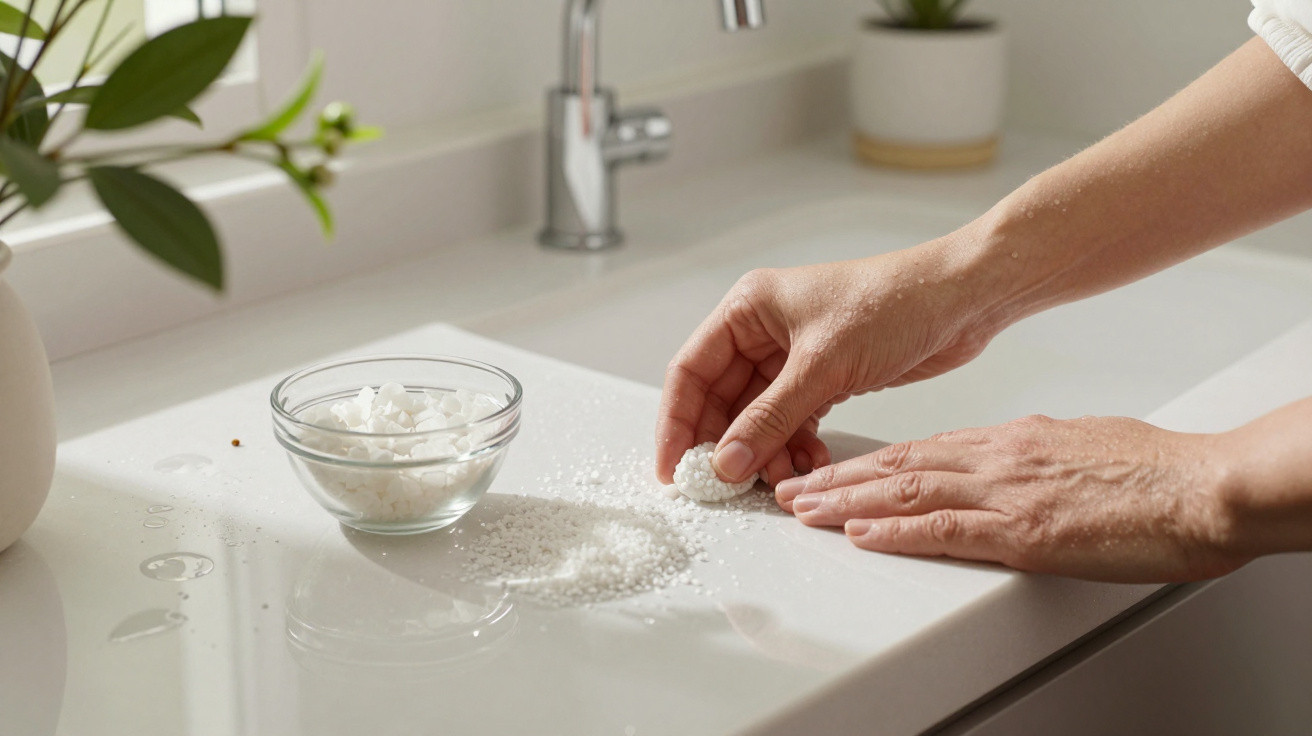
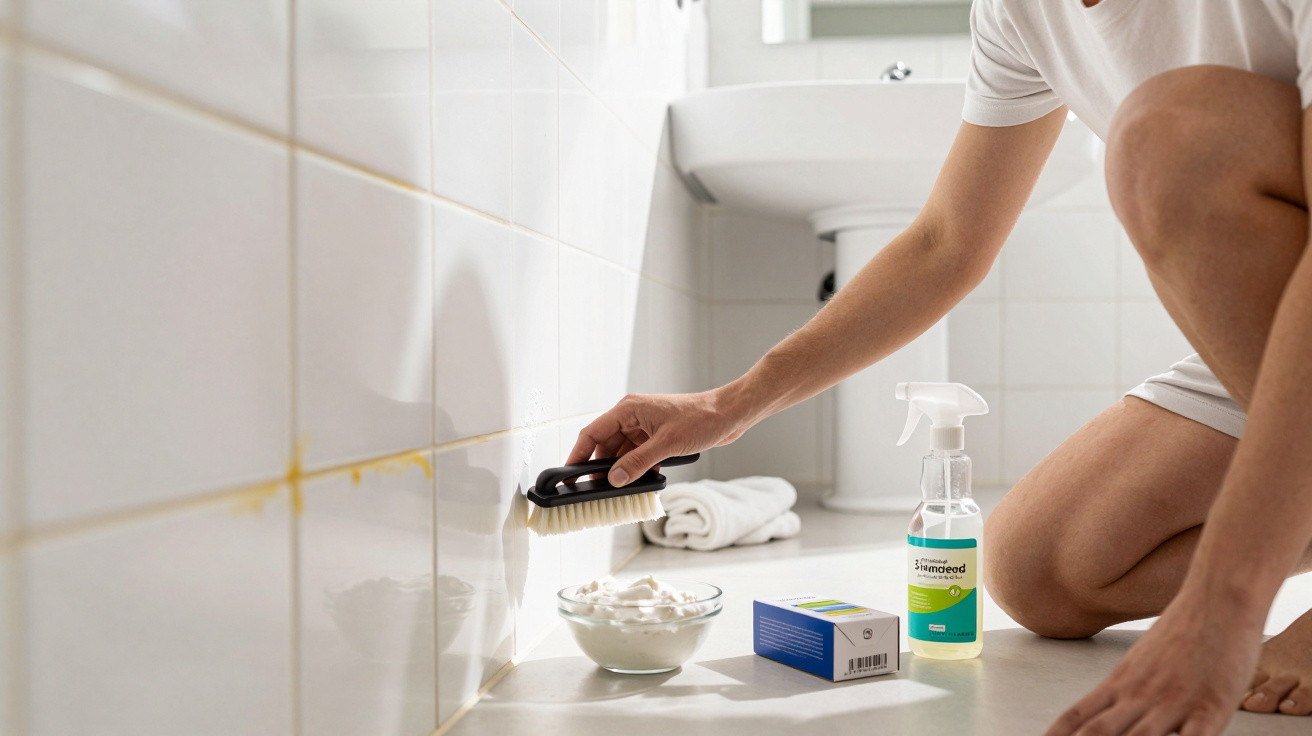
At weekends or on calmer evenings, spray the taps for 30 seconds with a mixture of white vinegar and water, then rinse them. There is no need to scrub as though you are in a commercial: regular, light spraying stops the initial layers from becoming hard. On a scale from 1 (lazy) to 10 (obsessive), aim for a 4. The goal is a habit you can sustain, rather than another full-time job.
“The big difference is what you do in the 30 seconds after turning off the water, not the product you buy once a month,” explains a professional cleaner who specialises in hard-water homes. “People fight limescale on weekends instead of nudging it every day when it’s still soft.”
This is not about guilt; it is about strategy. Emotionally, the bathroom should be somewhere you unwind, rather than a place where you feel you have failed because the shower screen looks frosted. Practically, leaving limescale for months can reduce the lifespan of mixer taps, block aerators and make rubber seals brittle. Briefly disrupting the drying process is far kinder to your future self than an exhausting “deep clean” every school holiday.
- Hang a squeegee in the shower and clear the glass in 20 seconds after every use.
- Keep a dedicated microfibre cloth beside the basin for the taps and basin edge.
- Once a week, spray fittings with diluted white vinegar, leave it for 5 minutes, then rinse.
- If you have very hard water, consider a shower-head filter or whole-house softener.
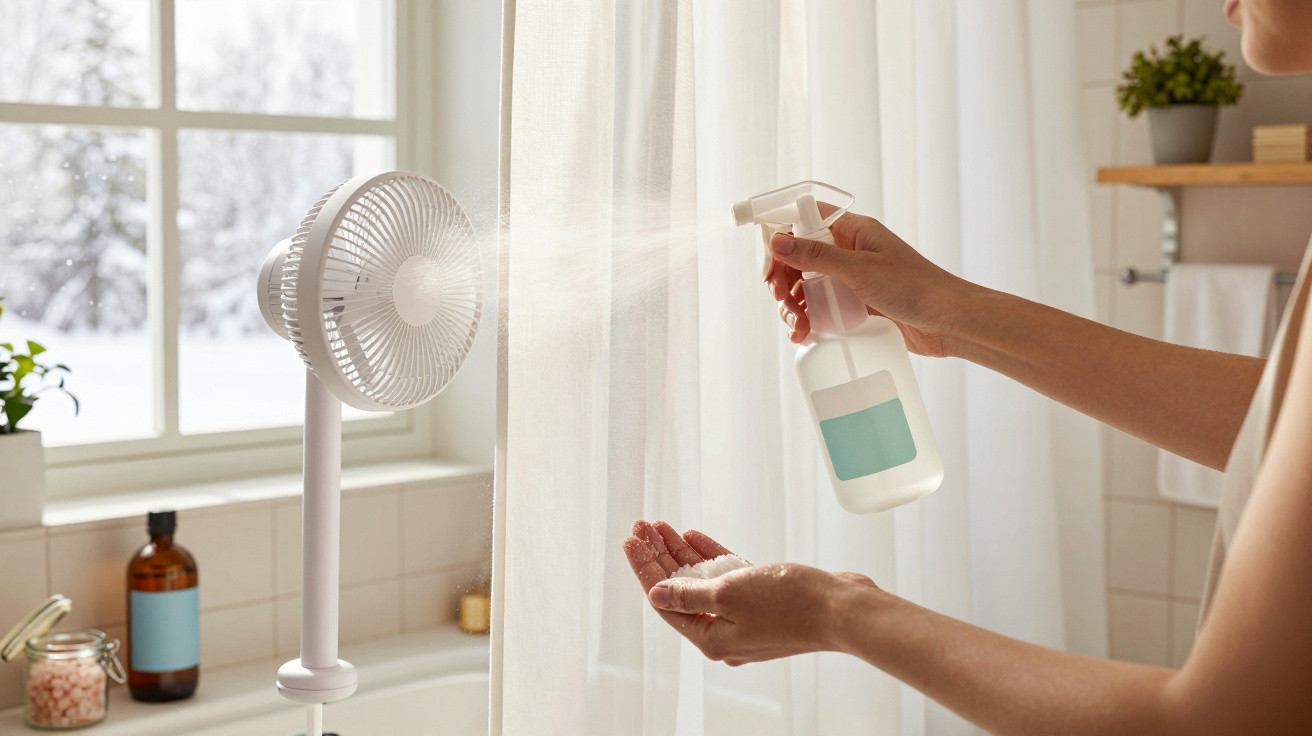
- Use the bathroom extractor fan or open the window for 10–15 minutes to lower humidity.
Making peace with limescale without surrendering your time
On a quiet evening, view your bathroom as though it belonged to somebody else. Imagine you are visiting a friend's flat. You will notice the white rings around the basin, cloudy streaks across the shower door and the crust at the tap base that catches the light. On a screen, they are simply “stains”. In real life, they are small reminders of the daily rush and the silent work your water carries out after you leave the room.
We have all experienced the moment when a guest asks, “Mind if I use your bathroom?” and every chalky mark suddenly becomes painfully obvious. That reaction is not about being unclean; it is about feeling you have lost control of a space that ought to feel like a sanctuary. Limescale feeds that feeling because it makes fittings seem old and tired even if you clean often. It is not laziness - it is hard water combined with routine habits that build up over time.
If one change makes the greatest difference, it is shifting from “fighting” limescale to quietly outsmarting it. Do less heroic scrubbing and adopt more small, semi-automatic actions. Keep tools where your hands already go. Switch on the fan as routinely as the light. Wipe a ring when you first spot it, rather than waiting until it turns into a crust. Your bathroom will never be a showroom, and that is perfectly fine. It is where the real life of the home steams up the mirror each morning.
The reality is that your bathroom will always be negotiating with your water. Some days, you will forget the squeegee; some weekends, you will skip the vinegar spray and binge-watch a series instead. That does not undo your progress. Each time you disrupt the habit of “leave it to dry on its own”, you slow down limescale a little. Repeating that small action over weeks is what keeps your taps shining for longer than you might expect.
| Key point | Details | Why it matters to readers |
|---|---|---|
| Letting water air-dry speeds up limescale | Each droplet evaporating on tiles, glass or taps leaves calcium and magnesium behind, creating visible white marks within weeks in hard-water areas. | It explains why bathrooms can quickly look dull or “old”, even when cleaned regularly, and why a shower screen never seems genuinely clear. |
| Two-minute wipe-down after showers | A squeegee on glass and a microfibre cloth on metal remove most water before it dries, dramatically reducing mineral deposits. | This limits the need for harsh chemicals and tiring deep cleans, saving effort and the expense of powerful descaling products. |
| Target the high-risk zones | Concentrate on tap bases, shower heads, screen edges and drain surrounds, where water remains and evaporates more slowly, creating thicker layers of limescale. | It identifies where a small daily action delivers the greatest benefit, instead of attempting to wipe every surface “perfectly”. |

Comments
No comments yet. Be the first to comment!
Leave a Comment