On a Sunday evening, the laundry basket is overflowing, the children need their clothes for the next day, and rain has been streaking the windows for three days. In many homes, the tumble dryer becomes a magic button: load the drum, press start, and almost forget what is happening behind the door. That is, until the electricity bill arrives. At that point, this unobtrusive appliance reveals a very real appetite for power, particularly when it runs several times a week without anyone paying close attention to its consumption. We all know the moment when having clean clothes feels more urgent than doing the maths. Yet a few figures are enough to put things in a different light. And a €15 alternative can change household habits without turning the home into one enormous laundry room. The true cost may come as a surprise.
A tumble dryer can make a sizeable difference to your bill, even when it feels essential
A tumble dryer is one of those appliances that fades into the background until you look at its energy use in detail. A conventional resistance-heated model often consumes between 3 and 4 kWh per cycle, depending on the size of the load, the selected programme and how damp the laundry is when it comes out of the washing machine. With electricity charged at roughly €0.20 to €0.25 per kWh, one load can cost between 60 cents and €1. That may sound minor, but repeated over a year, it becomes a different matter.
Take a family that uses the dryer four times each week, for example - a very common routine with two children or regular sportswear to wash. At 3.5 kWh per load, consumption reaches around 728 kWh over 12 months, representing between €145 and €182 depending on the electricity tariff. With five weekly cycles, the bill can readily rise above €200. It is not an isolated financial disaster, but it is an expense that quietly joins the fridge, oven and internet router on the monthly bill.
Heat-pump tumble dryers alter the calculation considerably, as they typically use 1.5 to 2 kWh for each cycle. The saving looks appealing on paper: at four loads a week, annual spending could fall to between €60 and €100. However, the purchase price remains higher, and not every household will replace an appliance that still works. The issue is not necessarily the tumble dryer itself, but the role it is allowed to take in everyday routines. Let us be honest: after a demanding day, nobody calculates the cost of every programme.
The €15 clothes airer: a small purchase that prevents automatic tumble-dryer cycles
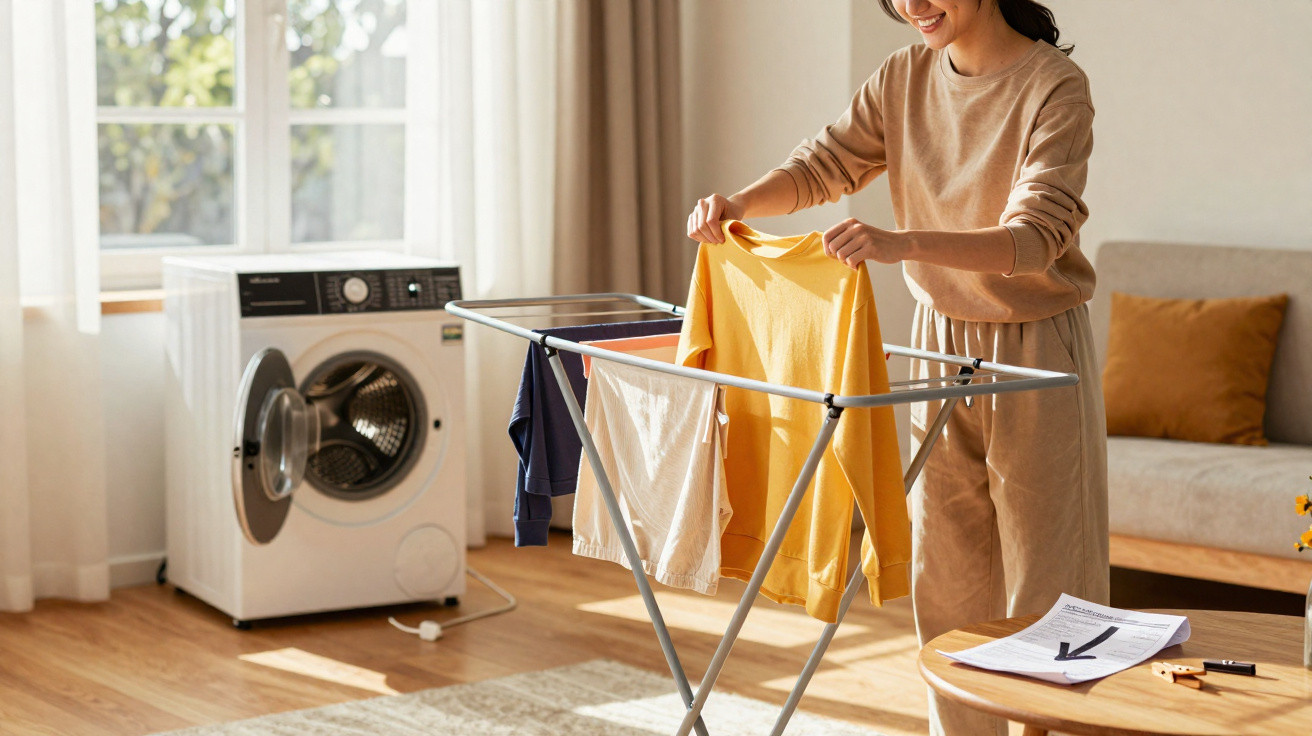
The simplest alternative is often tucked away in a cupboard: a folding clothes airer, sold for around €15 in major retailers and DIY shops. It costs virtually nothing to use and makes it possible to keep the tumble dryer for urgent situations, heavy bedding or weeks of relentless rain. The right approach begins with the washing machine: choosing a suitable spin speed - around 1,200 rpm for most clothes - already cuts drying time. Laundry comes out lighter and less saturated, so it dries more effectively on the airer.
Positioning the airer near an open window or in a ventilated room makes a genuine difference. Many people make the same mistake: short of space or pressed for time, they pile garments on top of one another, then wonder why drying takes two days. It is better to leave space between T-shirts, turn pockets inside out and give shirts a quick shake before hanging them up. That extra minute at the start often prevents creasing and the smell that develops when laundry stays damp for too long.
Drying clothes indoors does require some care, however, as the released moisture can encourage condensation in a poorly ventilated home. One simple rule helps strike the right balance: put out one wash, air the room, then fold the airer away as soon as possible.
“The tumble dryer is very convenient, but it should not become the default choice for three T-shirts and two towels.”
- Around €15: the cost of a basic, durable folding clothes airer.
- €60 to more than €200: the possible yearly cost of a tumble dryer, depending on the model and frequency of use.
- 1,200 rpm: a spin speed that is often enough to reduce moisture without being harsh on every fabric.
Cutting the bill without giving up fast-paced days
The most realistic answer is not to ban the tumble dryer, especially in a small flat, a damp region or a family home where laundry piles up at remarkable speed. Instead, it is about using it selectively. Towels, bedding and thick garments can go into the drum when there is a genuine need, while underwear, pyjamas and lightweight tops dry perfectly well on an airer. The distinction may seem obvious, but it can remove two or three weekly cycles from the meter.
Regular maintenance also prevents the appliance from wasting energy unnecessarily: empty the filter after every use, clean the condenser when the manufacturer advises it, and make sure the humidity sensor is unobstructed. A tumble dryer that heats or detects moisture poorly can sometimes keep running when the clothes are already dry. And ‘ready to store’ programmes can be gentler than intensive drying selected out of habit. Every avoided cycle is still the cheapest one.
There is another, less obvious advantage: air-drying some laundry often extends the life of the fibres. Elasticated materials suffer less, certain prints retain their shape, and garments are less likely to shrink. Naturally, nobody wants to turn their living room into a forest of socks. But there is a more flexible option between using the tumble dryer for everything and drying every item over chairs: one that respects the budget, the time available and the reality of each household.
| Key point | Detail | Benefit for the reader |
|---|---|---|
| Annual tumble-dryer cost | Around €60 to more than €200, depending on the appliance and number of cycles | Helps assess the hidden expense within the electricity budget |
| Low-cost alternative | A folding clothes airer costs around €15 | Reduces energy consumption without major investment |
| Effective step | Spin laundry properly and leave space between items on the airer | Speeds up drying and limits damp smells |












Comments
No comments yet. Be the first to comment!
Leave a Comment