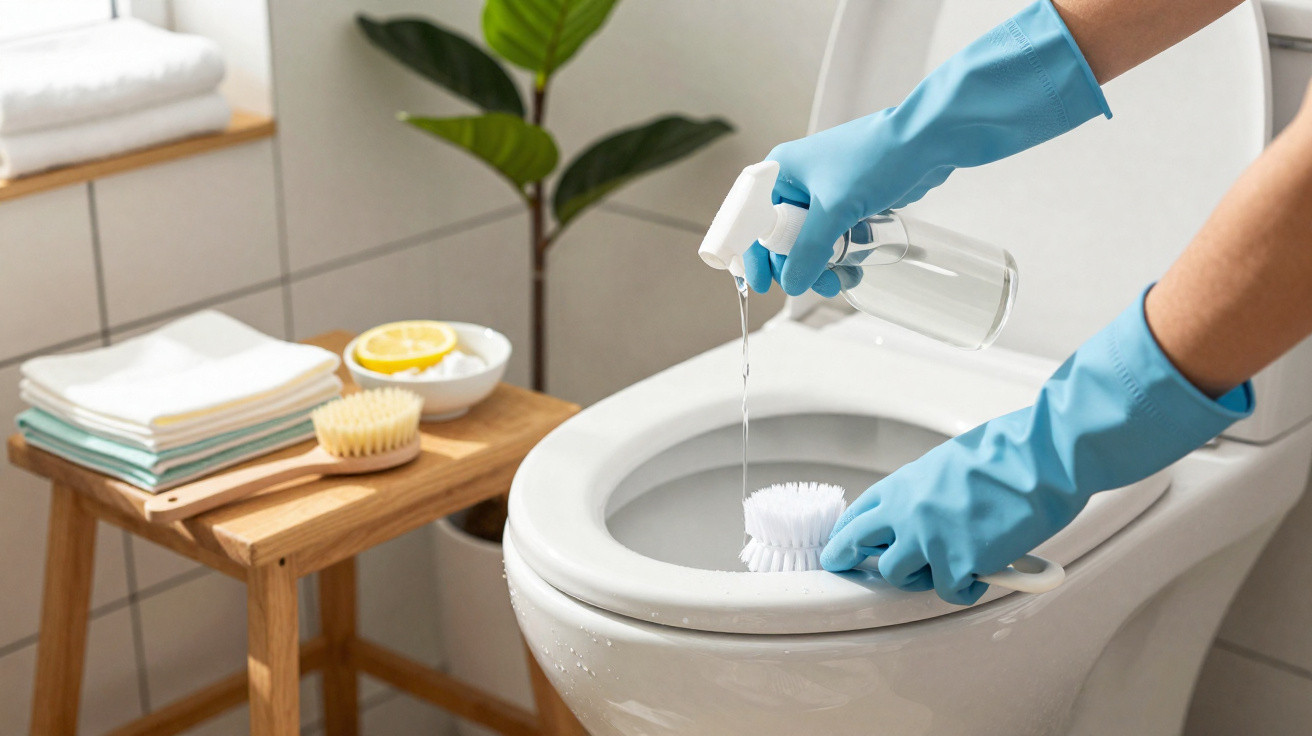
Keeping the bathroom hygienic at all times calls for practical methods that make everyday cleaning easier without harming the sanitary ware. Using white vinegar is an effective way to shift stubborn build-up, delivering excellent cleaning without the need to scrub ceramic surfaces vigorously.
How does vinegar work against ingrained dirt?
Build-up on sanitary ware often creates yellowish crusts that are highly resistant to conventional cleaners. Extended contact with this acidic substance dissolves these hardened layers, allowing the sanitary ware to regain its original shine through hygiene that is far more economical and quick.
When the product is poured straight into the toilet bowl, its compounds immediately begin reacting with deposited residue. This chemical process reduces the need for excessive physical effort, making household care simpler and leaving residents with a completely refreshed environment.
Why do so many people put vinegar in the toilet?
The reaction between acetic acid and mineral crusts produces a surprising effect on ceramic sanitary ware that… Read more
Why does acetic acid dissolve mineral deposits?
The ongoing presence of hard water encourages limescale deposits to form on the inner ceramic surface of the toilet. Acetic acid breaks down the structure of these mineral layers, ensuring that any embedded residue comes away easily during routine bathroom cleaning.
Over time, mineral impurities leave dark marks that are difficult to remove with water alone. Allowing the solution to sit for several minutes softens the accumulated dirt, restoring the impeccable appearance of the finish and protecting the sanitary ware for much longer.
Below is a video from the YouTube channel A DICA DO DIA COM FLÁVIA FERRARI demonstrating the practical application of this method:
What is the best way to apply the product?
For a satisfactory result, pour the liquid generously around the inner sides of the toilet bowl. The key is allowing enough contact time for the active agents to break down the mineral crust without using harsh chemicals that may affect health.
This home technique prevents wear on the bowl’s glaze and keeps the room free from strong odours. Applying it regularly provides continuous protection against stains, making daily life more practical and efficient for anyone looking after the home.
Essential Hygiene Kit
Cleaning items: Gather these basic items to improve the results:
- White vinegar with a good acidic concentration;
- A toilet brush with firm bristles;
- Rubber gloves to protect your hands.
How can yellow stains be removed more effectively?
Persistent yellow marks require gentle mechanical action shortly after the liquid has been left to sit. Using the toilet brush correctly ensures that all loosened sediment is removed, delivering a complete visual renewal and eliminating bacteria present in the bowl.
Combining patience with the right technique can transform bathroom hygiene without requiring tiring physical effort. By gently scrubbing the inner edges, you can achieve a superior standard of cleanliness while preserving the qualities of the sanitary ware in a much safer, more practical way.
Consider these practical steps for the best results while scrubbing:
- Pour the product so that it covers every visible stain in the bowl;
- Wait long enough for the crusts to soften;
- Use the toilet brush with gentle circular movements.
What care keeps the toilet clean?
Weekly preventive maintenance stops fresh mineral deposits from hardening on bathroom sanitary ware. Establishing a routine with mild products preserves the toilet’s shine and avoids frequent use of heavy-duty chemicals, creating a much healthier environment for the family.
Choosing straightforward methods reduces the time spent on household tasks and improves day-to-day wellbeing. With regular applications, the toilet remains protected from unpleasant odours and stubborn dirt, ensuring a far more peaceful and economical care routine at home.


Comments
No comments yet. Be the first to comment!
Leave a Comment