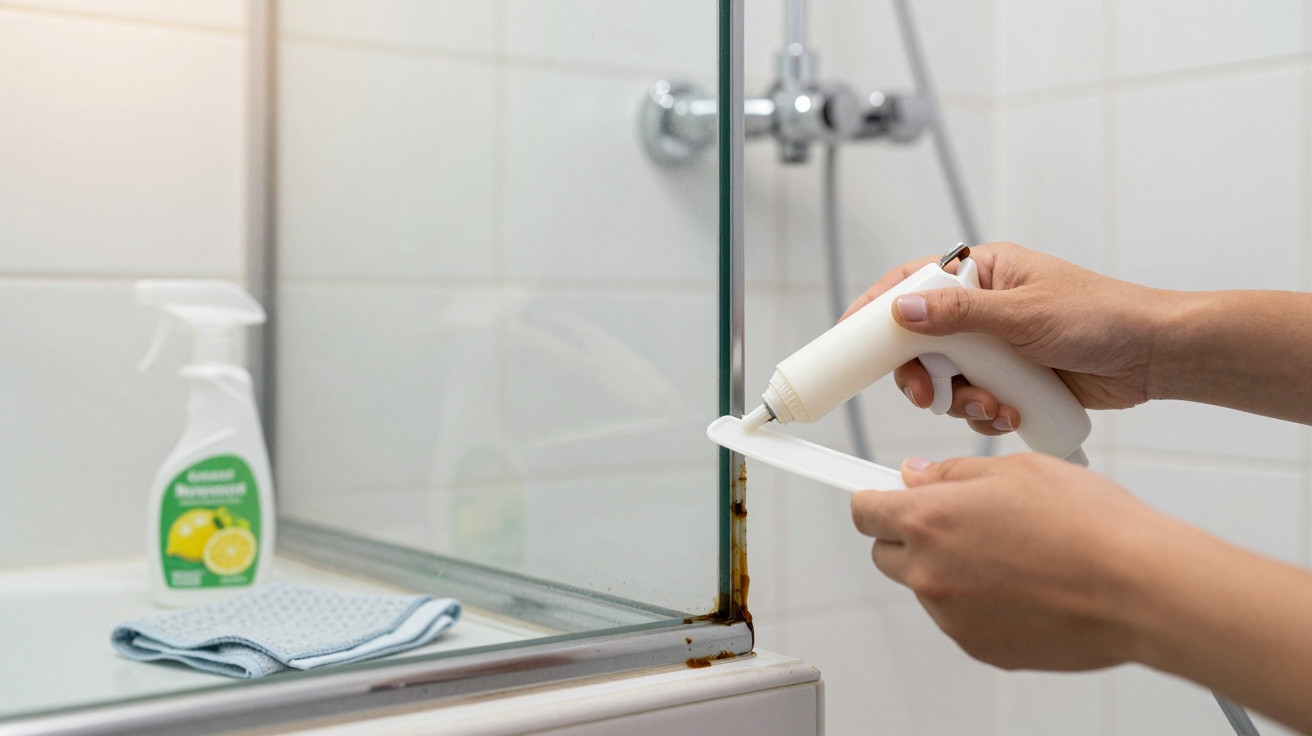
When the shower enclosure silicone becomes dry, cracked or loose, it can no longer prevent water from passing through the joints between the floor and walls. The proper repair is not to add a fresh layer over the old one: the damaged sealant must be removed completely, mould cleaned away, the surface dried and the joint resealed.
Why does shower enclosure silicone crack and develop mould?
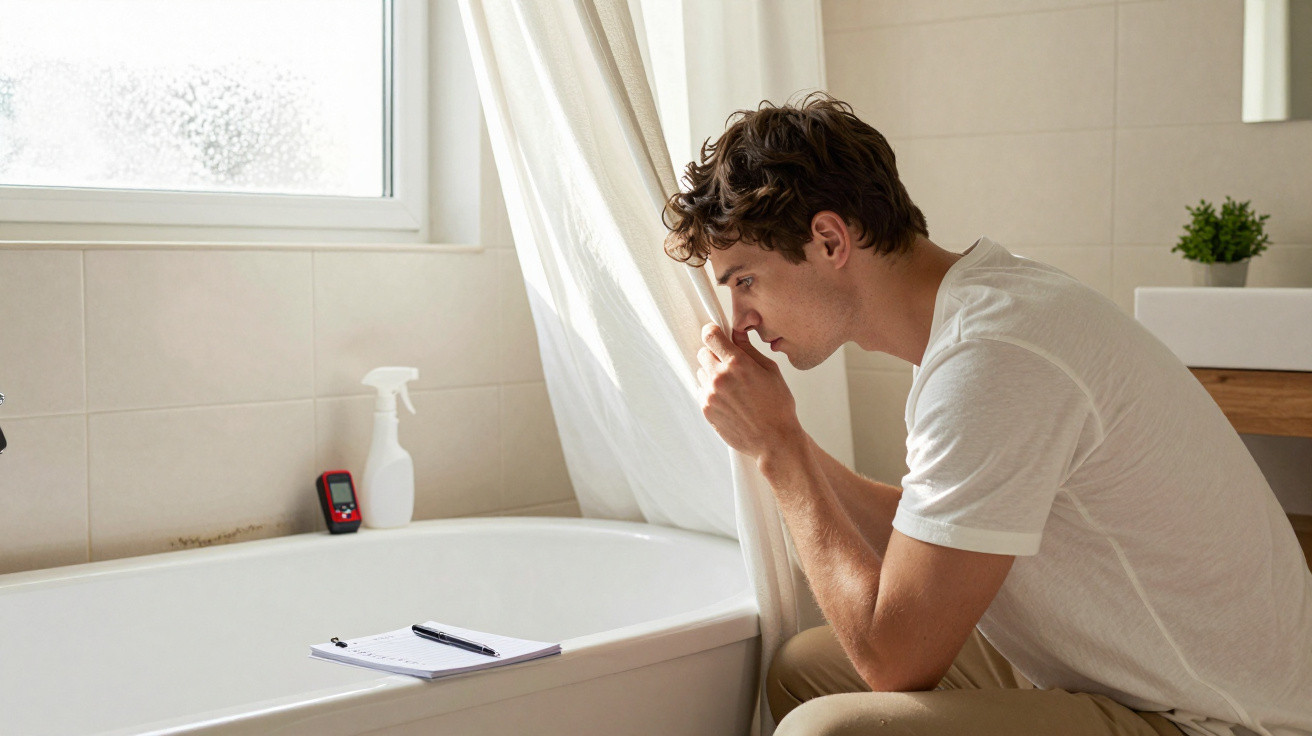
Silicone is exposed every day to water, heat, cleaning products and the natural movement of the surrounding components. Over time, it may lose flexibility and pull away from the edges, creating gaps where moisture becomes trapped and encourages dark marks to develop.
- Ageing and loss of flexibility in the material;
- Application onto a damp or dusty surface;
- Movement between the floor, wall and shower enclosure structure;
- Frequent use of overly harsh cleaning products;
- Defects or gaps left during the previous application;
- Poor ventilation and slow drying in the bathroom.
How can you remove old silicone completely?
Start with a dry shower enclosure, then remove the old bead with a plastic scraper or a sealant remover designed for the task. Carefully cut along the edges and pull the material away gradually. Avoid sharp metal tools, which may scratch the glass, chip the tiling or damage the waterproofing layer.
Fine traces must also be removed, as the new product will not bond properly to old silicone. Although silicone sealant repels water and remains highly flexible, it needs a clean, sound and fully dry surface to create an unbroken bead.
How should mould beneath the sealant be removed?
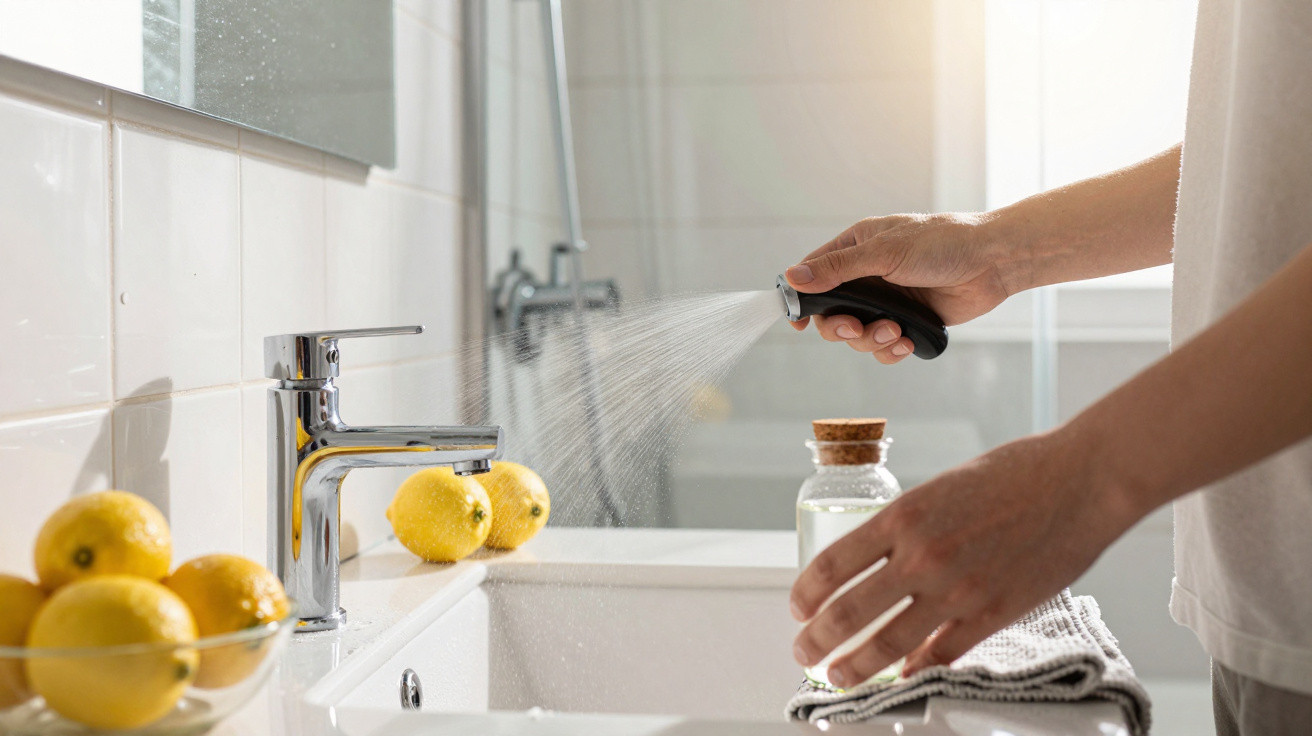
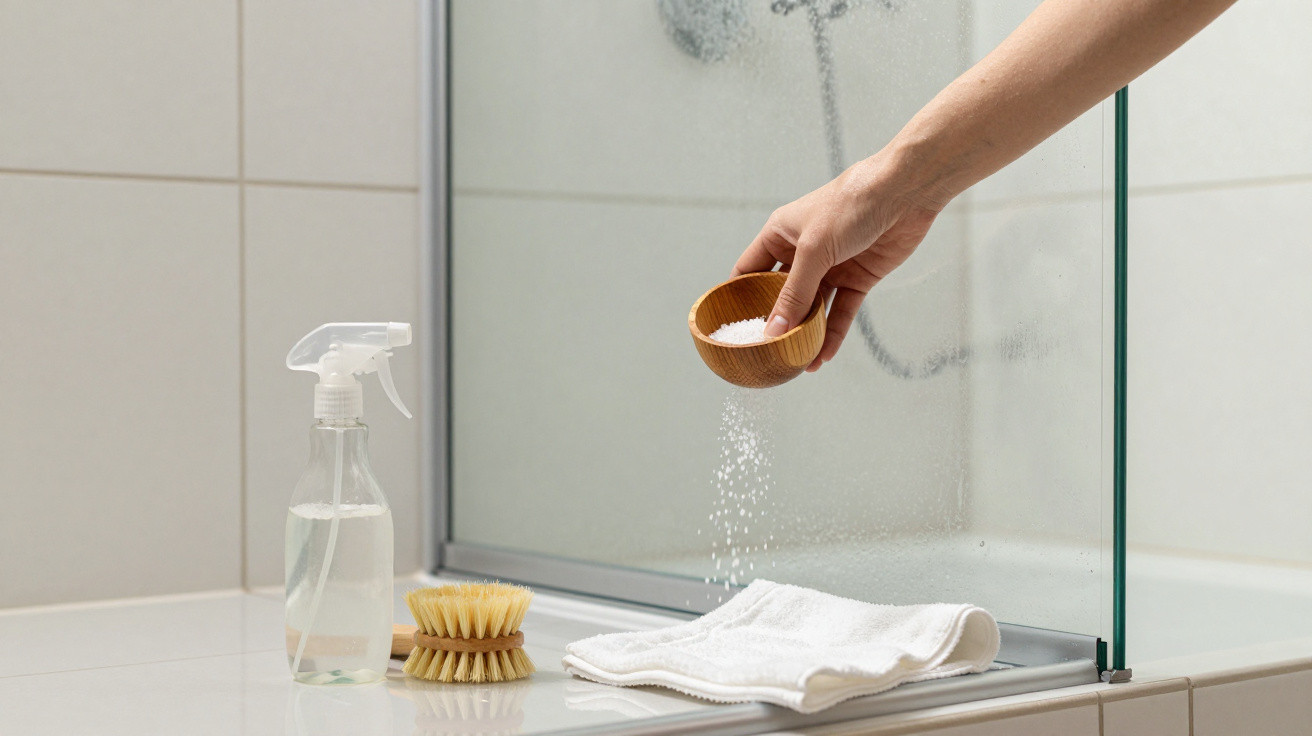
Once the sealant has been taken out, wash the joint with water and mild detergent to clear away soap, body oils and grime. On glass or ceramic surfaces, white vinegar may be used separately on small, superficial marks, provided it is tested first and removed fully before resealing.
- Never combine vinegar with bleach or other cleaning products;
- Wear gloves and keep the bathroom well ventilated;
- Scrub the area using a small, soft brush;
- Rinse thoroughly so that no vinegar, detergent or residue remains;
- Dry with clean, lint-free cloths;
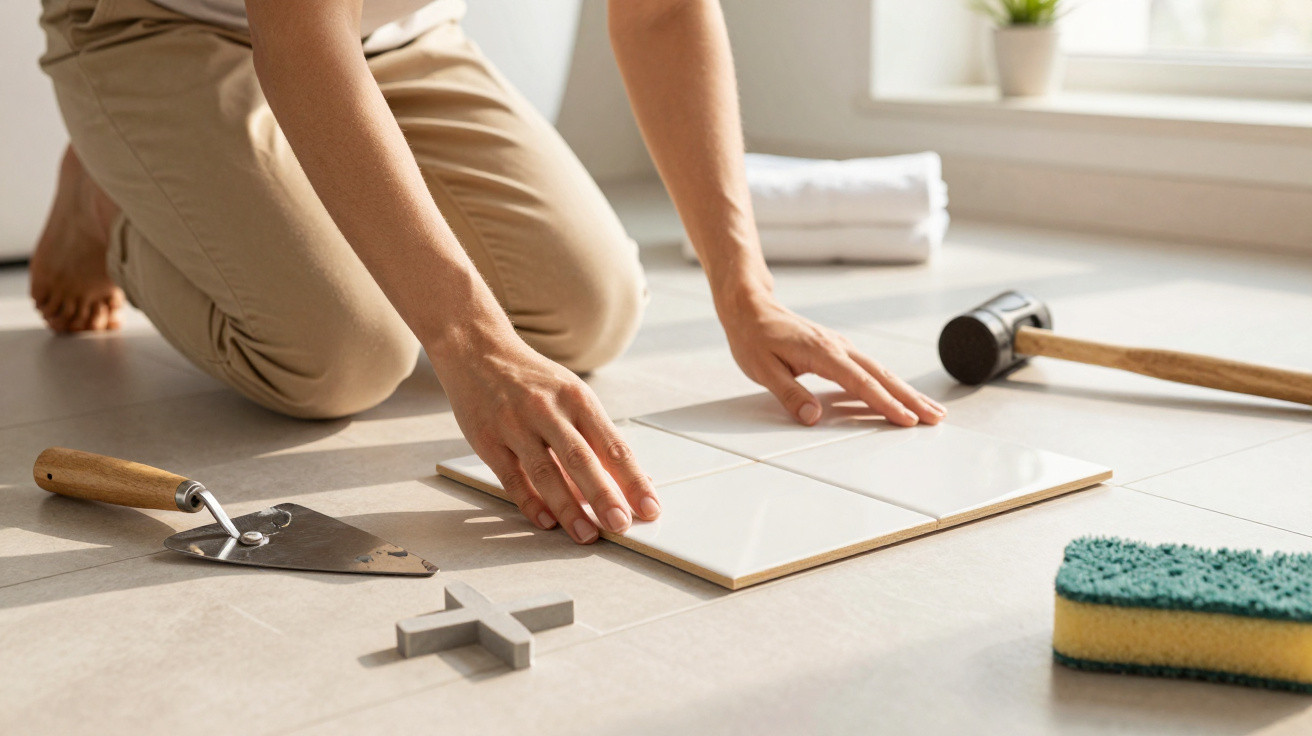
- Replace grout or porous materials that are deeply contaminated.
How do you reapply silicone to prevent further leaks?
Allow the joint to dry completely. A fan or hairdryer on a cool or warm setting, kept at a distance, can help moisture evaporate, but it must not overheat the glass or tiles. Apply masking tape on both sides, then use fungus-resistant sanitary silicone, creating one continuous bead without breaks or air bubbles.
Smooth it immediately using a suitable tool or a gloved, lightly dampened finger, taking care not to let soapy water get underneath the sealant. Remove the tape before a surface skin forms, and follow the manufacturer's curing time in full; this may mean keeping the shower enclosure dry for 24 hours or longer.
How can you stop silicone becoming mouldy and coming loose again?
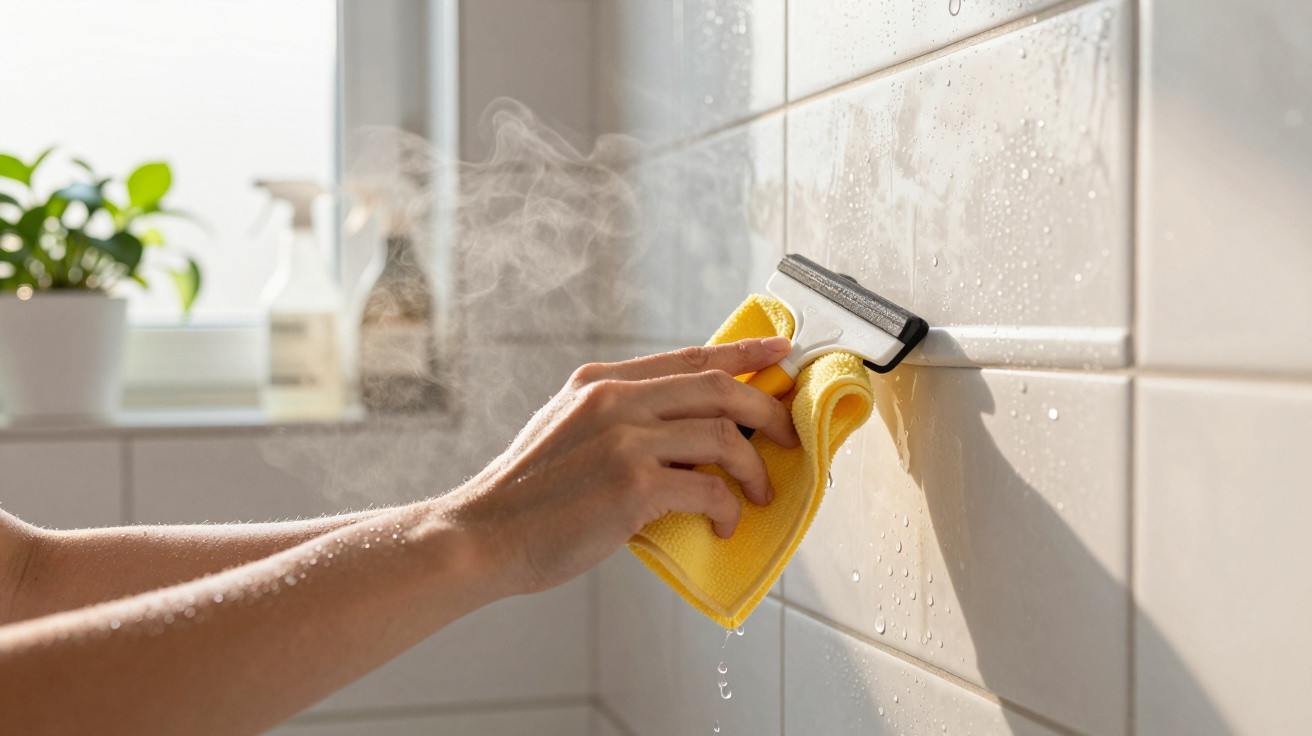
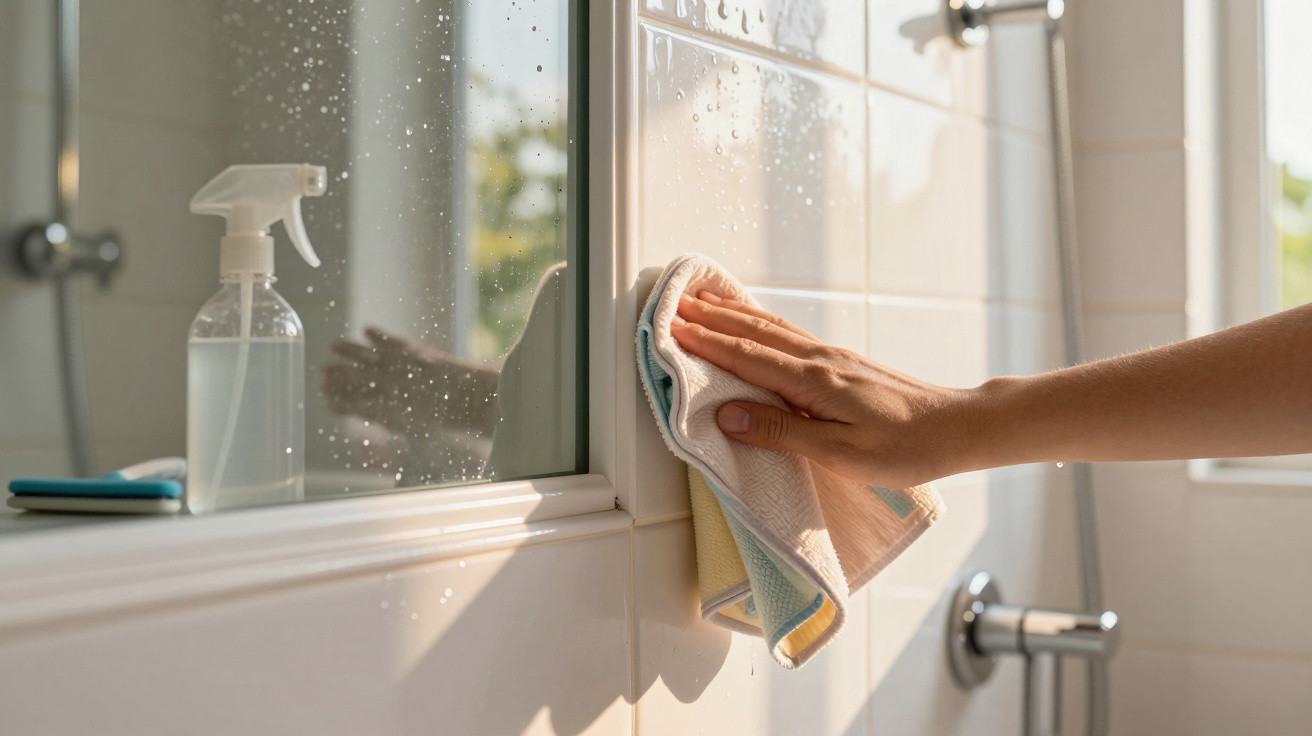
After showering, use a squeegee to remove pooled water, leave the shower enclosure door open and air the room. Do not scrub the bead with stiff brushes or abrasive cleaners. Regular gentle cleaning prevents soap deposits from building up into a layer on which mould can grow more easily.
Advice on preventing mould from returning in the bathroom also relies on controlling moisture. If water still appears outside the shower enclosure, tiles are bulging, or the new silicone comes loose quickly, there may be a waterproofing fault that needs professional assessment rather than simply replacing the sealant.



Comments
No comments yet. Be the first to comment!
Leave a Comment