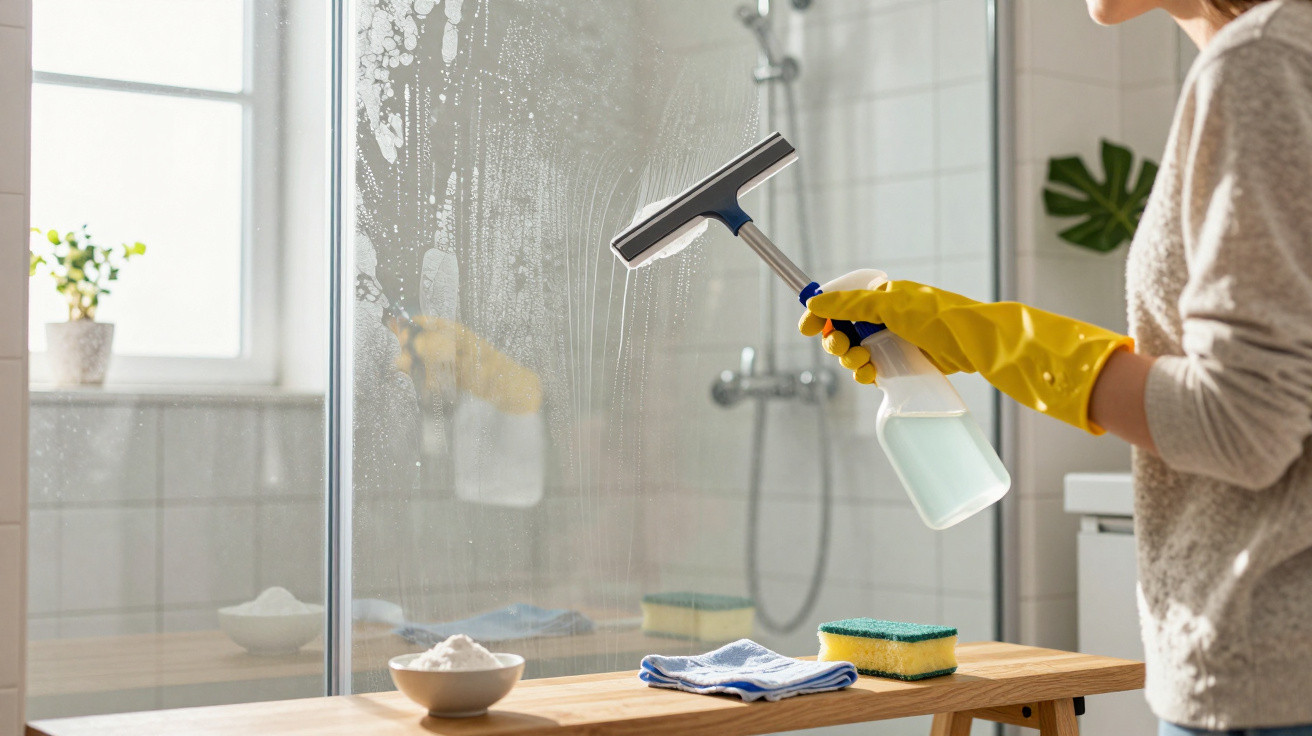
White marks, dark spots and that dull film on the bathroom shower enclosure can develop even when it is cleaned regularly. Glass and grout become stained by limescale, mould and soap residue, which readily cling to damp surfaces and gradually create a stubborn crust that water and washing-up liquid alone cannot remove.
Why do limescale, mould and soap cling so firmly to the bathroom shower enclosure?
Limescale is caused by mineral salts in the water, including calcium and magnesium. Once the water evaporates, these minerals remain on the glass, leaving rough, whitish marks. Mould, meanwhile, develops where there is ongoing dampness, poor ventilation and leftover hygiene products, creating suitable conditions for fungi and unpleasant odours.
Soap marks form when oils from soap and shampoo combine with limescale, producing a durable film. Because this layer contains both oily residue and minerals, it can seem as though it will not “come away” from the surface. It therefore needs a cleaning method that tackles minerals, grease and fungi simultaneously without harming the glass.
Watch this video from the YouTube channel Chef Taico, which discusses practical vinegar and bicarbonate of soda mixtures for cleaning glass surfaces and removing body-oil marks:
https://www.youtube.com/watch?v=uK8n_b_2jxE
How can you clean a bathroom shower enclosure with less physical effort?
To minimise scrubbing and prevent scratches on the glass, many people use a homemade combination in stages, with straightforward products that complement one another. The approach combines a mild acid for limescale, a degreaser for soap deposits and an antifungal component for mould in grout.
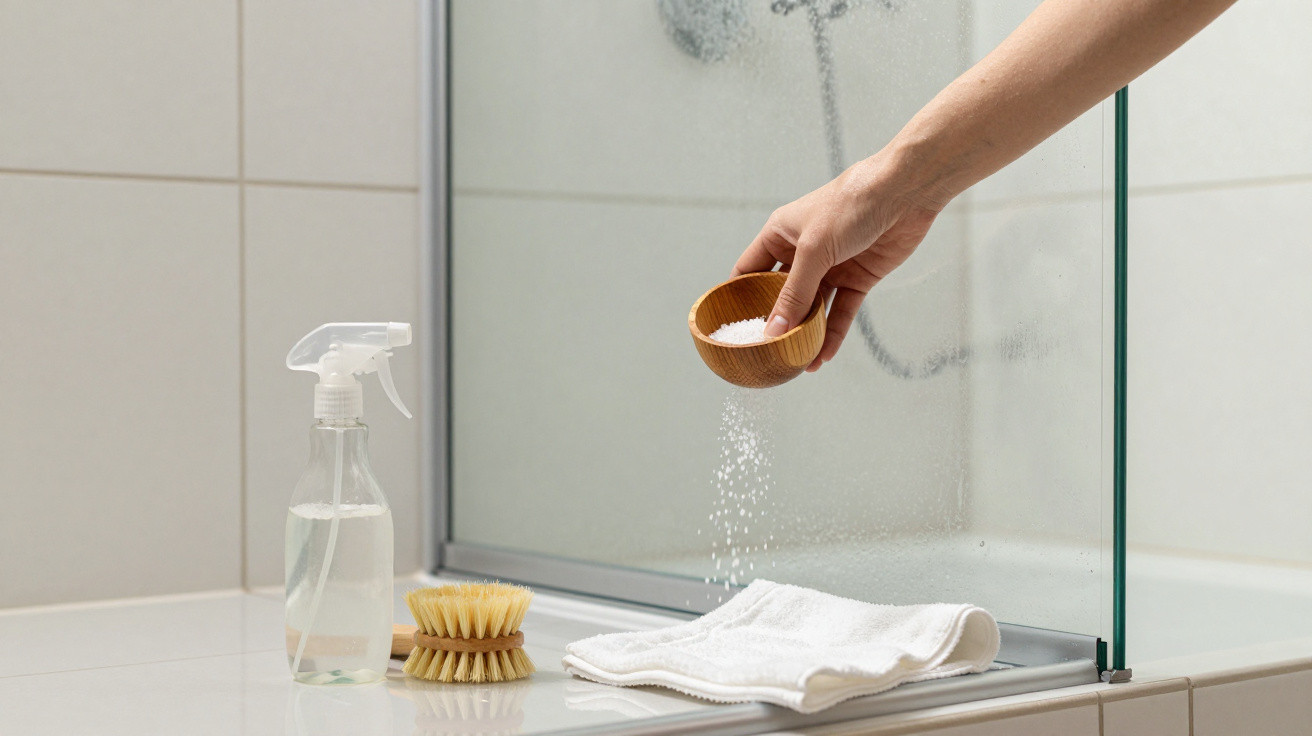
These products generally work well together when cleaning a bathroom shower enclosure, provided they are applied carefully and left for an appropriate amount of time:
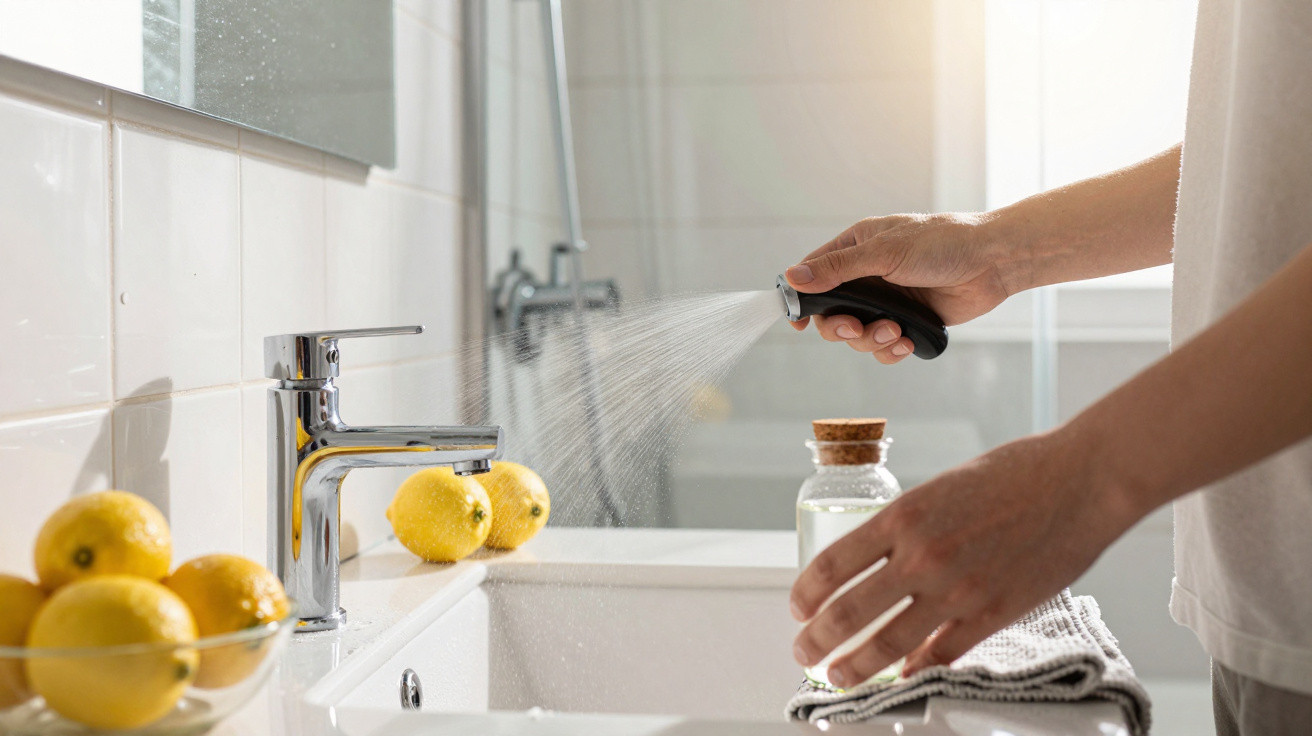
- Diluted white vinegar to help dissolve limescale;
- Neutral washing-up liquid to break down grease from soap products;
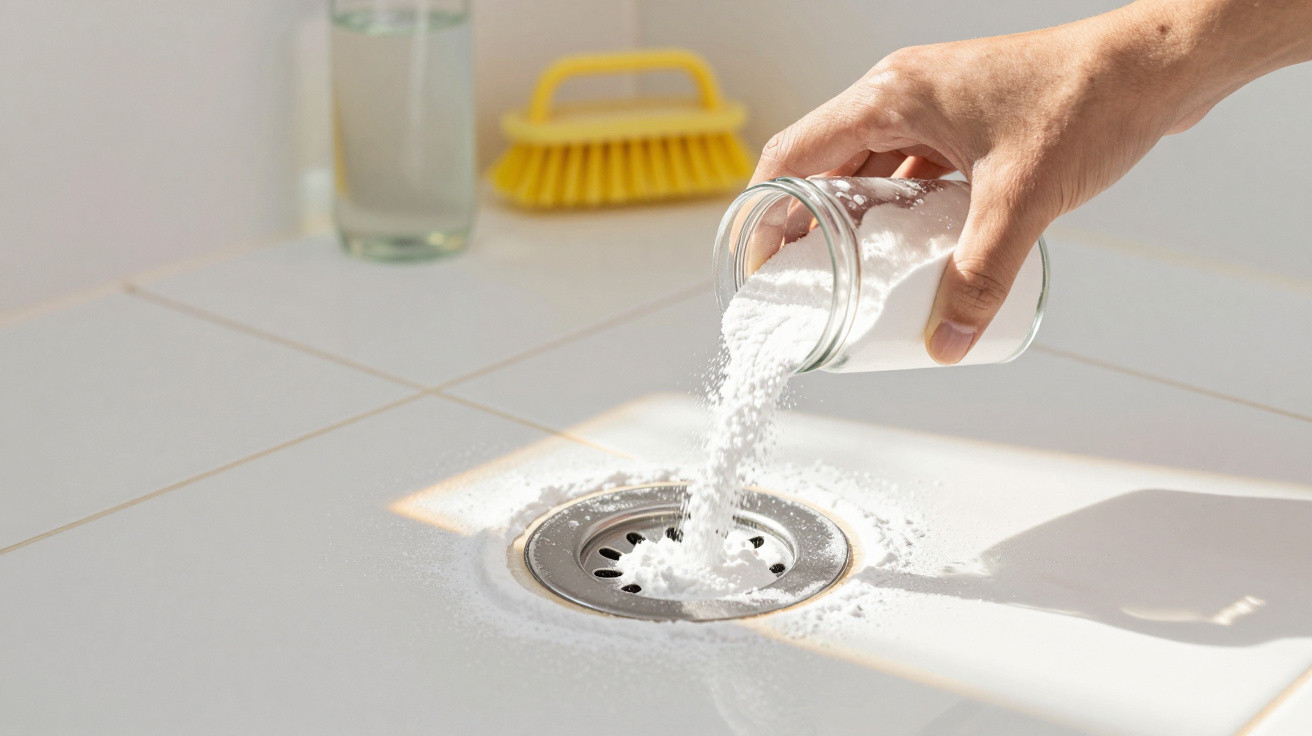
- Bicarbonate of soda as mild support for removal and odour neutralisation;
- Hydrogen peroxide in small quantities on grout to help tackle mould.
What is the practical step-by-step method for cleaning a bathroom shower enclosure?
Rather than using force, the key is to allow each product time to work and to follow a straightforward application order. This makes it easier to remove limescale, mould and soap deposits while using only gentle movements with the soft side of a sponge.
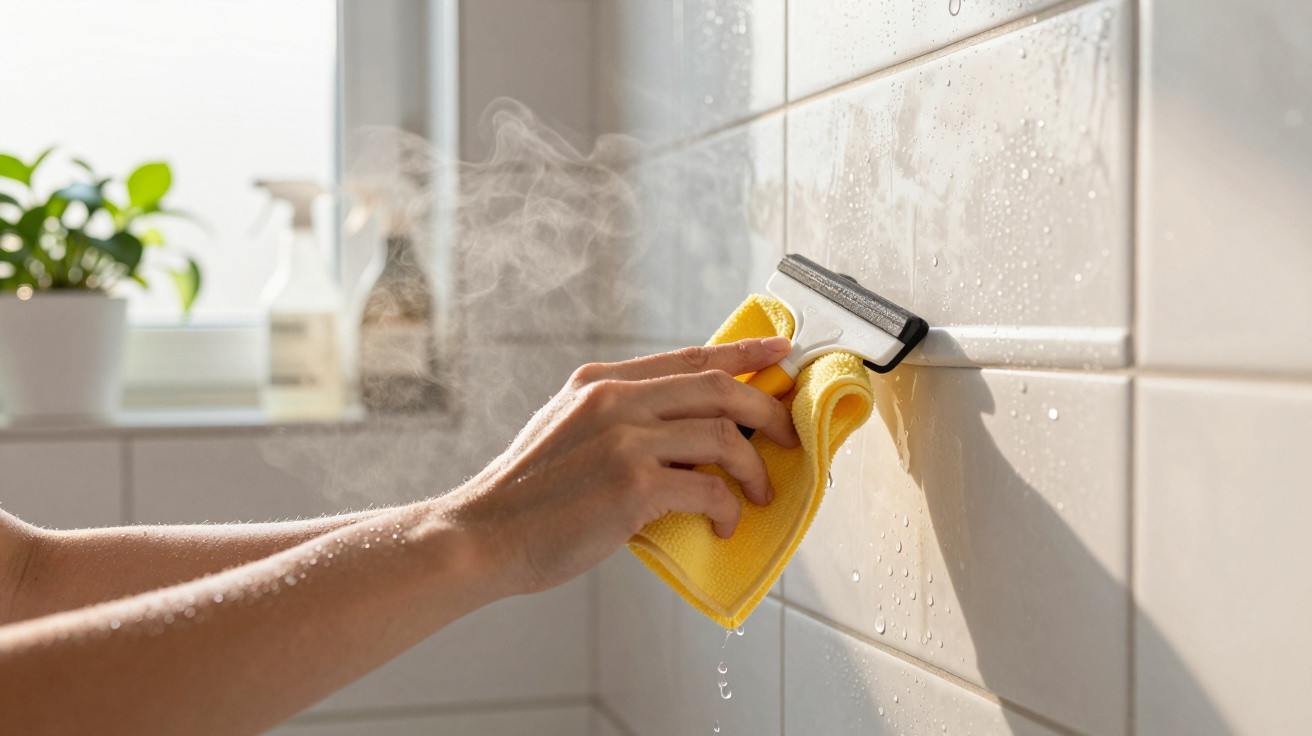
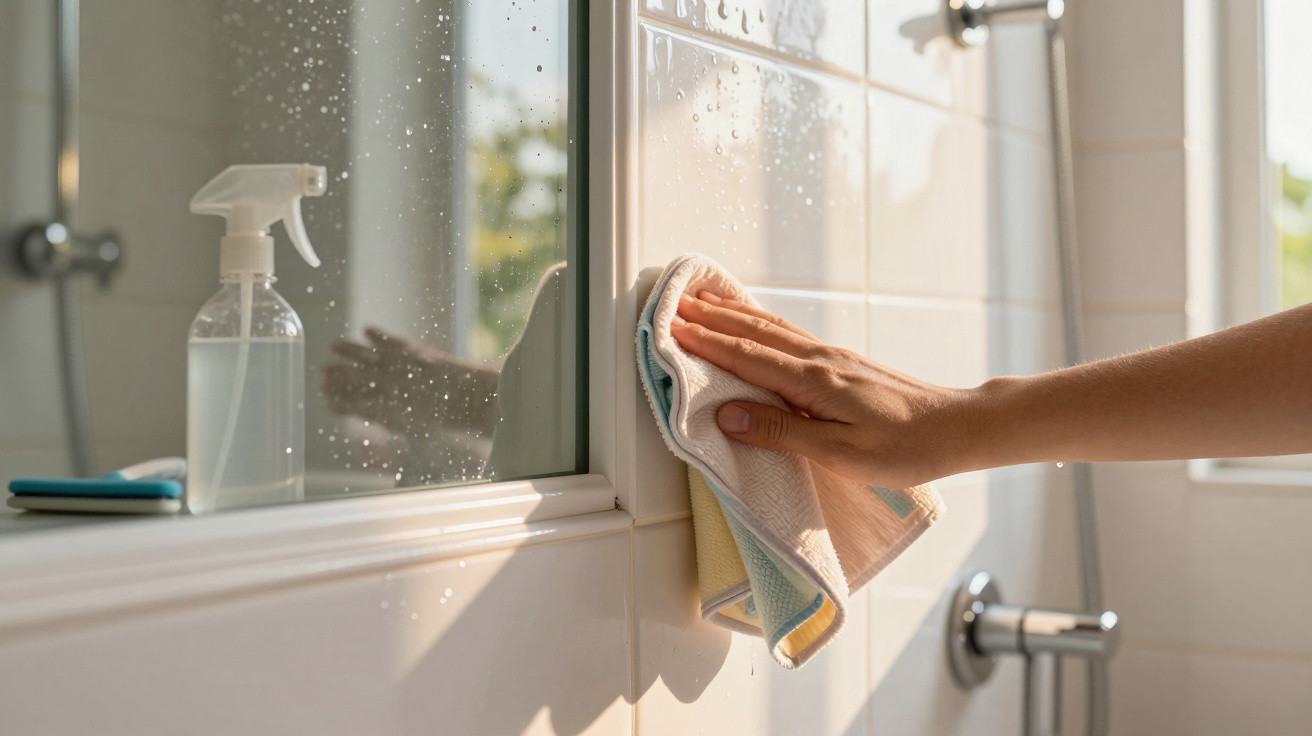
A basic method for cleaning a bathroom shower enclosure without harsh scrubbing is to ventilate the room well and remove any items first. Apply diluted vinegar to the glass and metal fittings, then leave it for 10 to 15 minutes. Treat grout with mild hydrogen peroxide, optionally combined with bicarbonate of soda. Next, use diluted neutral washing-up liquid simply to lift away the loosened dirt. Finally, rinse thoroughly and dry with a squeegee or microfibre cloth.
How often should you clean a bathroom shower enclosure to prevent stubborn stains?
Regular maintenance is vital for preventing thick layers of limescale, mould and soap from building up. In bathrooms used every day, it is helpful to rinse the enclosure and use a squeegee after each shower, or at least several times a week. This alone greatly reduces white marks and cloudiness on the glass.
A more thorough clean using the homemade combination can be carried out weekly or fortnightly, depending on water hardness and how many people use the bathroom. Keeping the room ventilated, drying the shower enclosure whenever possible and monitoring areas that remain constantly damp will help protect the grout, prevent fungal growth and keep the glass clear for longer, with less need for strong chemical products.





Comments
No comments yet. Be the first to comment!
Leave a Comment