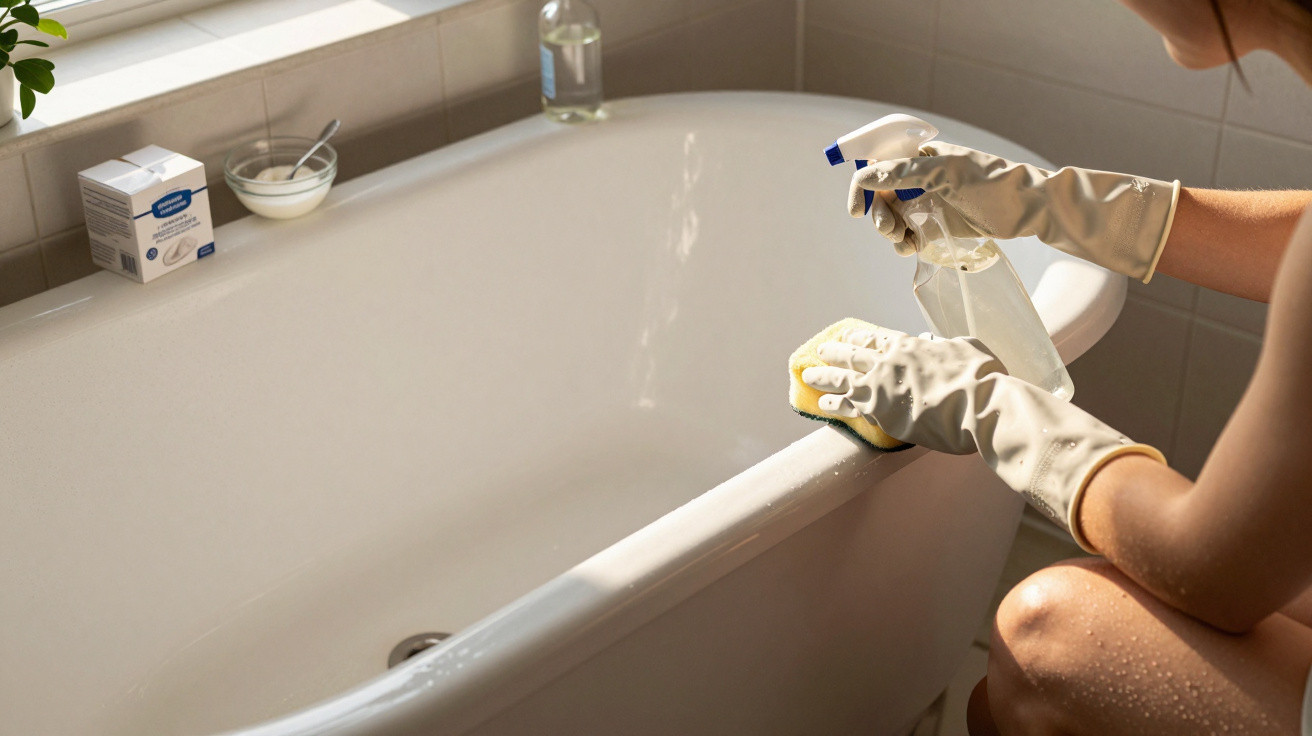
Your bathtub can look fresh again in no time.
Professional cleaners are increasingly sharing reliable cleaning tricks. Most use ordinary cupboard essentials rather than expensive specialist sprays. A few considered steps can remove soap scum, limescale and yellowing while protecting the surface from scratches.
Why bathtubs quickly become grey
Two main causes are responsible. Soap scum develops when soap fats combine with the minerals in hard water, adhering to enamel and acrylic almost like glue. Limescale then settles over it and becomes hard. Body oils, fake tan and bath oils add further layers of stubborn staining.
A large number of UK households are in hard-water areas, which accelerates mineral deposits. It can also reduce the effectiveness of ordinary washing-up liquid, as the minerals weaken its cleaning action. The answer is a combination that removes grease while releasing mineral residue at once.
Break the bond between fat and minerals, then lift the residue gently. That is the whole cleaning strategy in one line.
The low-cost bathtub cleaning recipe experts use
Professional cleaners regularly recommend this straightforward, inexpensive mixture. It deals with grease and scale without strong fumes and, when applied properly, is gentle on both enamel and acrylic.
The tub-brightening paste: 4 tbsp bicarbonate of soda + 1 tbsp washing-up liquid, loosened with warm water to a yoghurt-like paste. For yellowing or dye transfer, add 1 tbsp of 3% hydrogen peroxide.
Bicarbonate provides gentle abrasion and helps remove odours. Washing-up liquid breaks down oils, while peroxide increases whitening power on organic stains. Keep the mixture moist as it works, since dry powder may damage soft acrylic.
Step-by-step: from dull to bright
Kit you need
- Microfibre cloths and a non-scratch sponge
- A soft-bristle brush or old toothbrush
- Bicarbonate of soda, washing-up liquid, white vinegar and 3% hydrogen peroxide
- A spray bottle, rubber gloves and good ventilation
Method
- Rinse the bathtub using hot water to loosen dirt. Take out bath mats and metal racks.
- Apply the paste to dull areas and tide marks. Clean in sections to prevent it from drying.
- Leave it in place for 10–15 minutes. Spray lightly with water if it begins to dry out.
- Work the surface with a soft sponge. Use a toothbrush around the silicone and overflow cut-out.
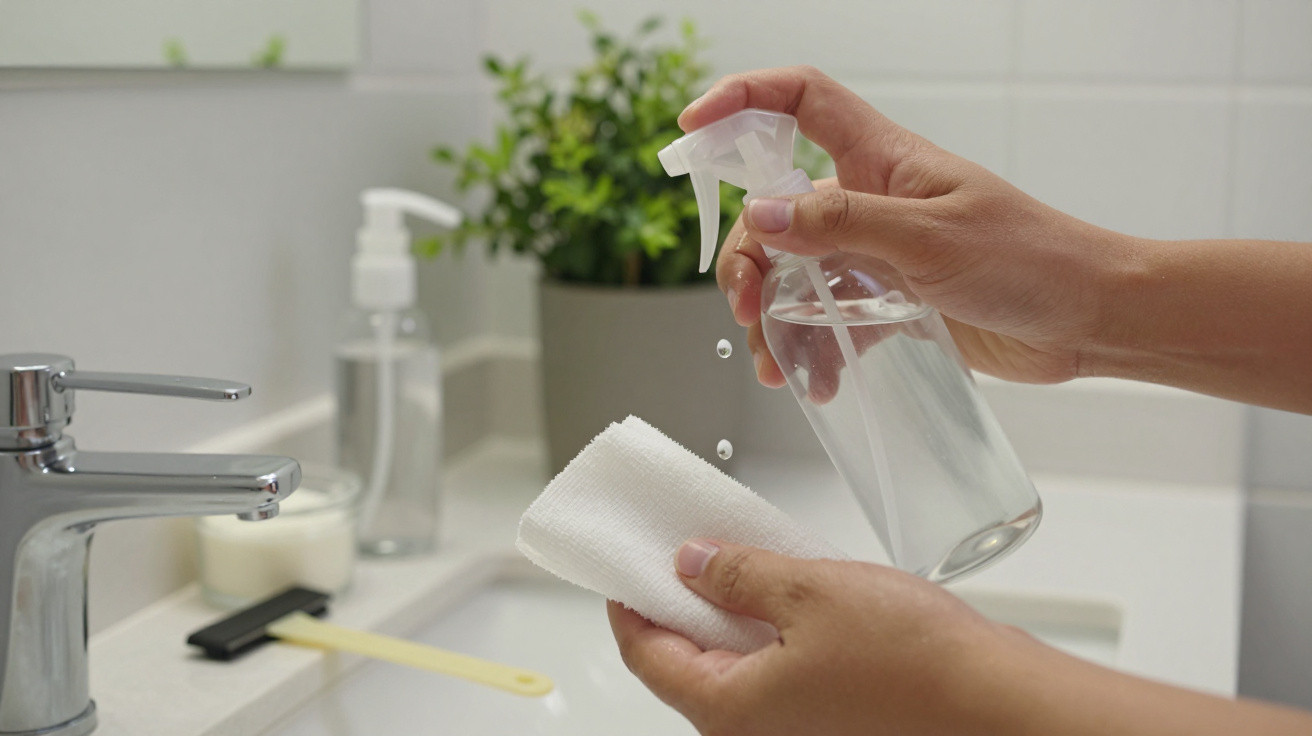
- Treat limescale on taps and the drain separately by spraying white vinegar and leaving it for 5–10 minutes. Never combine vinegar with bleach or peroxide during the same stage.
- Rinse completely with warm water, then use a microfibre cloth to identify any areas you missed.
- If yellowing remains, apply the peroxide-containing paste only to the affected mark. Leave for 10 minutes before rinsing thoroughly.
- End with a cold-water rinse. Dry the bathtub to prevent fresh mineral droplets from creating rings.
The sweet spot is dwell time. Give the paste time to loosen bonds, then wipe. Force rarely beats patience here.
Tough bathtub stains and how to treat them
Different stains require different cleaning chemistry. Deal with the specific mark rather than simply scrubbing more vigorously.
| Stain | What to use | Dwell time | Safe on | Notes |
|---|---|---|---|---|
| Heavy limescale | White vinegar or 10% citric acid solution | 10–20 min (re-wet as needed) | Enamel, acrylic | Rinse well; avoid prolonged contact with marble or natural stone surrounds. |
| Yellowing/grey film | Bicarb + washing-up paste; add 3% peroxide for whitening | 10–15 min | Enamel, acrylic | Keep paste damp. Patch-test peroxide on aged acrylic. |
| Rust flecks | Lemon juice + salt paste or a rust remover labelled for baths | 5–10 min | Enamel; cautious on acrylic | If rust returns, the source may be a chipped drain or old water supply. |
| Hair dye/fake tan | Bicarb + peroxide paste, or oxygen bleach powder in warm water | 10–20 min | Enamel, acrylic | Never mix with chlorine bleach. Repeat rather than scrubbing hard. |
| Mould on sealant | Chlorine bleach gel, 1:10 with water | 10–15 min | Silicone only | Mask surrounding metal. Ventilate well. Rinse and dry thoroughly. |
What not to use on acrylic and enamel
- Never apply abrasive powders dry; turn them into a wet paste first.
- Do not use green scourers or magic erasers on glossy acrylic, as they can take away its shine.
- Avoid automatic dishwasher tablets because they may etch the finish.
- Never combine bleach with vinegar, ammonia or peroxide. The risk of gas and burns is genuine.
- Do not allow acidic liquids to sit on chrome for extended periods, as they can pit its surface.
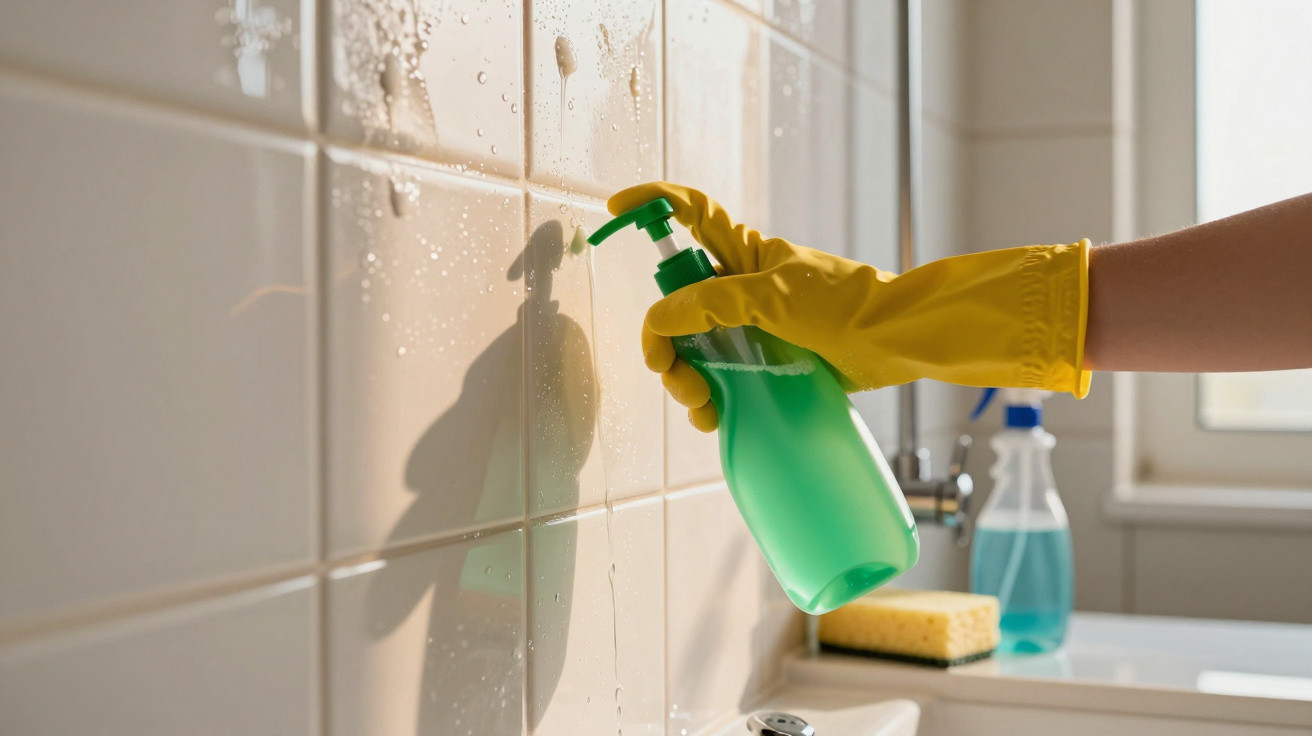
Safety first: gloves on, window open, products used one at a time with a rinse between each step.
Keep your bathtub white for longer
Small routines help a bright bathtub remain that way. Soap scum accumulates quickly after hot baths, so deal with it while the surface is still warm. A 30-second rinse and wipe can save work later.
- Replace bar soap with shower gel to reduce fatty deposits.
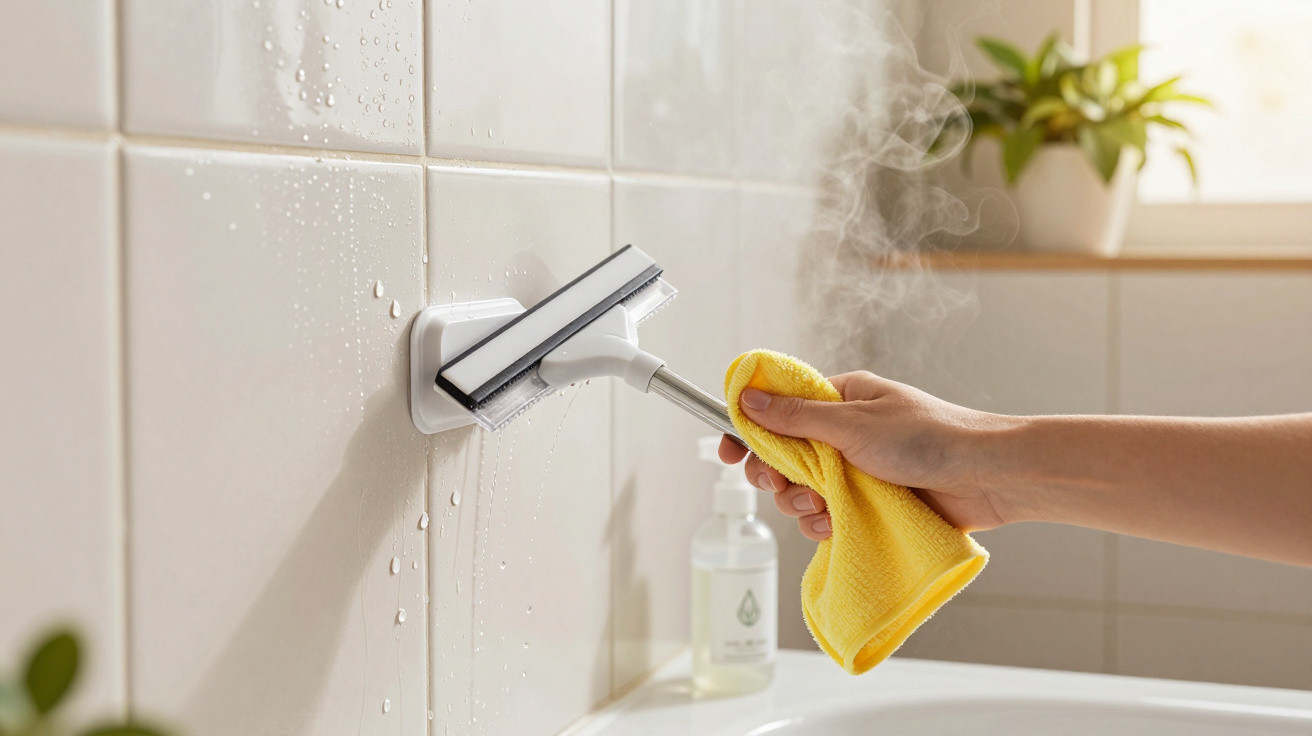
- Rinse and squeegee the bathtub after every use. Dry the edges where water collects.
- Once a week, use a quick paste clean only around the ring zone.
- In a hard-water area, carry out a monthly citric-acid soak on taps and around the drain.
- Leave the extractor running for 15 minutes after bathing to lower humidity.
Costs, water type and when to escalate
Buying bicarbonate of soda and white vinegar in bulk brings the cost down to pennies per clean. A 500 g tub of bicarbonate provides roughly 12 full cleans. A bottle of 3% peroxide should last for several months when used for occasional whitening tasks. Store products simply: keep bicarb in a labelled jar, vinegar in a separate spray bottle and never mix them together.
Hard-water levels differ around the UK. Deposits form more rapidly in some parts of the South and East. In these regions, citric acid can work better than vinegar because it is stronger gram for gram, smells less pungent and stores effectively as a powder. Begin with a 10% solution, increasing strength only if the scale remains.
If the bathtub still feels rough after cleaning, its glaze could be worn. It remains cleanable, but new stains will appear more quickly. Consider professional re-glazing or a fitted liner at this stage. For minor enamel chips, a touch-up kit can help prevent rust and stop marks from spreading.
A final time-saving idea is to treat the bathtub before bed. Allow the paste to work while you brush your teeth, then rinse and dry it. By morning, you will have a bright, clean bath without any harsh scrubbing at the start of the day. Small adjustments can make a big difference to the whole room.


Comments
No comments yet. Be the first to comment!
Leave a Comment