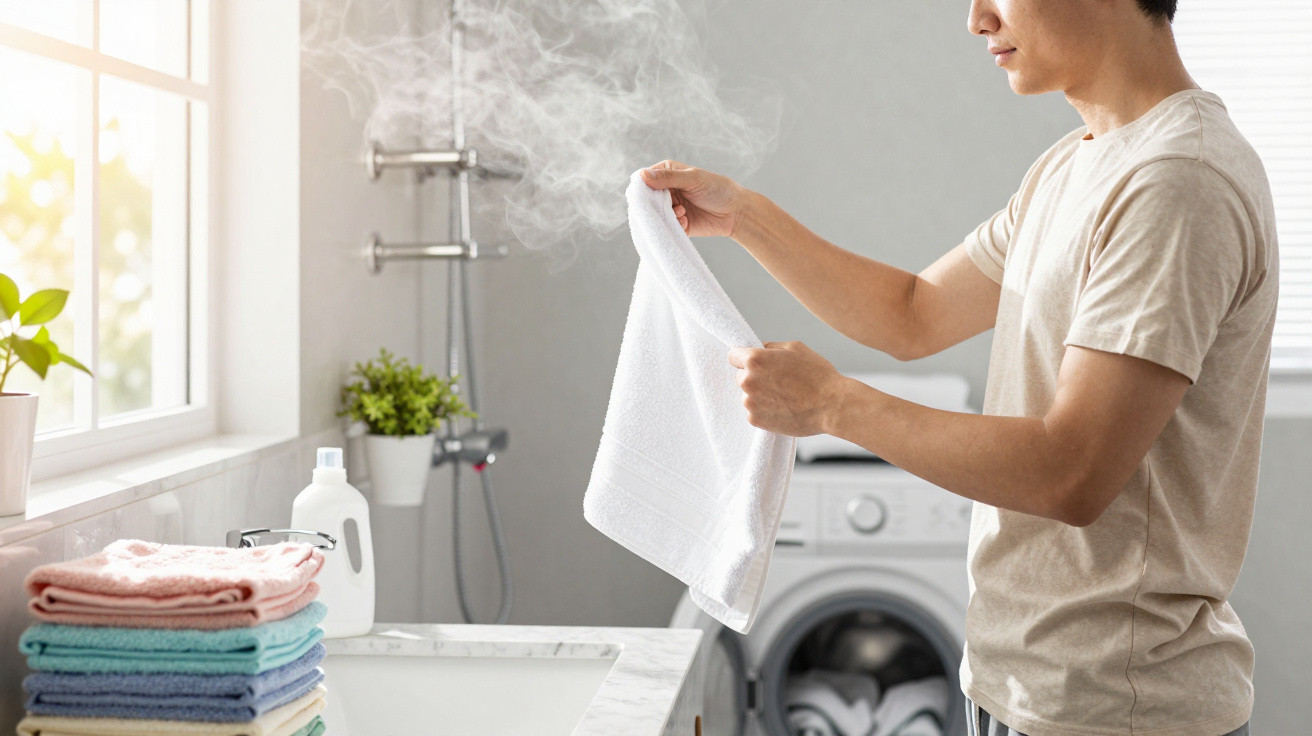
Most people give little thought to towels at home. You shower, dry yourself, hang the towel up again – job done. Anyone who is reasonably tidy adds it to the wash on Sunday and assumes everything is fine. Yet that routine does not match what microbiology tells us.
Why towels are hidden breeding grounds for germs
Even freshly washed skin is not sterile. Each time you dry yourself, more is transferred to the fabric than you might expect:
- dead skin cells
- skin oils and traces of sweat
- residue from shower gel, shampoo, cream and make-up
Combined with moisture, these substances create an ideal breeding ground. Microorganisms multiply especially quickly in a warm bathroom with poor ventilation.
Towels can already be heavily contaminated with bacteria and fungi after just two or three uses.
Experts warn that using towels for too long can lead to skin issues, ranging from irritated, itchy skin to staphylococcal infections. People with acne, eczema or allergies are often more susceptible because their skin barrier is already compromised.
One practical detail also matters: people who regularly use inhalers bring additional germs close to their mouth and nose. If these come into contact with an old, damp towel, exposure around the face increases further.
How often you should really wash different towels
The widely used schedule of “once a week” is rarely suitable. Experts recommend much shorter intervals, depending on the type of towel:
| Type of towel | Recommended washing frequency |
|---|---|
| Bath towel / shower towel | after no more than 3–4 uses |
| Hand towel by the basin | every 1–2 days |
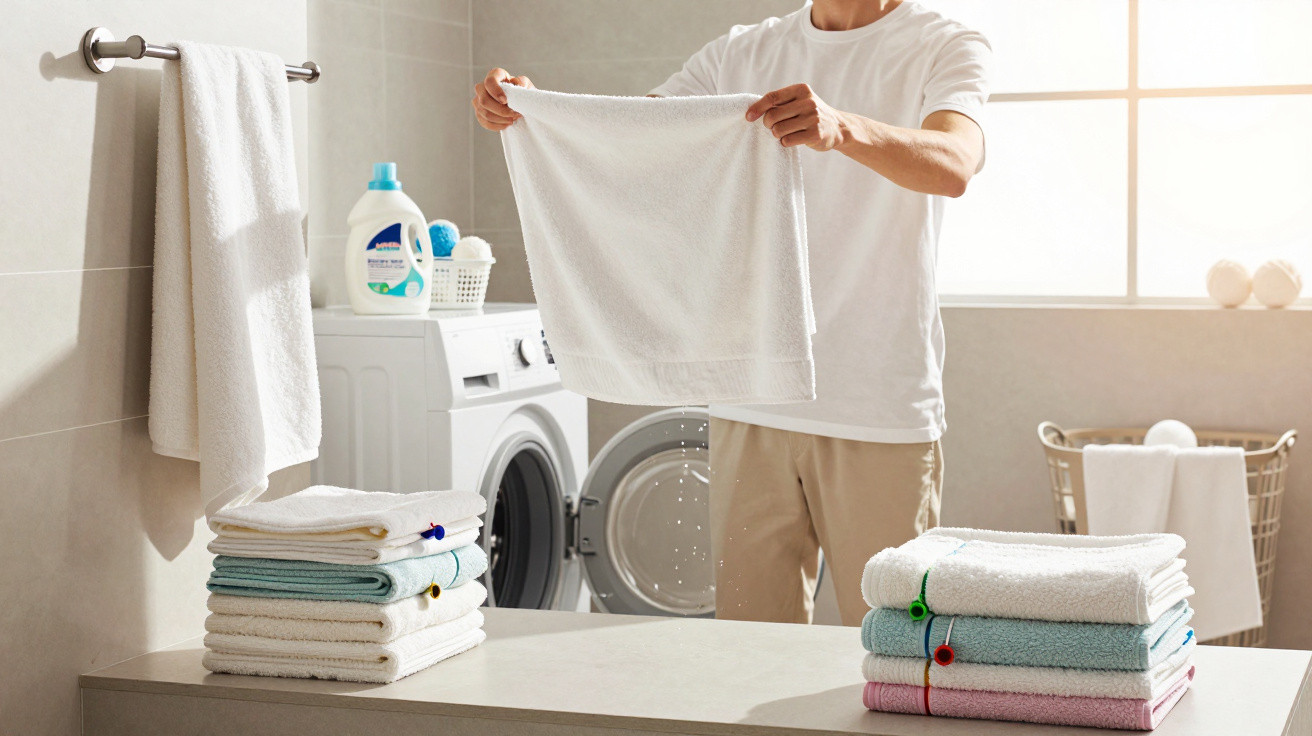
| Sports or gym towel | after every use |
| Face towel | change daily |
If you shower every day, this means washing a bath towel every two to three days. It may sound demanding, but it is a direct investment in the health of your skin.
A damp towel can double its bacterial count within 20 minutes – particularly in a poorly ventilated bathroom.
The best routine also depends on the conditions:
- Climate: Germs reproduce faster during warm, humid summer months, so towels need washing more often.
- Ventilation: If your bathroom has no window, be especially consistent about washing towels or hang them to dry in another room.
- Health: Fresh towels are essential if you have sensitive skin, open areas of skin or infections – daily, if in doubt.
How to care for towels properly – step by step
The time until the next wash is not the only factor. A few straightforward habits can significantly reduce the number of germs.
Dry towels properly instead of letting them turn musty
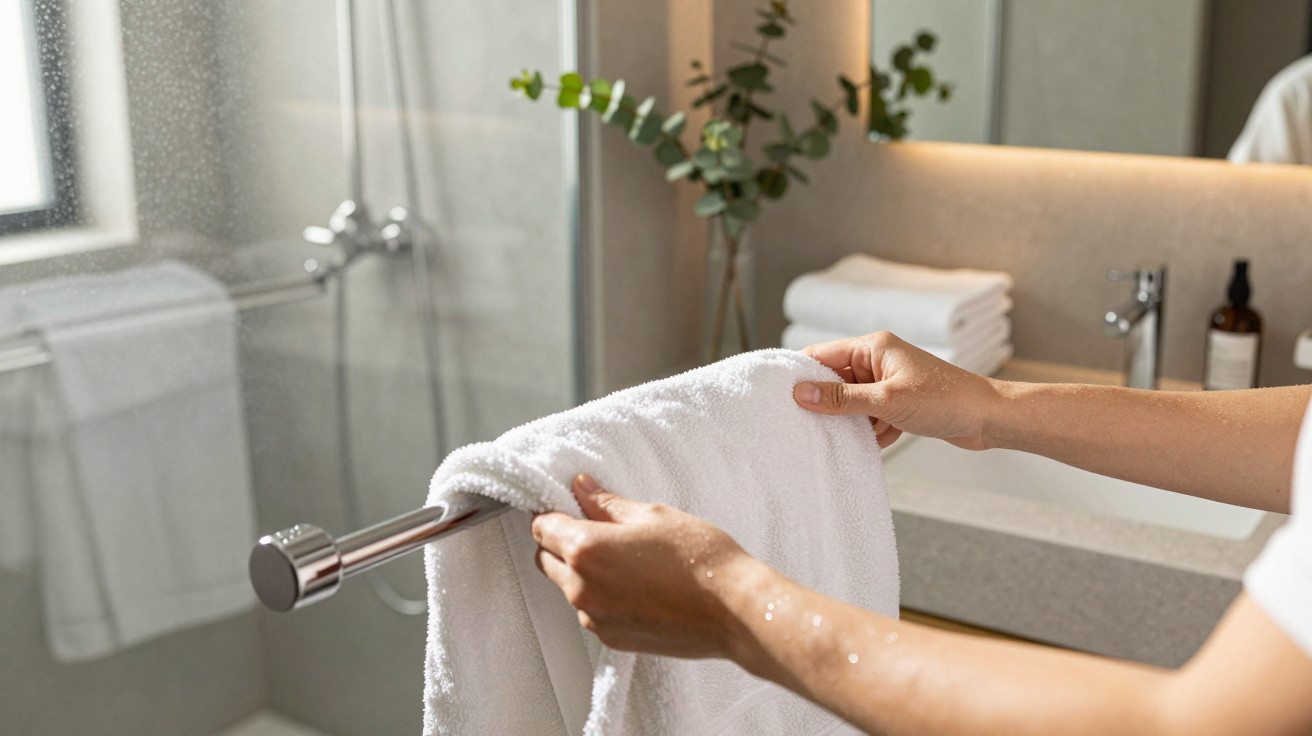
- Spread towels out fully after showering rather than leaving them crumpled over a hook.
- If the bathroom is very humid, hang the towel in the hallway or by an open window.
- Do not pile towels on top of one another – every layer needs air circulation.
The more quickly the fabric dries, the less favourable conditions are for bacteria and fungi.
Washing temperature, detergent and fabric conditioner
- Temperature: Ideally, wash towels at 60°C. This reliably kills most germs.
- Biological detergent: Powder or tablets containing bleaching agents help tackle odours and discolouration.
- Use fabric conditioner sparingly: It coats the fibres like a film, leaving them soft but less absorbent.
- Household remedy: A splash of white vinegar in the fabric-conditioner drawer can neutralise smells and loosen residues.
How long towels can stay in the cupboard
Even the best care routine eventually reaches its limit. Over the years, fibres lose their structure, become thin and grey, and absorb water less effectively.
Towels should be replaced after around two years of intensive use at the latest – sooner if they are badly worn.
The more porous the fabric becomes, the harder it is to wash hygienically clean. Germs have more tiny spaces in which to settle.
Common everyday mistakes – and how to avoid them
Many issues stem from convenience or habit. Common examples include:
- One towel for the entire family: This may reduce the washing load, but it also transfers germs from one person to another. Everyone needs their own towel.
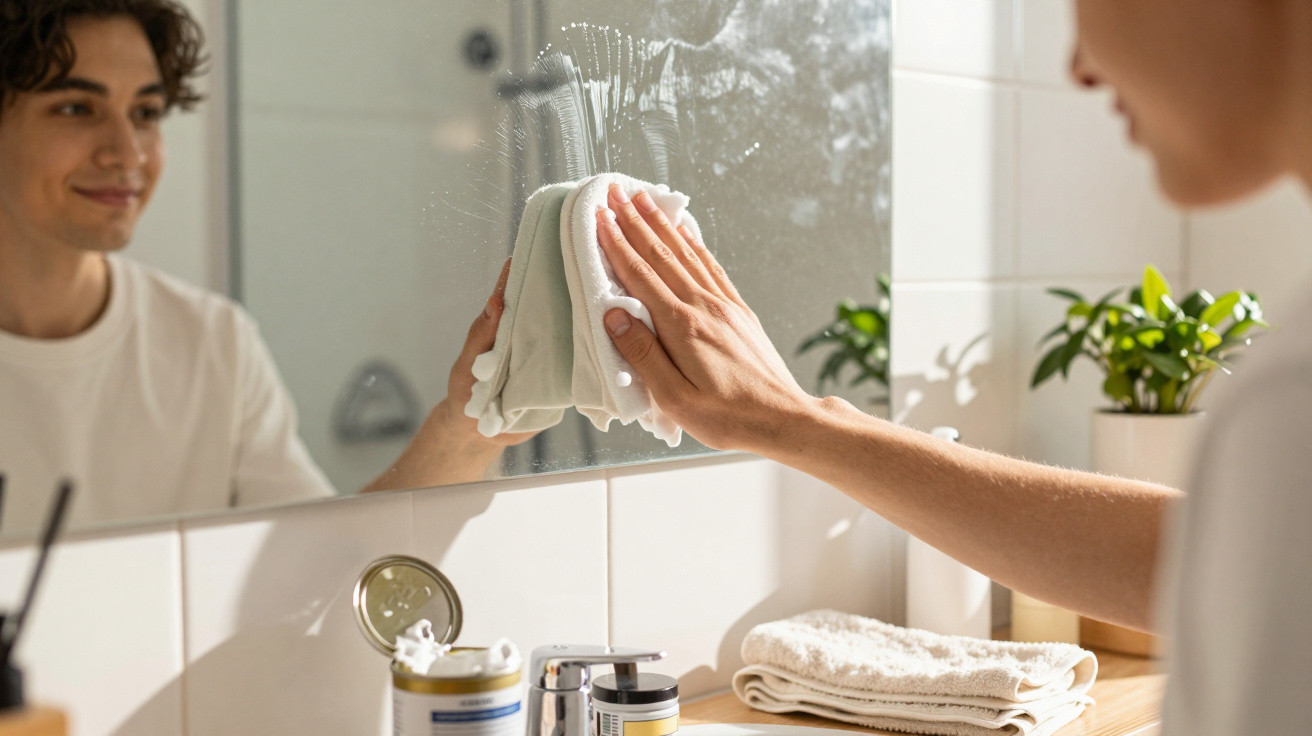
- Using the same towel for face and body: Anyone prone to blemishes should use a separate small face towel exclusively for that area.
- Using towels as multipurpose cloths: Drying hair first, then wiping feet, and occasionally dabbing the floor – this is a sure route to a high germ load.
- Using them continuously for weeks: “It still looks clean” is misleading – smells and stains usually appear well after the germs do.
When extra care is needed
Some circumstances call for even greater discipline with towel hygiene:
- Skin conditions: For fungal infections, eczema or open wounds, use disposable towels or plan to wash them very frequently.
- Homes with babies and young children: Children’s skin is more sensitive, so it is better to wash too often than too rarely.
- Shared houses or flatshares: Keep towels strictly separate and label them clearly to prevent mix-ups.
- Gym and swimming pool: Wash towels straight after use rather than leaving them in a sports bag for days.
What terms such as “germ” and “microorganism” mean
People often refer to “germs”, but what exactly does that mean? The term covers tiny living organisms that cannot be seen with the naked eye: bacteria, fungi and sometimes viruses. Bacteria and fungal spores are the main types found on towels.
Many are harmless, and some are even beneficial. They become a concern when they are present in large numbers, enter broken skin or affect people with weakened immune systems. Damp towels provide the ideal launchpad for this.
That is why a small everyday adjustment is worthwhile: keep more towels in circulation, use them for shorter periods and dry them consistently. It takes hardly any extra time, yet can substantially reduce the risk of irritated skin, facial spots or persistent bathroom odours.





Comments
No comments yet. Be the first to comment!
Leave a Comment