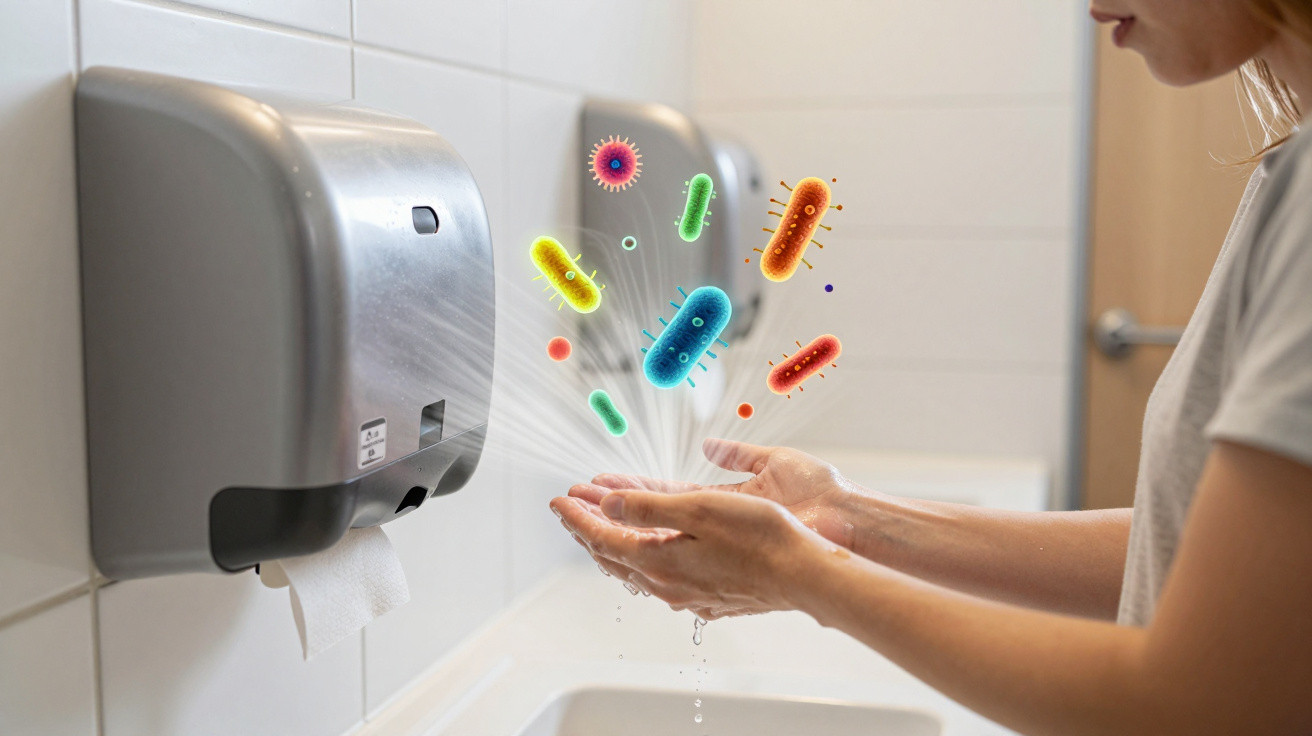
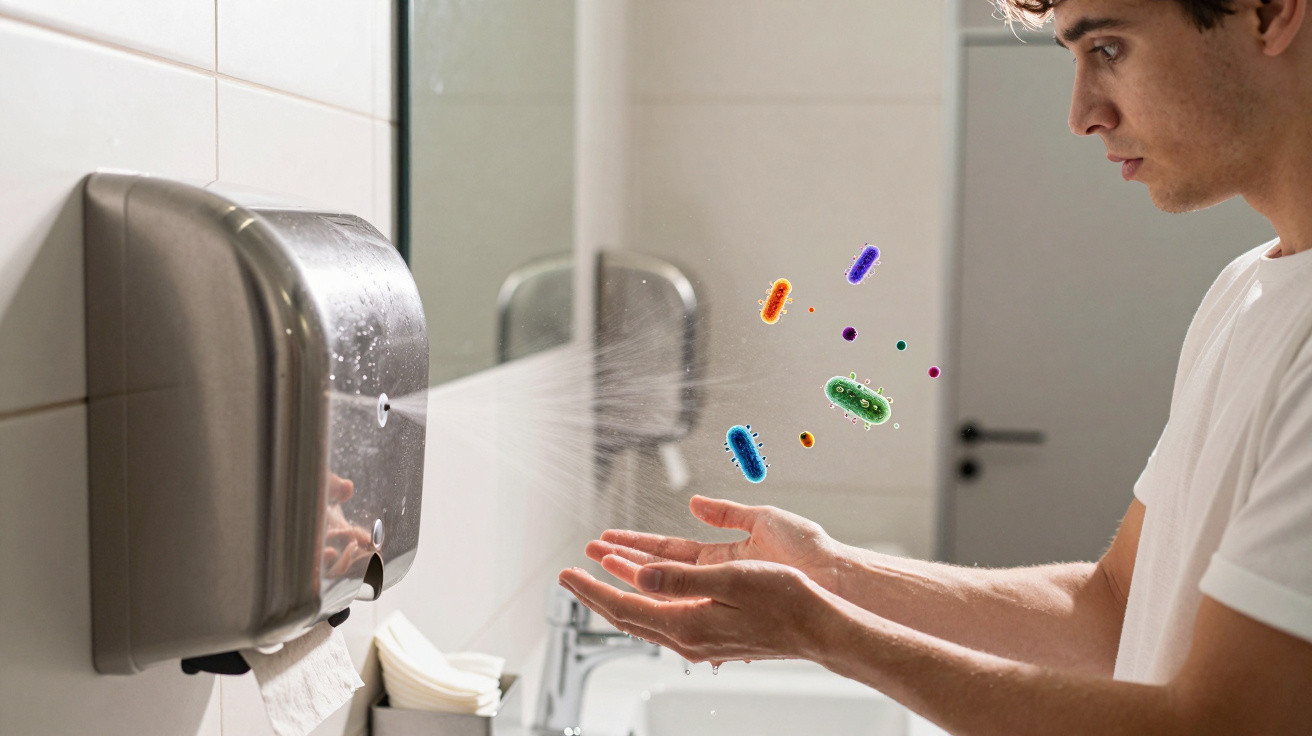
Anyone who carefully washes their hands after using the toilet will usually feel they have done enough. Hold them briefly under a stream of warm air and the job is done. But a scientist has used a simple experiment to show that this supposedly hygienic step may do the exact opposite: rather than providing cleanliness, many machines appear to blow a cocktail of germs straight onto freshly washed hands.
How a TikTok experiment made the cloud of germs visible
The researcher, who goes by the name “Devon Science” online, wanted to find out what really comes out of a hand dryer. There was no high-tech laboratory or million-pound equipment involved – just Petri dishes and some patience.
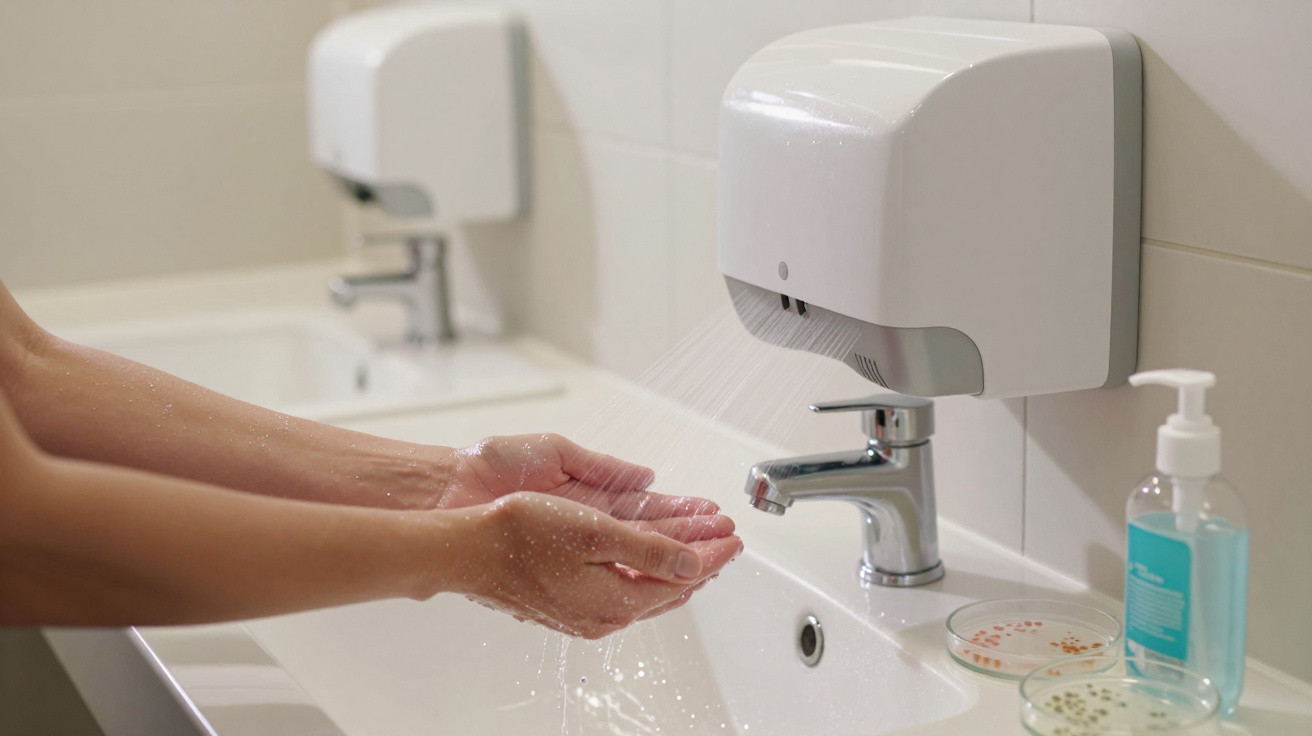
- She held one Petri dish directly beneath the airflow from a public hand dryer.
- A second dish was left in the clean laboratory as a control.
By the following day, the contrast was striking. The dish left in the laboratory was almost empty, with barely a mark on it. The dish from the toilet, however, was covered in yellow, white and black colonies. Each colony represents bacteria that multiplied from a single germ into a visible patch.
The experiment suggests that the airflow throws bacteria from the toilet air directly onto hands – and in considerable quantities.
The test challenges the convenient assumption that hand dryers are automatically more hygienic than paper towels. In reality, the appliances seem more like fans that distribute at high speed whatever is floating around the room or has accumulated inside them.
Which microbes can end up on your hands
The exact mix of germs depends on the particular toilet. However, the same usual suspects repeatedly appear in this type of investigation.
Typical bacteria and fungi found in public toilets
- Staphylococcus aureus: Often found on human skin and in the nose. If it enters a wound, it can trigger abscesses, inflammation and, in severe cases, blood poisoning.
- Escherichia coli (E. coli): Normally belongs in the gut. Some strains are harmless, while others can cause severe diarrhoea, abdominal cramps and urinary tract infections. In toilets, the source is usually faecal contamination.
- Fungal spores: Black spots in the dishes often point to mould or other fungi. They are generally only an annoyance for healthy people, but can worsen breathing problems in allergy sufferers or people with weakened immune systems.
This is precisely what makes the issue significant: hands are the main means of transmission in everyday life. Once they touch door handles, bus grab rails or food, the germs can quickly spread further.
Why hand dryers spread germs so efficiently
These machines operate on a straightforward principle: a motor draws in air, partly heats it and forces it at high speed through a narrow opening. In practice, this creates several problems.
High-speed airflows act as a germ catapult
- Extreme air currents: Modern jet hand dryers can reach air speeds of several hundred kilometres per hour. Anything on nearby surfaces or in the surrounding air can be disturbed and carried along.
- Aerosol generation: Flushing toilets produces tiny droplets known as aerosols. They contain microscopic particles of faeces, urine and mucus. The dryer’s airflow can pick up these particles and blast them across the room.
Anyone standing directly beneath the machine may get this mixture on their hands, forearms and sometimes even their face. It may look clean, but the actual “coating” remains invisible.
Dirt inside the machines
In the second stage of her experiment, “Devon Science” swabbed the inside of a machine. The swab turned dark. This indicates a biofilm made up of dust, skin flakes, moisture and germs that may have built up over months or years. Whenever the motor starts, the airflow can tear away parts of this layer.
Hand dryers therefore operate like a permanent fan, connecting the machine’s inner wall with the mixture of air in the room – without any visible warning signs for users.
Technical measures: HEPA filters and UV light
Manufacturers have long recognised the issue and promote ever more hygiene features. Two technologies are at the centre of this approach.
What HEPA filters can do – and what they cannot
- Filtering intake air: HEPA filters (High Efficiency Particulate Air) can remove up to 99.97 % of particles measuring 0.3 micrometres or more from the air.
- Effective against bacteria and dust: Many bacteria, fungal spores and dust particles fall within this size range or are attached to larger carrier particles. They are trapped by the filter.
- The maintenance issue: A filter only works if it is changed regularly and fitted correctly. In poorly maintained installations, filters can themselves become a source of germs.
In reality, no one knows when a filter was last replaced in a motorway service station toilet or railway station. The technology may sound reassuring, but it says little about the condition of an individual machine.
UV sterilisation as a selling point
Some newer models use UV light, usually inside the air channel. UV radiation can damage bacterial DNA and thereby deactivate germs. It sounds appealing on paper, but several questions remain in practice:
- Is the airflow exposed to the light for long enough?
- How dirty do the UV lamps themselves become?
- Who checks whether the lamps are still working?
Until these systems have proved themselves over the long term and are introduced more widely, the level of safety for users remains difficult to assess.
Comparison: hand dryer or paper towel?
Several studies have compared different drying methods. Their overall direction is repeatedly similar:
| Method | Hygiene | Practical considerations |
|---|---|---|
| Hot-air hand dryer | Can blow germs onto hands and clothing, and extends the time spent in the toilet | No refilling required, often cheaper to run |
| Jet hand dryer (air curtain) | Powerful airflow distributes aerosols around the room; internal components are often contaminated with germs | Dries hands quickly, gives a modern impression |
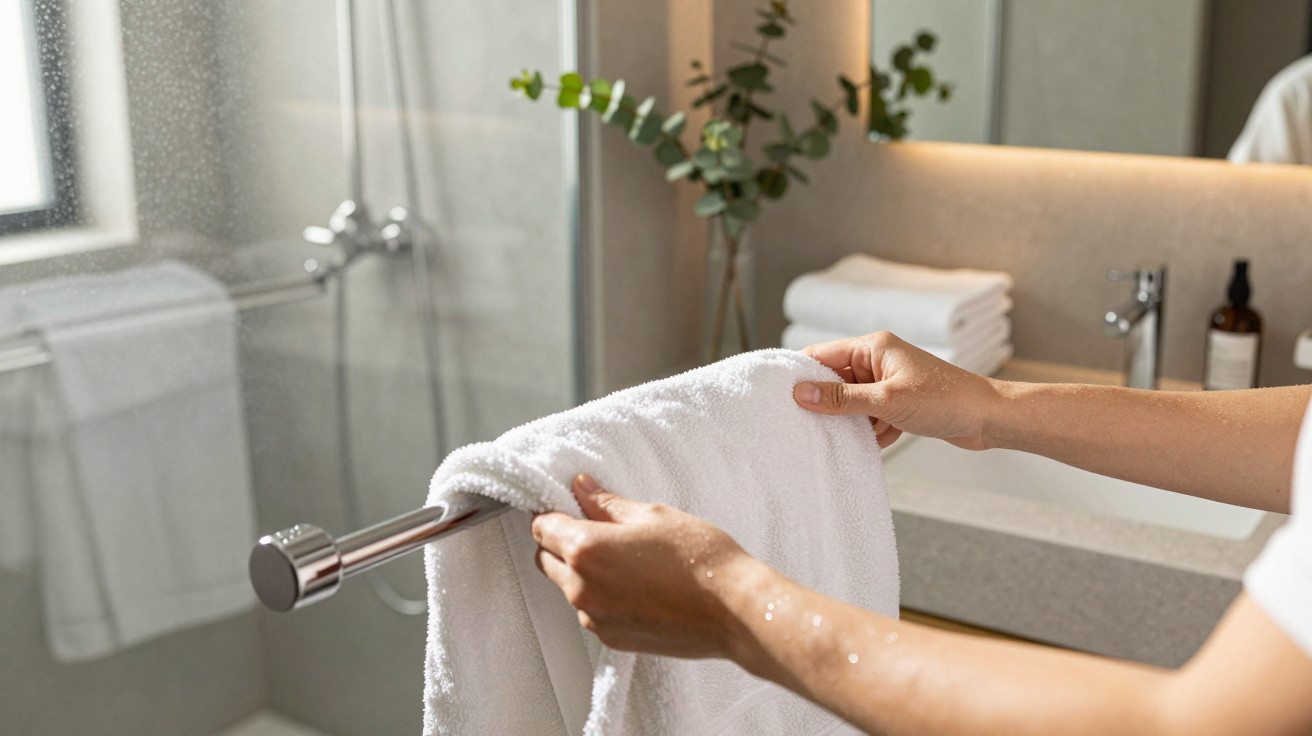
| Paper towels | Reduce germs on the skin because friction picks up microbes | More waste, with greater storage and replenishment requirements |
For hospitals, many hygiene specialists still recommend paper towels because they do not spread germs and can mechanically remove some bacteria during drying.
How to protect yourself better in everyday life
Nobody can carry out a laboratory analysis after every toilet visit. However, a few simple habits can substantially reduce the risks.
- Wash thoroughly: Use soap for at least 20 seconds, cleaning the palms, between the fingers, thumbs and fingernails.
- Choose paper: Use paper towels wherever they are available, even if they seem less convenient.
- Avoid hand dryers: In busy toilets, it is better not to stand beneath the airflow at all. Shake your hands lightly and let them air-dry instead.
- Keep your face away: If a dryer switches on automatically, keep your distance so that the air stream does not blow directly into your face.
- Consider door handles: After drying, open door handles with a paper towel or your elbow whenever possible.
The safest option: wash hands thoroughly, dry them with paper – and touch as few surfaces as possible on the way out.
Why the debate about hand dryers is gaining momentum
The TikTok video from “Devon Science” went viral because it made an abstract issue visible. Many people already suspected that toilets were not sterile, but regarded the machines on the wall as neutral or “cleaner than paper”. The images of the Petri dishes directly challenge that instinct.
Healthcare workers also joined the discussion, raising questions about hand dryers in hospitals and GP surgeries. In places used by particularly vulnerable groups of patients, the idea of a wall-mounted shower of germs feels especially unsettling.
What terms such as aerosol and biofilm mean
Anyone trying to assess the risk more clearly will quickly encounter technical terms. Two appear again and again.
- Aerosols: Tiny droplets that remain suspended in the air. They can stay in a room for minutes or hours and transmit illnesses such as influenza or Covid-19. Hand dryers increase the turbulence of these particles.
- Biofilm: A slimy layer of bacteria, fungi and their metabolic products that forms on surfaces – for example in water pipes, ventilation ducts or inside hand dryers. Once established, a biofilm is difficult to remove.
These biofilms are particularly problematic: germs can survive for long periods beneath the visible surface, protect one another and repeatedly release particles into the surrounding environment.
What this means for public buildings and operators
Operators of shopping centres, railway stations, cinemas and hospitality venues face an uncomfortable trade-off: paper towels create costs and waste, while electric dryers seem more sustainable but are attracting growing criticism. Over the long term, combined solutions could make sense, such as much better toilet ventilation, regular hygiene checks on machines and paper towels being offered alongside them.
Until such standards become established, the everyday approach remains practical: if there is a choice, use paper. Where it is not provided, consistent handwashing, keeping a short safety distance from the machines and recognising that dry hands are not automatically clean hands can all help.


Comments
No comments yet. Be the first to comment!
Leave a Comment