A shower spray that shoots sideways. What once felt like summer rain now resembles a moody drizzle. Water marks gradually appear, until one day the shower head looks worn-out and flecked. Hard water never announces itself: it leaves limescale, dries quickly and acts as though nothing occurred. If you are currently staring at those chalky specks, you are far from the only one.
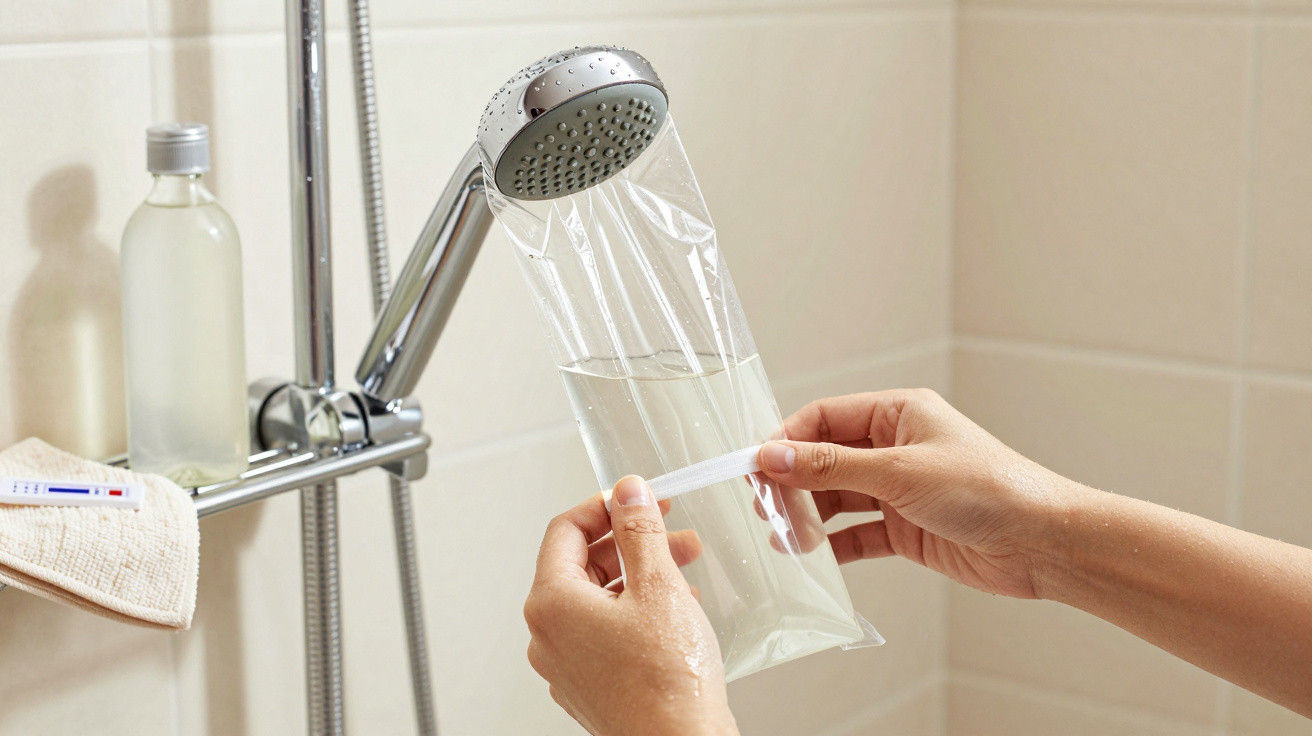
The other morning, I noticed the light catching my shower head from exactly the wrong angle. Its chrome surface looked as if someone had sprinkled it with flour, while half the jets hissed rather than ran properly. I tried turning it, gave the side a tap – a very human response – and felt that familiar irritation when a minor job takes up your time. Then I recalled a tip my neighbour had shared between recipe ideas and boiler chat. I filled a bag, secured it with a band and left time to do the work. There is a sound reason it works.
What causes those chalky marks?
Water spots are not grime; they are mineral traces. As hard water dries on metal, calcium and magnesium salts remain behind, creating tiny raised deposits that reflect light and take away the shine. That is why a shower head becomes cloudy and tiles start to lose their gleam. The nozzles block gradually, meaning the earliest clue is often not what you see. Instead, it is reduced pressure and one wayward jet spraying your elbow.
Across much of the UK, tap water contains minerals collected from chalk and limestone bedrock. This is why kettles develop furred deposits and taps acquire white rings. One reader in Kent was convinced his mixer valve had broken, yet the answer was surprisingly straightforward: a brief soak and a toothbrush. Afterwards, he sent me a photograph, pleased as punch. It looked brand new. It is the sort of quiet success you can really feel.
Limescale develops as warm water evaporates and dissolved calcium carbonate comes out of solution, attaching itself to metal and rubber. Heat makes the process happen faster. Acid reverses that chemistry, converting the carbonate into soluble forms that can be rinsed away. Chrome and nickel coatings are not suited to forceful scrubbing or powerful alkalis, so cream cleaners and abrasive powders can cause more damage than benefit. Nine times out of ten, a mild acid and some patience outperform hard work.
The five-minute bag-and-vinegar trick for shower heads
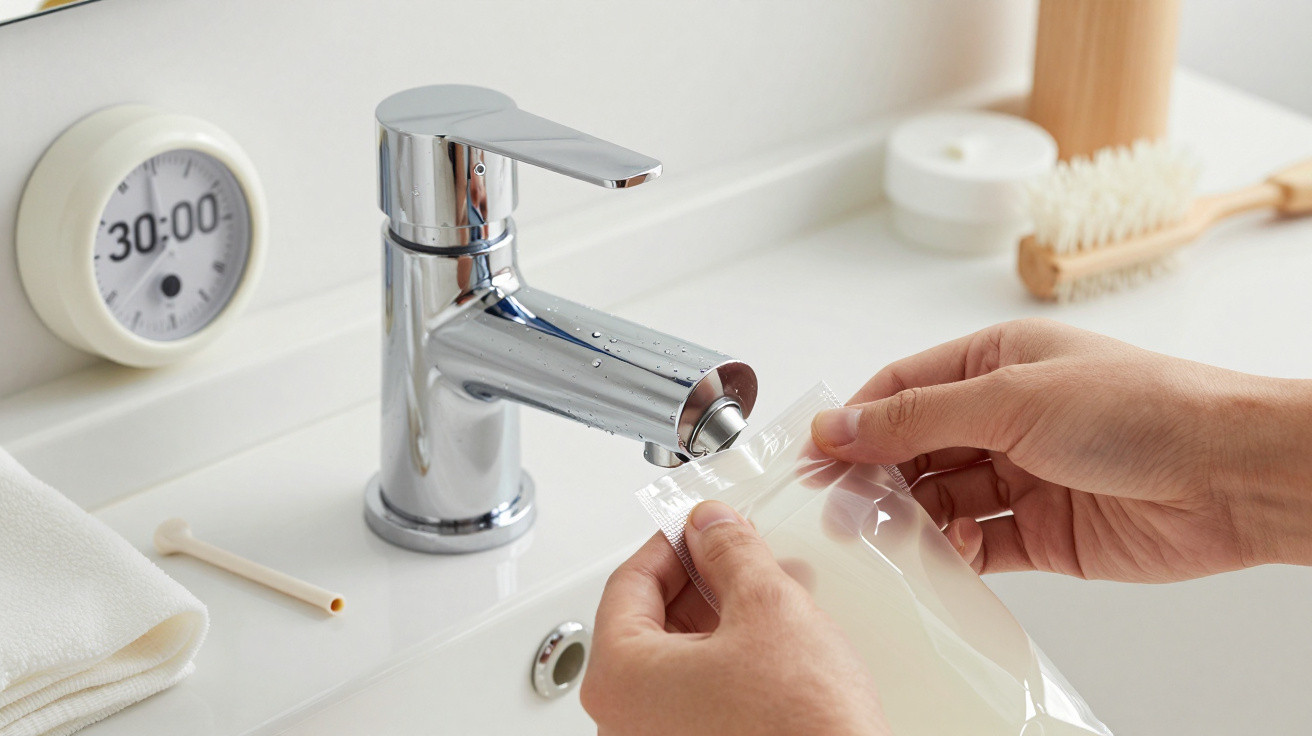
You will need a small zip-seal bag, white vinegar, warm water and a rubber band. Combine equal parts vinegar and warm water, then fill the bag halfway. Place it over the shower head with the nozzles beneath the liquid, then secure the bag tightly around the neck with the band. Leave it for 30–60 minutes when you clean fairly regularly, or for as long as two hours where limescale is particularly stubborn. Remove the bag, lightly brush the face with an old toothbrush, run hot water for one minute and dry it with a microfibre cloth. This trick takes five minutes of hands-on time.
Not keen on the smell of vinegar? Put a small strip of lemon peel into the mixture, or choose low-odour citric acid instead: use one tablespoon for every 250 ml of warm water. Where the shower is installed above natural stone, such as marble or limestone, protect the stone with a towel to prevent accidental drips from etching it. Nickel, brass and gold-tone finishes need a gentler solution and a shorter soaking time. We have all seen a bathroom turn into what looks like a science experiment that has gone wrong. Begin cautiously, observe what happens and adapt as needed. No scrubbing marathon, no harsh chemicals.
Where your shower head has rubber nozzles, press and roll each one between your thumb and finger after soaking to loosen any remaining flakes. With a fixed rain shower head, position the bag higher and use two bands to keep it secure. For a handset, remove it and immerse it in a bowl for more consistent coverage. Honestly, nobody does this daily. Deal with it when the spray pattern starts irritating you, or once each month in hard-water areas. Your water pressure will thank you.
“I used to think I needed a new shower. Turns out I needed a sandwich bag and vinegar,” said Tom, a plumber from Leeds who’s seen hundreds of scaled heads revived in under an hour.
- Mix: equal parts white vinegar and warm water, or prepare a mild citric acid solution.
- Soaking time: 30–60 minutes; reduce this for delicate finishes.
- Finish: use a toothbrush, rinse with hot water and dry with microfibre to avoid fresh marks.
- Avoid: harsh abrasives, extended soaking of plated brass and drips on natural stone.
- Frequency: whenever the spray misbehaves, or monthly in hard-water postcodes.
Keeping your shower head sparkling
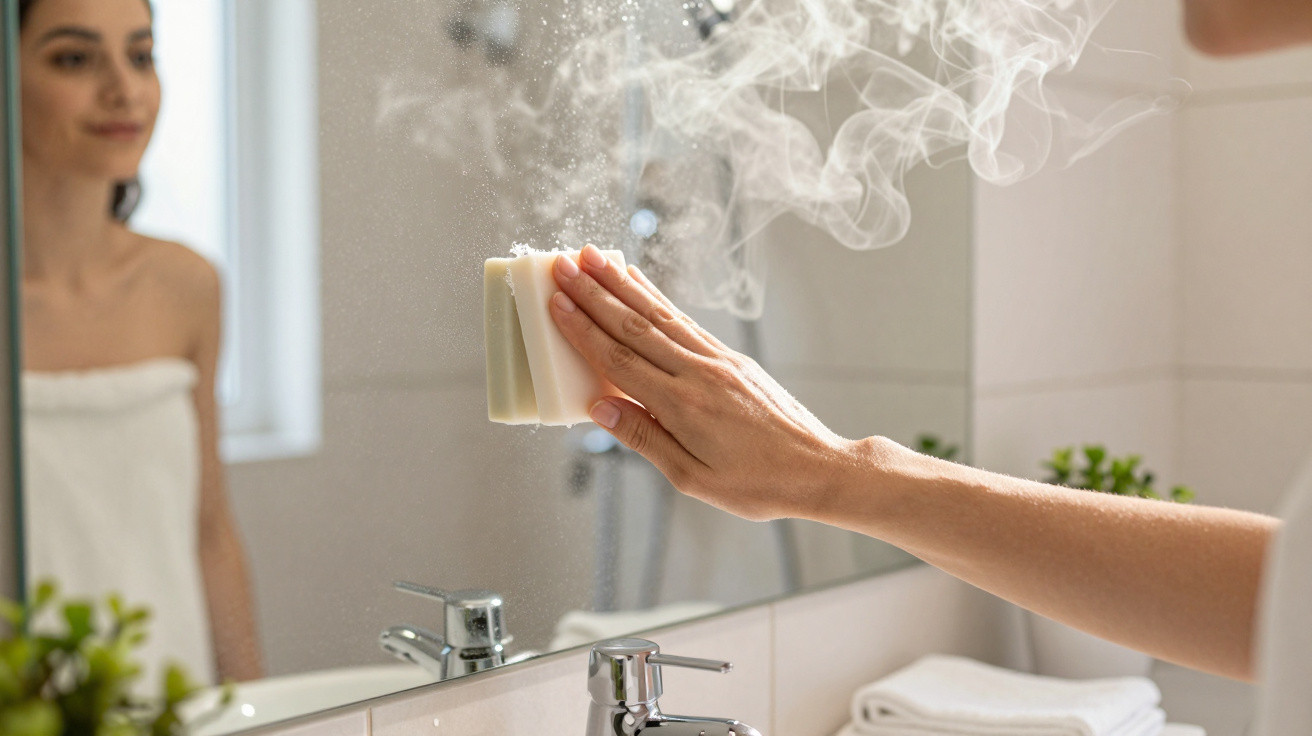
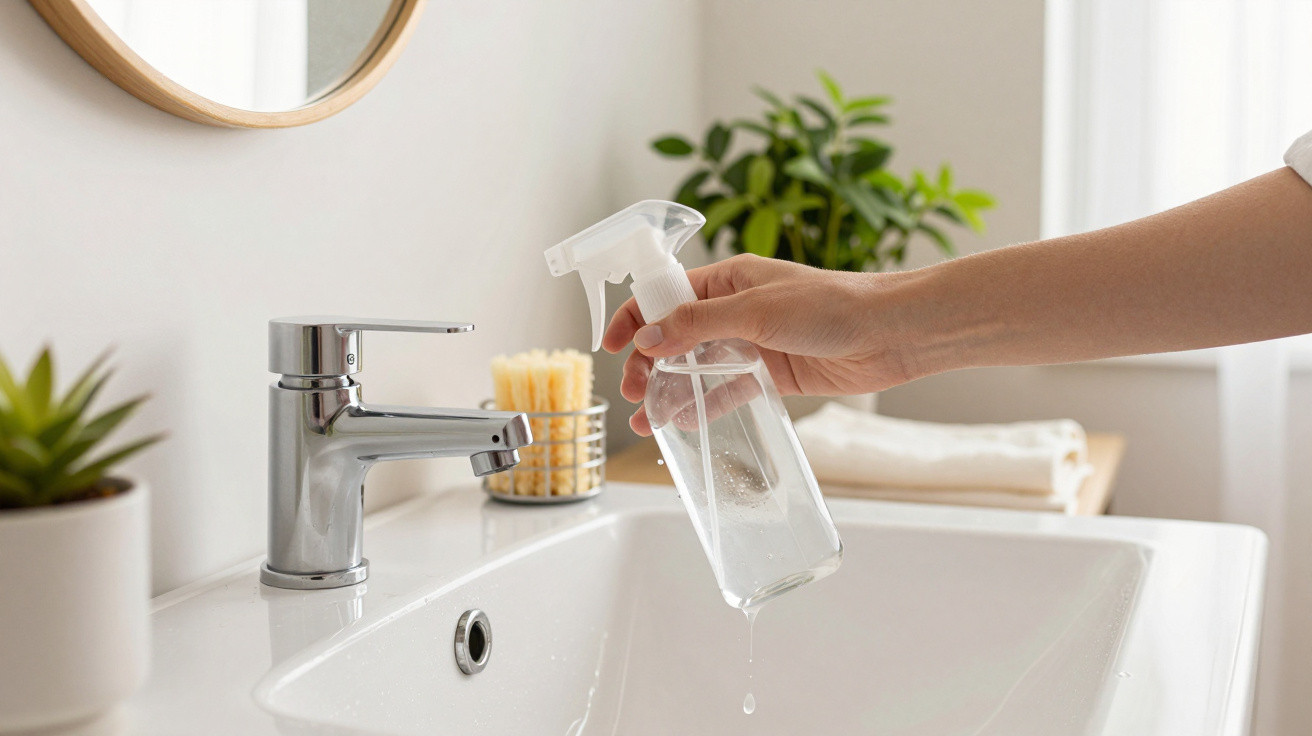
A bathroom that functions well has a routine. Wiping the shower head quickly after a steamy shower prevents droplets from drying into tide marks. A mild weekly spray of diluted vinegar over the faceplate makes it harder for limescale to settle. If your current model blocks regularly, consider a fine-mesh or rubber-nozzle shower head, and run hot water through it for one minute after every clean to flush the channels. Small actions can make a big difference.
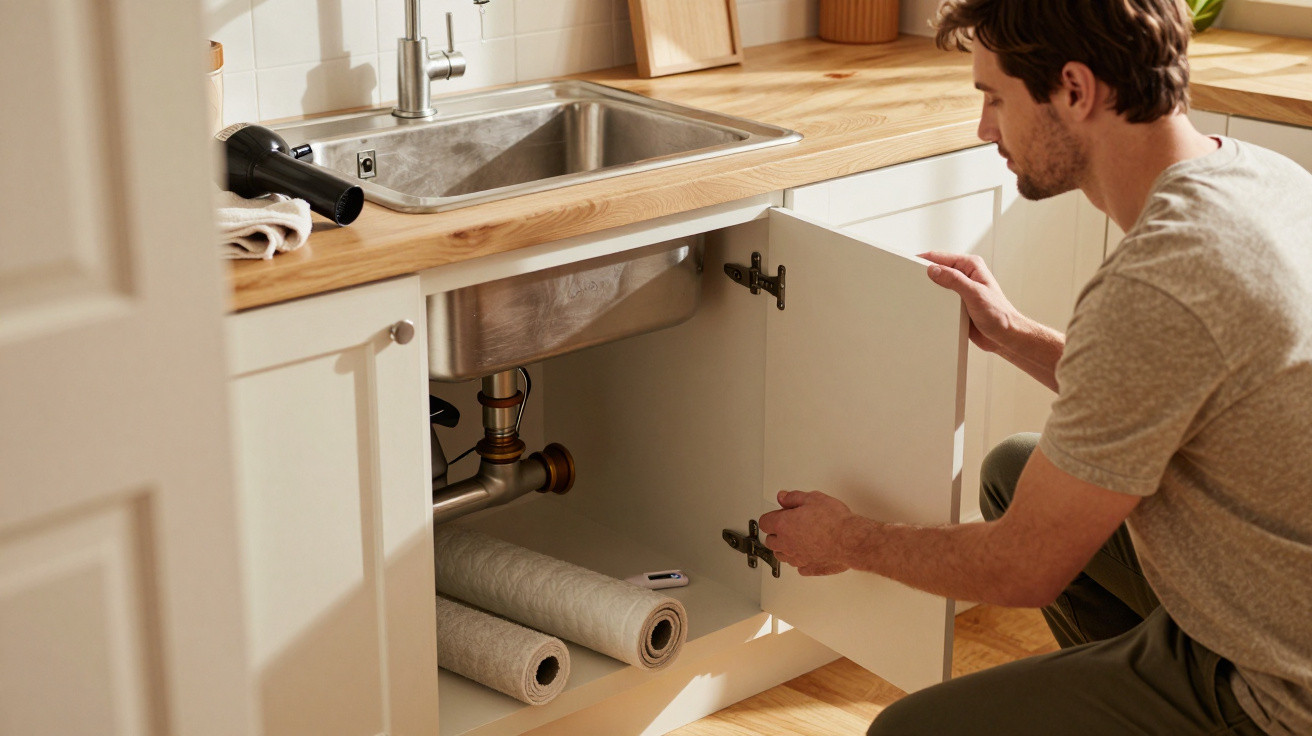
If you are considering an upgrade, a basic in-line filter fitted to the hose can reduce sediment, while a water softener can transform the situation throughout your home, from the kettle to your glassware. It is not necessary for everyone. Sometimes all you need is a bag, a band and a little patience. Pass this on to a housemate who believes the shower “just does that”. The solution is waiting in your kitchen cupboard.
| Key point | Detail | Why it matters to the reader |
|---|---|---|
| Limescale is chemistry, not grime | Minerals crystallise as water dries; a mild acid dissolves them | Explains the issue and directs you towards the appropriate solution |
| Bag-and-vinegar method | Equal parts vinegar and warm water, a 30–60-minute soak, toothbrush and hot rinse | Quick, inexpensive, low-effort cleaning using household items |
| Finish-safe habits | Shorter soaking times for plated brass and nickel; protect natural stone; dry with microfibre | Avoids damage while keeping the shower head bright |


Comments
No comments yet. Be the first to comment!
Leave a Comment