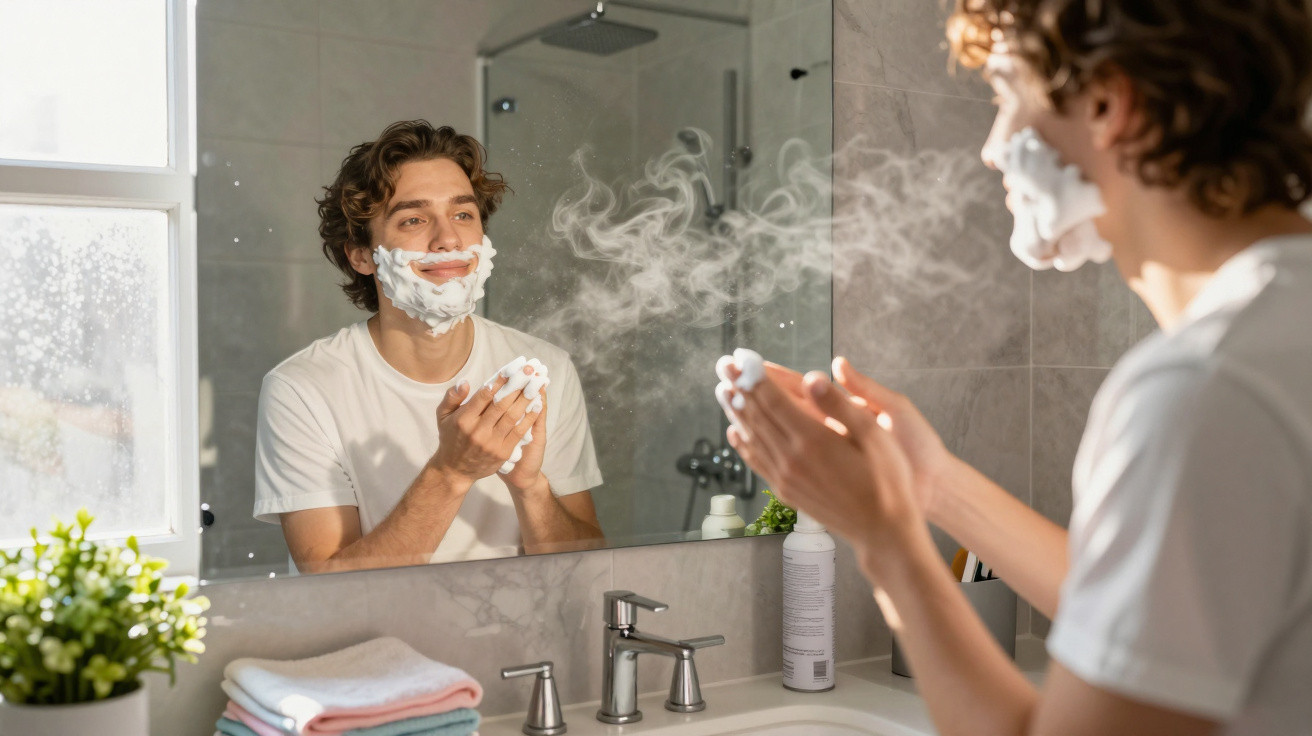
The bathroom is warm, your skin has that post-shower glow, and the mirror? Completely clouded over. You clear a patch with your hand, only for it to mist up again before you can spot your fringe. Yet one small trick can keep the glass clear, even while the shower is at full heat.
It is midnight, and the shower is still whirring like a kettle. The mirror has become a pale blur, with my face barely visible behind it. I go through the familiar routine - wiping it with my sleeve, giving it a half-hearted blast with the hairdryer, letting out a sigh long enough to create more steam - only to see the mist return as though the glass itself is breathing. My toothbrush is waiting, the train timetable is counting down, and somewhere in the hall, one lone sock is silently criticising my decisions.
Then a neighbour mentions a trick their grandad used in the Navy. No device, no specialist spray, just something already sitting in the bathroom cabinet. I dismiss it at first, then give it a go, and the following morning the mirror remains clear throughout a genuinely hot shower. It feels like a magic trick.
Then one tiny squirt changed everything.
Why your mirror fogs - and how to beat it
Steam is not smoke; it is water vapour drawn to cold surfaces, particularly glass. Once you have showered, the mirror is cooler than the warm, humid air surrounding it. When vapour meets the glass, it loses heat and becomes droplets. Those droplets scatter light, making your reflection disappear behind a hazy veil. It can look lovely during a relaxed Sunday spa session, but it is far less charming when you are late on a Monday morning.
In my own bathroom, with the extractor on and the door slightly open, I timed the gap between “shower off” and “mirror usable”: it was nearly seven minutes. That is a lot of messing about when you simply want to shave a clean edge or apply concealer without taking a chance. We have all had the mirror mist up again just as we lean closer, leaving us to draw a silly smiley face in the steam because there is little else to do.
The answer lies in a straightforward bit of physics. Droplets form readily on untreated glass because its surface lets them gather into beads. Add an extremely thin coating that alters the way water behaves, however, and those beads cannot cling together in the same way. Rather than lots of tiny, light-scattering pearls, moisture spreads into a uniform layer that appears clear. That is the entire principle: manage the surface rather than the steam.
The shaving-foam trick (yes, really)
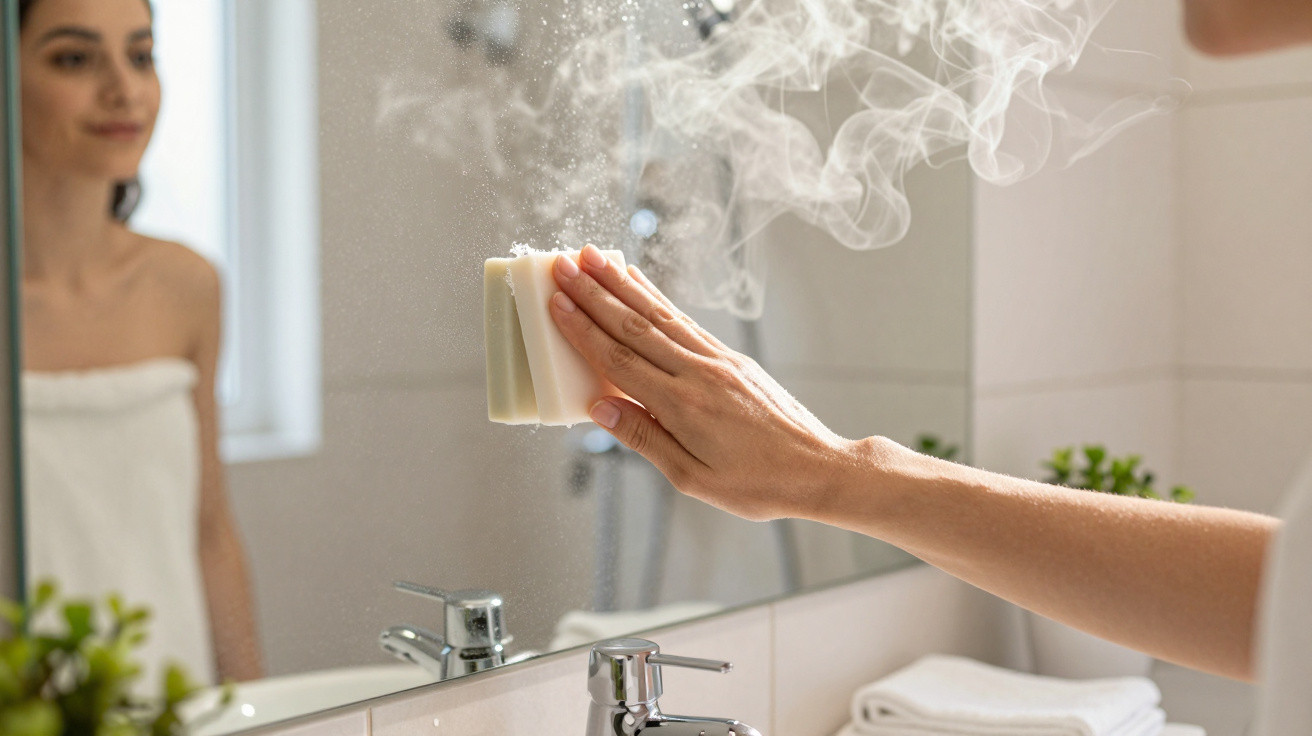
Take ordinary white shaving foam - not shaving gel - along with a clean, dry microfibre cloth. Begin with a mirror free from dust. Put a small amount of foam, roughly grape-sized, on the cloth. Spread it across the glass using thin, overlapping strokes until the surface looks evenly hazy. Leave it for two minutes, then polish it using a clean, dry part of the cloth until the mirror is fully clear, without streaks or a milky residue. This leaves an almost invisible film that can prevent fogging for days or even weeks.
Use less than you think you need. If there is visible froth, you have applied too much. Concentrate on the middle section of the mirror that you actually use. Avoid getting foam on wooden frames or stone surfaces, as residue may leave marks. Repeat the treatment every two weeks, or when the mist begins to return. If you need a quick alternative, one drop of washing-up liquid or a little hair conditioner, rubbed on and buffed away, works on the same principle. Realistically, though, no one wants to do that every day.
Aim for comfort rather than perfection. Polishing too vigorously may create streaks. Paper towels often leave lint behind, so microfibre is the better option. Gel products and strongly mentholated formulas may smear or leave a stubborn film. If water drips down the mirror afterwards, dab the edges dry. A brief job now saves valuable time when you are rushing. No more panic over a fogged-up mirror.
“I manage a gym and we’ve tried every anti-fog spray. The cheap winner? Plain shaving foam once a week. Members think we’ve installed heated mirrors.” - Rob, facilities manager
- Use white, non-gel shaving foam only.
- A microfibre cloth is always better than paper.
- Buff until the glass looks naturally clear rather than wet and shiny.
- If the mirror has a decorative frame, test a small corner first.
- Reapply every 2–3 weeks, or sooner after a thorough clean.
What is really happening - and small habits that help
Shaving foam contains surfactants, which are molecules attracted to both water and oil. When spread in a thin layer, they alter surface tension so droplets cannot collect into the tiny beads that create mist. Instead, moisture settles as a smoother layer that scatters less light. The mirror therefore appears dry, even if the bathroom feels like a tropical greenhouse. This is also why a little shampoo or washing-up liquid can help: they rely on the same type of chemistry in a different form.
A few simple routines can make the effect last longer. Before showering, warm the mirror with a hairdryer for 30 seconds to bring it nearer to room temperature. Leave the bathroom door open by a finger-width, or run the extractor for ten minutes before switching on the taps. Point the showerhead slightly away from the mirror. Dry the sill too, so droplets do not travel over the treated surface. There is no need to turn this into a military operation. Just one or two regular habits can make the room feel far more manageable.
There are some limitations. Shaving foam cannot repair a pitted or damaged mirror that smears even after cleaning. Heavy limescale can also reduce the result, especially in hard-water areas. If the bathroom is small and poorly ventilated, consider fitting a quiet fan or a timed boost setting; it will benefit both the mirror and mould prevention. If you prefer a technical solution, heated demister pads fitted behind the glass work brilliantly, although they cost more. Choose what suits you - a quick trick now, or a lasting improvement when the time is right.
Beyond the shaving-foam trick: clearer mornings, calmer pace
When the mirror cooperates, the benefits go beyond moving more quickly. Your day begins with fewer small irritations picking away at your patience. It is surprising how much easier eyeliner is to apply when you are not peering through a layer of fog. The shaving-foam trick gives you a little breathing space, and that modest success can encourage better habits: opening the window for a minute, wiping the basin, or allowing the room to dry fully after a hot bath.
I have told friends about it, watched them roll their eyes, then received a message a week later saying, “okay, you were right.” It is not magic. It is simply the sort of household wisdom our grandparents relied upon. Give it a try tonight and, tomorrow, you may see your reflection immediately - no moody ghost effect, just you, clear and ready. It is one less wobble between getting out of bed and leaving through the front door. One more quiet step towards a morning that feels properly yours.
| Key point | Detail | Benefit for the reader |
|---|---|---|
| Shaving-foam film | A thin layer, polished until clear, changes how water settles on glass | The mirror remains usable immediately after hot showers |
| Correct method | Use white foam, a microfibre cloth, a tiny quantity and thorough buffing | A streak-free result without purchasing specialist sprays |
| Helpful habits | Warm the mirror, leave the door ajar, run the extractor and dry the edges | Longer-lasting clarity and less bathroom damp |





Comments
No comments yet. Be the first to comment!
Leave a Comment