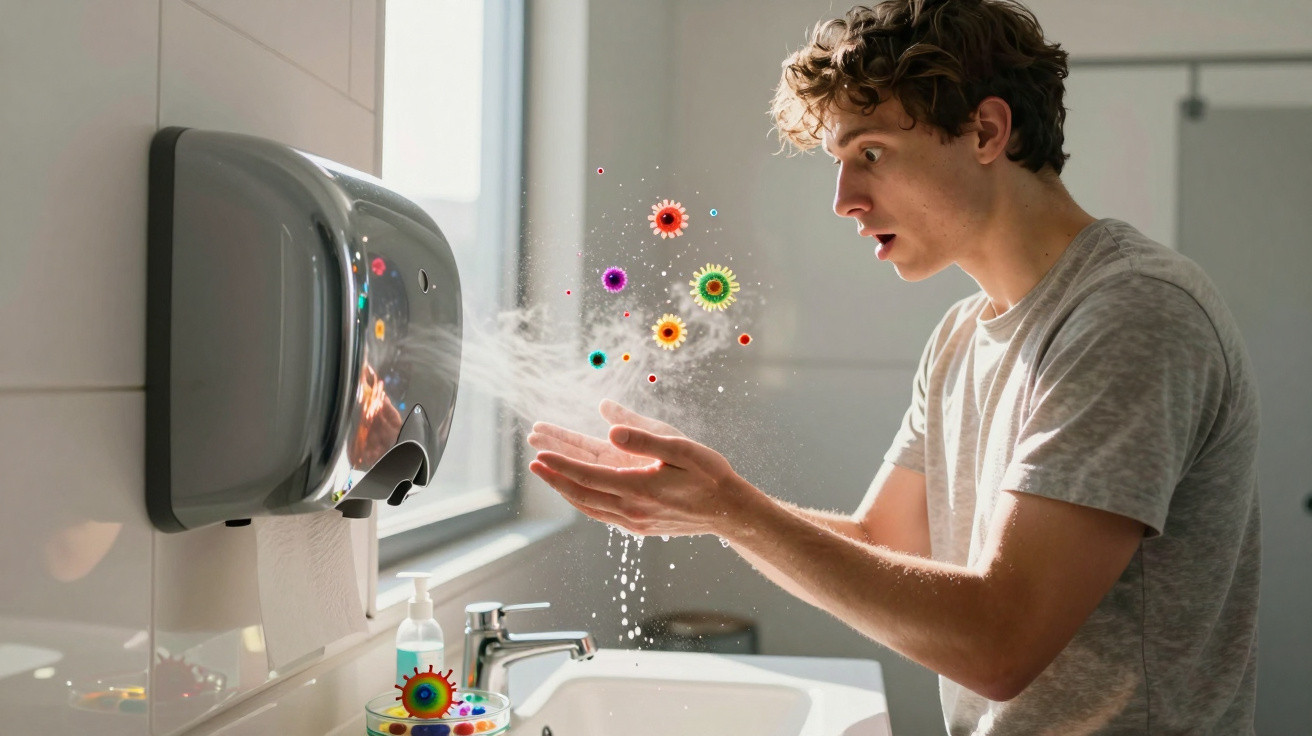
In many toilets, electric hand dryers are seen as modern and hygienic.
A viral laboratory experiment has now revealed an unpleasant truth.
Anyone who dutifully washes their hands after using the toilet may feel protected. Warm-air and jet hand dryers seem convenient, touch-free and therefore clean. Yet a UK scientist has used a straightforward experiment to demonstrate how many germs these machines may propel into the air and straight onto freshly washed hands – producing images that are difficult to forget once seen.
How a simple experiment made the cloud of germs visible
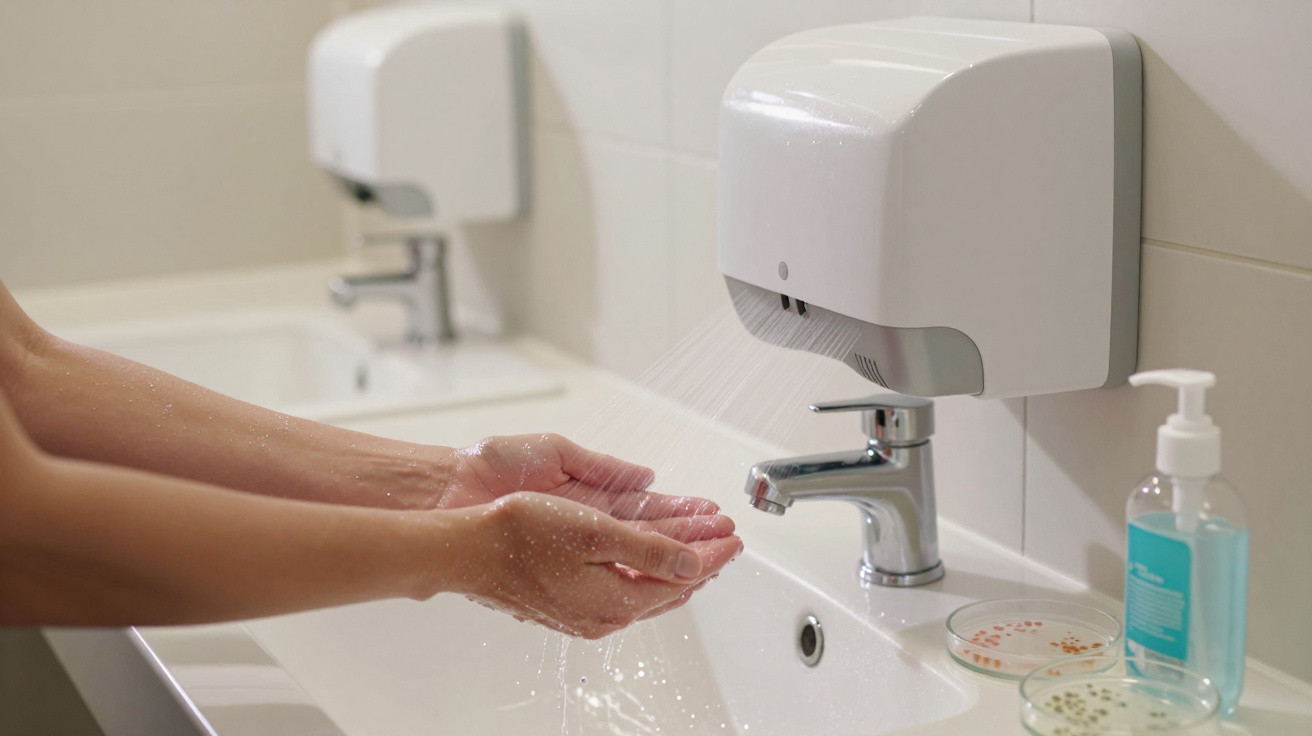
The teacher and scientist known online as Devon Science wanted to find out what a hand dryer in a public toilet actually “blows out”. Rather than using expensive high-tech equipment, she used conventional Petri dishes containing growth medium – a standard microbiology tool.
- She placed one dish directly beneath the airflow of a hand dryer.
- A second dish was left open in clean laboratory air as a control.
After one day in an incubator, the difference was clear. The control dish remained largely clear, whereas the dish used in the hand dryer experiment was covered in yellow, white and black dots – colonies of bacteria and fungi.
The images suggest that a hand dryer’s airflow can collect a dense mix of germs from toilet air and blow it directly onto hands.
To non-specialists, such a Petri dish may simply look “disgusting”. To experts, however, it indicates that these devices may actively spread germs rather than reduce them.
Which germs appeared in the hand dryer experiment
On closer inspection, the findings included typical inhabitants of toilets and damp environments – including some unwelcome candidates:
- Staphylococcus aureus: Commonly found on human skin and in the nose. Certain strains can cause abscesses, wound infections or even pneumonia.
- Escherichia coli (E. coli): A familiar inhabitant of the gut. While many strains are harmless, some cause diarrhoea or urinary tract infections. In a toilet setting, E. coli often indicates traces of faeces.
- Fungal spores: The black dots point to moulds or yeasts. They may worsen symptoms in people with allergies and can become a concern for those with weakened immune systems.
Such germs are generally present in public washrooms: on floors, door handles, flush buttons, sinks and soap dispensers. The crucial issue is that the hand dryer apparently stirs them up in concentrated form.
Why hand dryers distribute germs so effectively
Modern jet hand dryers use exceptionally powerful airflows. Some manufacturers promote “high-speed air” that strips water from hands in seconds. From a hygiene perspective, this is precisely where the problem lies.
- High air speed: Air moving at several hundred kilometres per hour can lift water droplets, dust and microorganisms from surfaces. These droplets remain suspended as aerosols and may be inhaled or blown onto nearby surfaces.
- Contaminated internal components: In a further stage of the experiment, Devon Science swabbed the inside of a hand dryer. The swab turned dark, suggesting deposits of dirt, dust and microorganisms within the machine itself.
Switching on the dryer therefore does not merely release “neutral” air. The blower may draw in germs from the room, pass them through its dirty interior and propel them back into the space as a cocktail of germs – directly where people hold their freshly washed hands.
Activated hand dryers act like small germ cannons: they stir up, concentrate and distribute what has already collected in the toilet air and inside the machine.
What this means in everyday life
For healthy people with robust immune systems, every encounter with these germs is not automatically a disaster. Our immune systems are accustomed to many bacteria. Even so, each additional exposure raises the risk of infection – especially when someone then eats, touches their face or cares for a baby.
This can be particularly concerning for:
- People with weakened immune systems
- Older people and very young children
- Hospital and care staff
- Workers in food businesses and hospitality
HEPA filters and UV light: how much do “high-tech” hand dryers achieve?
The market has long been responding to this criticism. Some manufacturers install additional technology to clean the air before it reaches users’ hands.
| Technology | How it works | Potential |
|---|---|---|
| HEPA filter | Filters particles down to 0.3 micrometres from the air drawn in. | Can substantially reduce germ numbers if filters are replaced regularly. |
| UV radiation | UV light inside the unit is intended to kill bacteria and fungi. | Effective only with a sufficient dose and correct positioning of the lamps. |
Both approaches sound persuasive, but their real-world performance depends on maintenance and installation. A HEPA filter that is never replaced loses its effectiveness. UV lamps age and may still appear to shine, but no longer produce enough radiation to reliably damage germs.
In addition, many public toilets still use older models without filters or UV technology. When people see an anonymous metal box blowing hot air in a station or shopping centre, they can rarely tell whether it contains modern filtration technology or is a decade-old dryer.
Why paper towels are often more hygienic
Numerous studies in recent years have compared hand dryers with paper towels. The outcome is usually less favourable for air dryers. Paper absorbs water and, with it, some of the germs that remain on skin after washing. Once used, the towel goes into the bin – ending contact with those germs.
By contrast, a hand dryer’s airflow spreads moisture and microorganisms further. Hygiene specialists therefore still frequently recommend conventional paper towels for sensitive settings such as hospitals.
- Fewer aerosols in the room
- No additional germs from dirty machines
- No filters or UV lamps requiring maintenance
The disadvantage is obvious: paper costs more to maintain and creates waste. Many operators therefore opt for electric dryers – often without fully considering the hygiene implications.
What you can do yourself in a public toilet
How can the everyday risk be reduced without avoiding every toilet altogether? A few simple measures can lower germ exposure:
- Wash thoroughly: Rub hands with soap for at least 20 seconds, including between the fingers and around the thumbs. This significantly reduces germ numbers, regardless of the drying method.
- Choose paper where possible: If dispensers provide paper towels, they are often the more hygienic option.
- Avoid hand dryers if the room smells strongly or is visibly dirty: The dirtier the surroundings, the more germs may be stirred into the air.
- If in doubt, let hands air-dry briefly: Slightly damp hands that can dry again later in fresh air are preferable to a full blast of germ-laden air.
- Do not touch your face after drying: The mouth, nose and eyes are entry points for pathogens.
What terms such as aerosols and germ load mean
Talking about hand dryers quickly brings up technical terms. Two terms appear especially often: “aerosols” and “germ load”.
Aerosols are tiny droplets suspended in the air. They are created when people cough, speak or when powerful airflows are used. In toilets, these droplets can mix with germs from faeces, floors or surfaces. Hand dryers can spread these droplets particularly far around the room.
Germ load is the term specialists use for the quantity of microorganisms in a particular area – for example, on a hand, a door handle or in a cubic metre of air. Hygiene measures do not aim for the sterile cleanliness of an operating theatre, but for the lowest possible germ load so that infections occur less often.
Why this is not only relevant to “cleaning obsessives”
Reactions to the TikTok experiment show how emotionally charged the subject of hygiene in public spaces has become – reinforced by experiences during the coronavirus pandemic. Many people now pay closer attention to hand hygiene and ventilation, but remain uncertain about which manufacturers’ claims they can trust.
Hand dryers therefore represent a broader conflict: convenience and cost savings on one side, and health protection on the other. Operators of shopping centres, stations, cinemas and schools face the question of whether a cheap dryer is truly the best solution – or whether better cleaning concepts, modern filtration technology and clear hygiene rules will be needed in the long term.
Until those decisions are made, everyday practice remains pragmatic: wash thoroughly, use paper where possible – and remember, whenever a hand dryer starts humming, what an unassuming Petri dish in a laboratory has already made visible.


Comments
No comments yet. Be the first to comment!
Leave a Comment