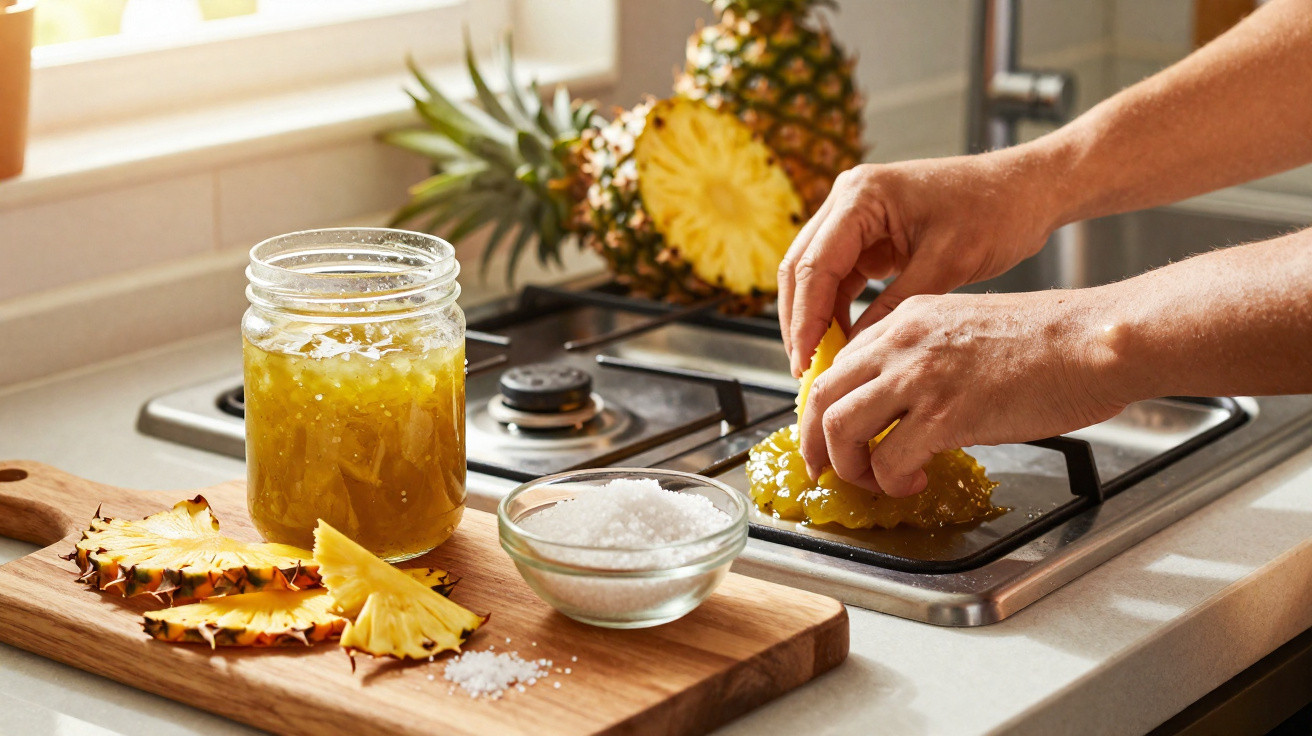
Combining pineapple peel with coarse salt is attracting attention because it turns an everyday discard into a useful paste for the kitchen. The fruit’s natural enzyme and the mineral texture help loosen stuck-on dirt without relying on harsh formulations.
Why does blending pineapple peel with coarse salt help with cleaning?
When the peel is blended with a small amount of water, the resulting paste concentrates fibres, an acidic scent and pineapple-related compounds, forming a moist base for scrubbing residue. Coarse salt provides the grains, creating mild friction during cleaning.
This combination does not replace washing-up liquid where there is heavy grease, but it can work as an initial step on areas where fresh dirt has built up. The key is to apply moderate pressure, rinse thoroughly and check how the surface reacts before using it again.
Its main effects are seen in the following ways:
- Reuse: it makes use of a part of the pineapple that would usually be thrown away.
- Friction: coarse salt helps lift recent dirt without requiring excessive scrubbing.
- Polishing: it works best on durable areas when applied with a soft sponge.
- Scent: after a complete rinse, it leaves a temporary fruity fragrance.
- Practicality: it can be made within a few minutes for immediate use.
How does bromelain in pineapple act on residue?
The proteolytic enzyme obtained from plants in the Bromeliaceae family is associated with pineapple and is known for acting on proteins, including in cooking, where it is used to tenderise meat. This property explains why bromelain is of interest when dealing with organic residue.
For household cleaning, this action should be treated cautiously, as homemade paste is neither a standardised product nor a disinfectant. Even so, the enzymes and fibres can help release superficial marks when paired with the friction created by salt.
How can you make the paste without wasting the fruit?
To make it, wash the peel thoroughly, cut it into small pieces and blend it with a few tablespoons of water until it becomes a thick paste. Then gradually add coarse salt, keeping the mixture moist, grainy and easy to apply with a sponge.
Homemade pineapple peel paste
Use it immediately after preparation
As the base is fresh, it should not be kept for several days or used as a preservative product.
The best approach is to make a small amount, use it straight away and wash the surface well to remove fibres and salt.
Once prepared, the paste should be used at once because it contains fresh organic material. Apply a small quantity, scrub for a few minutes and rinse away completely with water, taking care not to leave remains trapped in the corners of the sink.
For the right consistency, follow these simple precautions:
- Use only a little water in the blender so the paste does not become too runny.
- Add the coarse salt only after blending the peel.
- Choose a soft sponge or thick cloth to control the friction.
- Dispose of any excess after use, and do not keep it in a sealed container for long.
Which surfaces does the pineapple peel and coarse salt mixture work best on?
It usually performs best on materials that can withstand mild friction, such as stainless steel and glazed ceramic. On these surfaces, the paste can help release films of food, lingering odours and recent marks without scratching, when used with care.
Natural stone, however, should be avoided, particularly marble and polished granite, because the salt can cause micro-abrasions and the fruit’s acid may affect the finish. For delicate surfaces, choose neutral cleaning products and test any mixture in a hidden area.
It is safer to use in these situations:
- Stainless-steel pans with recently stuck-on residue.
- Stainless-steel sinks requiring gentle scrubbing and plenty of rinsing.
- Hard-wearing chopping boards, provided they are washed immediately afterwards.
- Tiles and ceramics without a sensitive or porous finish.
When is this reuse method worth adding to your routine?
This tip is particularly suited to people already looking for creative ways to reuse peels for cleaning and cut down on organic leftovers. Rather than throwing everything away, the peel is given another purpose before disposal.
Its benefit lies less in promising miraculous cleaning and more in creating a simple, inexpensive and mindful step. Used sensibly, the mixture supports reuse, reduces waste and makes the household routine more practical.






Comments
No comments yet. Be the first to comment!
Leave a Comment