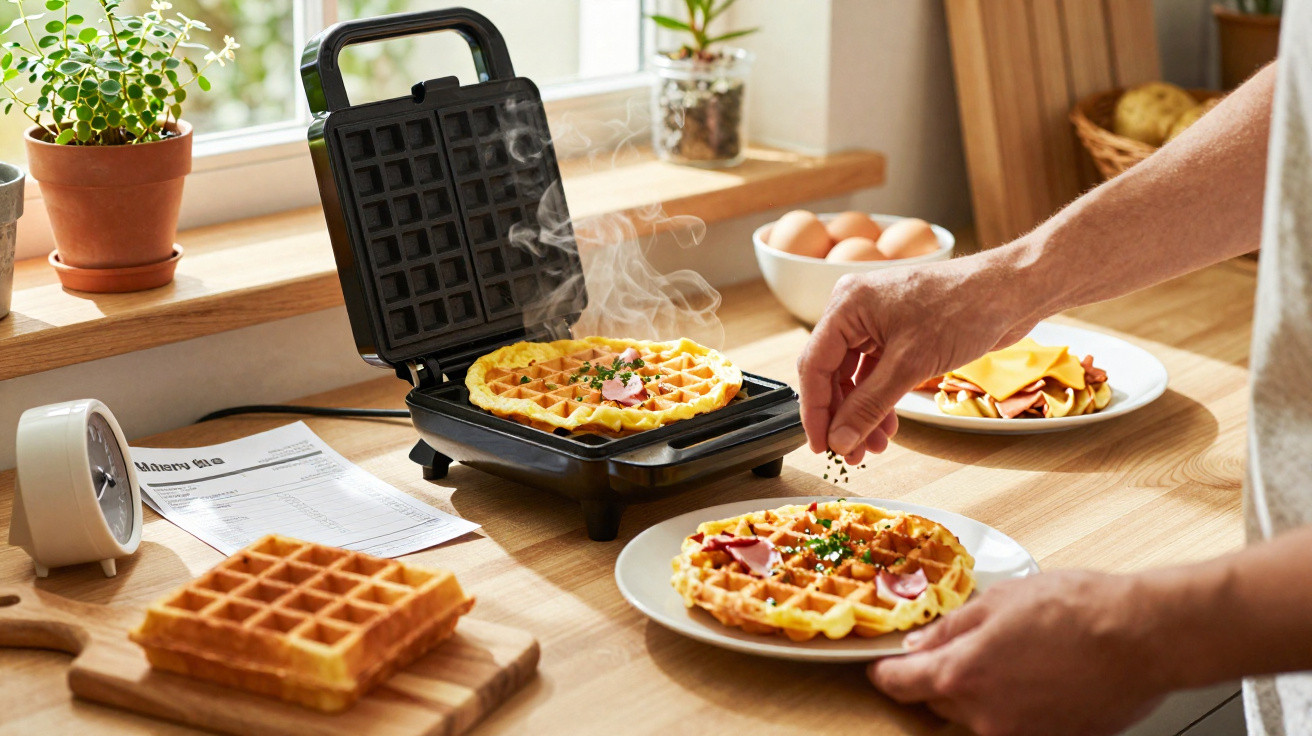
With electricity prices rising and little time left after work, using a conventional oven can quickly feel like a luxury that does not always fit everyday life. Yet one appliance often sits unused in the cupboard: the waffle maker. Many people associate it only with sticky Sunday waffles, but it is actually a compact countertop oven for savoury dishes - and it uses considerably less energy.
Why the waffle maker is an understated energy-saving hero
A waffle maker works on a straightforward principle: it heats only the food you intend to eat. There is no large volume of air to warm, no lengthy preheating period and no half-hour wait. Heat is applied directly from above and below to the mixture or dough, with close contact over a small surface area.
“Rather than heating a large oven cavity, the waffle maker focuses its energy on a few centimetres - exactly where the food is.”
In practical terms, this means that anyone cooking for one or two people will often use more electricity than necessary with an oven. A waffle maker produces small portions quickly, hot and crisp, then can be switched off again almost immediately after eating.
Electricity consumption compared: oven versus waffle maker
The figures are fairly clear:
- A standard oven usually has a power rating of between 2000 and 3000 watts.
- A typical waffle maker often manages with 700 to 1200 watts.
- An oven needs 10 to 15 minutes of preheating before food starts cooking.
- Many dishes are ready in a waffle maker within 3 to 7 minutes.
So, if you are preparing just two slices of toast, some vegetables or a small portion of potatoes, an oven is primarily heating air. The waffle maker, by contrast, directs its energy straight into the food. Heat from both the upper and lower plates creates rapid browning and significantly reduces cooking time.
Three savoury waffle maker recipes for weekday evenings
The best part is that there is no need for unusual ingredients. These recipes use items that are already found in many kitchens.
1. Quick waffle maker omelette
This is ideal when time is genuinely short - and when you want to avoid washing up an extra frying pan.
- Beat 2 eggs in a bowl.
- Stir in a little grated cheese.
- Season with salt and pepper, adding herbs if desired.
- Lightly oil the waffle maker or brush it with a little butter.
- Pour in the egg mixture and close the lid.
After around two minutes, the omelette will be set and lightly browned. As it is heated from both sides, there is no need to turn it over; nothing slides around in a frying pan, and it keeps a neat, compact shape. If you like, add finely chopped peppers, spring onions or diced ham to the egg mixture before cooking.
“A waffle maker omelette is a classic ‘what is still in the fridge?’ meal - perfect for avoiding food waste and for spontaneous evenings.”
2. Crisp potato rösti in the waffle maker
Anyone who enjoys rösti will get especially even browning from a waffle maker, along with a firm shape that does not fall apart when turned.
- Coarsely grate 2 raw potatoes.
- Put the grated potato into a clean tea towel and squeeze firmly to remove as much liquid as possible.
- Mix with 1 egg and a little salt; optionally add finely chopped onion or cheese.
- Press portions of the mixture into the preheated waffle maker and close the lid.
- Cook for 5 to 7 minutes, until the surface looks golden brown and crisp.
The rösti stay soft and moist inside while developing a substantial crust on the outside. The grooves in the waffle plates also add texture, helping them hold their shape on the plate. Serve with a spoonful of herb quark, a green salad or leftover sliced roast meat from the day before.
3. Savoury waffle maker sandwich
The idea is similar to a classic toasted sandwich, but it is quicker and gives a more intense toasted finish.
- Place one slice of toast or sandwich bread on the lower plate.
- Top it with ham, cheese and, according to taste, sliced tomato or mustard.
- Cover with a second slice of bread.
- Close the lid promptly and press down firmly so that the filling is “sealed”.
- Cook for around three minutes, until the bread is crisp on the outside and the cheese has melted inside.
The pressure from the lid cooks the sandwich into a particularly compact form, spreads the cheese and lightly caramelises the edges. Those who enjoy experimenting can replace the ham with cooked vegetables, feta or leftover chicken. It is an appetising way to use up fridge leftovers.
When a waffle maker is worthwhile and when an oven is better
For small meals and snacks, the waffle maker is at its best. Dinner for one, a quick lunch while working from home or a side component for a meal can all be prepared quickly while using little electricity.
The situation is different with larger quantities. A bake for the whole family, several trays of biscuits or a roast require the space and even heat of an oven. In those cases, the electricity use is shared across many portions, reducing the disadvantage of the larger interior.
“Rule of thumb: for one or two portions, the waffle maker usually comes out ahead; for four or more diners, the oven remains the more sensible option.”
A simple trick: make clever use of residual heat
To save a little more energy, there is a simple waffle maker technique: unplug it before the dish is completely finished. You can switch the appliance off roughly 90 seconds before the planned end of cooking. The metal plates retain enough heat to finish cooking and browning the food.
Keep the following in mind:
- Do not keep opening the lid during this stage, as too much heat will escape.
- Very thick mixtures or dishes with lots of moist ingredients require a little judgement.
- Cooking time depends on the appliance's power, so a brief trial run is worthwhile.
What causes such rapid browning
The deep crust created in a waffle maker comes from a chemical reaction that plays a major role in frying and baking. When proteins and sugars in food meet high temperatures, they produce flavour compounds and the characteristic browning. This is what gives rösti, sandwiches and omelettes their savoury aroma.
Since heat from a waffle maker sits directly against the surface and reaches it from both sides, this effect occurs faster than it does in many frying pans or in an oven. The result tastes noticeably more intense even though the cooking time is shorter.
Everyday tips for using a waffle maker
A few simple habits will help ensure that the appliance remains enjoyable to use in the long term:
- Always lightly grease the plates before the first batch to prevent food from sticking.
- Once cool, wipe it clean with a soft cloth and avoid harsh cleaning products.
- Do not add mixtures or dough too thickly, otherwise they will spill out at the sides when the lid is closed.
- Use leftover vegetables, potatoes or bread creatively in the waffle maker instead of throwing them away.
This turns a long-overlooked kitchen appliance into a compact helper that saves electricity, frees up time and brings surprisingly versatile savoury dishes to the table - far beyond the traditional Sunday waffle.





Comments
No comments yet. Be the first to comment!
Leave a Comment