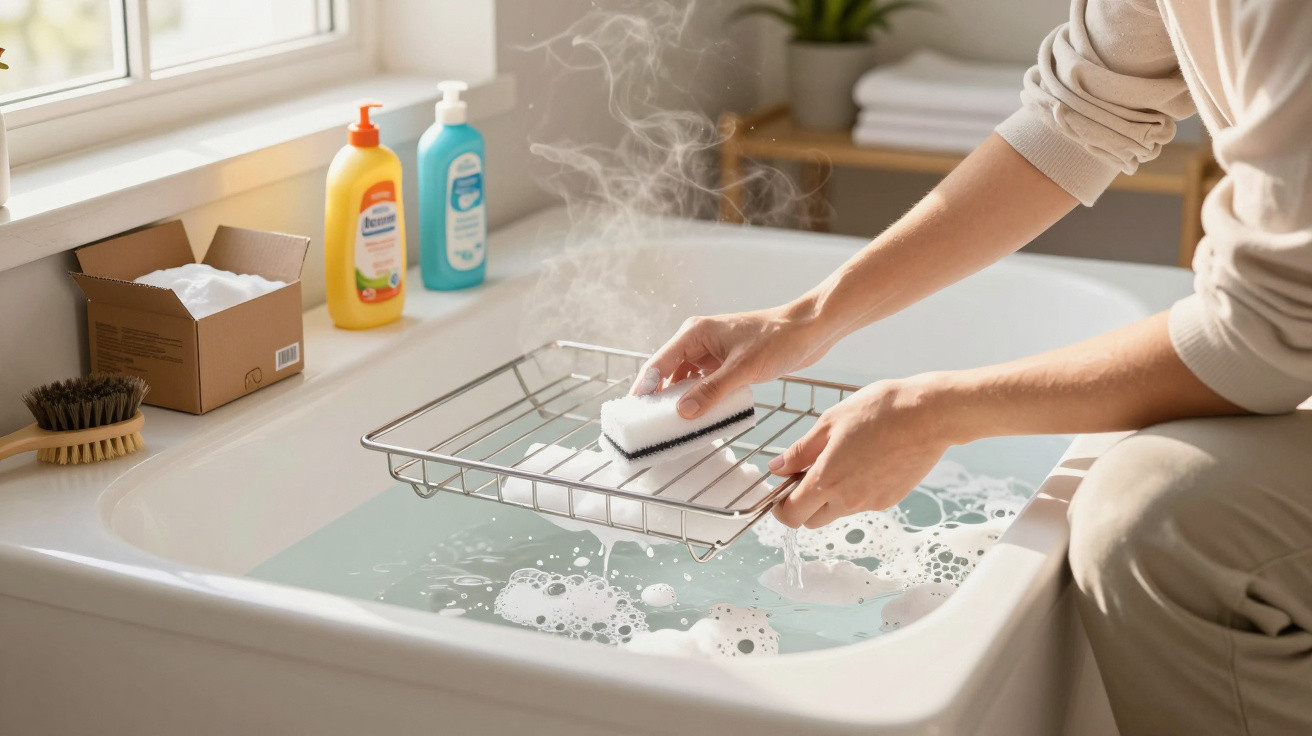
Most people dutifully wipe down baking trays and the oven door, yet the chrome oven racks are often ignored for months. They are bulky, awkward to handle and barely fit properly in the sink. There is, however, an easy method for shifting stubborn grime without harsh chemicals or aching arms – and most people have never even heard of it.
Why oven racks are so often missed during cleaning
The scene is much the same in nearly every kitchen: the glass shines, the baking tray gleams, but the rack is... well. Anyone who has tried washing one in an ordinary sink will know the difficulty. The metal frame sticks out, water splashes everywhere, some bars sit in the water while others remain dry. It is impossible to clean it evenly this way.
What makes matters worse is that baked-on fat splashes combine with sugar, melted cheese and marinades. The result is a sticky, stubborn layer that becomes more firmly burnt on with every use of the oven. Many people then reach for strong oven cleaners with a pungent smell. Such products can damage the metal surface and irritate the skin and airways.
“If you clean your oven rack too rarely, you create an ideal breeding ground for bacteria, odours and acrid clouds of smoke.”
The job is therefore repeatedly put off until the rack simply looks embarrassing. The answer is not ever stronger products, but choosing the right place and using a straightforward mix of household essentials.
The unexpected helper: the bath
The key trick is to take the job out of the kitchen and into the bathroom. A bath provides what a sink cannot: space. Even large oven racks can be laid completely flat inside it and covered fully with water. There is no more partial soaking or constantly turning them over.
A small protective measure is worthwhile to avoid damaging the bath.
- Place a thick old towel or bath towel across the bottom of the bath.
- Lay the oven rack or racks flat on top.
- The gaps between the bars leave enough room for water and cleaning ingredients to reach every area.
This towel method prevents scratches in the enamel and softens the sound if the metal knocks against the bath. The same approach can be used in a shower with a large, level tray, provided the rack can lie flat and be fully submerged.
Oven rack cleaning: three ingredients with powerful results
There is no need for specialist cleaners. A simple combination of three items found in most homes is enough:
- very hot water
- bicarbonate of soda (traditional baking soda / “soda”)
- washing-up liquid that cuts through grease
Together, these ingredients work remarkably well:
- Hot water softens dried-on food and hardened grease. The heat reaches into the small pores and gaps where dirt has settled.
- Bicarbonate of soda is mildly alkaline and also gently abrasive. It starts to lift grease films without scratching the metal when a sponge is used afterwards.
- Washing-up liquid breaks fat down into tiny particles, allowing it to release from the metal and disperse into the water.
A tried-and-tested ratio is roughly:
- 150 grams of bicarbonate of soda
- 50 millilitres of washing-up liquid
- enough hot water to cover the racks completely
The quantities do not need to be exact to the gram, although using too little bicarbonate of soda noticeably reduces the cleaning effect.
Step by step: how to clean oven racks in the bath
1. Prepare the bath
Spread out the old towel, put the oven racks on it and make sure they do not overlap. Ideally, arrange several racks side by side; if necessary, clean them in two batches.
2. Run hot water
Fill the bath with the hottest water available from the tap. You can increase the temperature further by adding boiling water from a kettle. The water should clearly cover every metal bar.
3. Add bicarbonate of soda and washing-up liquid
Sprinkle the bicarbonate of soda evenly over the surface of the water, then add the washing-up liquid. Stir gently with your hand, preferably while wearing gloves, or with a plastic spoon until everything is distributed. The solution will become slightly cloudy and may foam a little.
“The clever part is that the solution loosens the dirt almost by itself, rather than relying on hours of scrubbing.”
4. Allow time for soaking
Leave the racks in the bath for at least 30 minutes. For heavily baked-on layers, it is worth leaving them in the solution for several hours or even overnight. The longer they soak, the more crusted residue comes away, often in actual strips of grease and deposits.
5. Finish gently
Once the soaking time is over, a soft sponge or soft brush is usually enough to remove whatever remains. Many areas will simply wipe clean with no pressure at all. Avoid metal scouring pads and wire wool, as they can leave the surface dull.
6. Rinse and dry thoroughly
Finally, drain the bath and rinse the racks with clean water until no washing-up liquid residue remains visible. Dry them with a tea towel or leave them to air-dry on a towel. Wiping everything carefully helps prevent water marks and surface rust.
Why this oven rack method works so well in everyday life
Its greatest advantage is the very small amount of effort required. The mixture does most of the work while you get on with other things. At the same time, it avoids irritating oven sprays that can affect indoor air or aggravate the airways.
There is another benefit: the metal’s protective layer remains intact. Highly abrasive powders and stiff brushes can roughen the surface, making dirt more likely to stick there in future. Cleaning oven racks in the bath significantly reduces that risk.
- fewer chemicals in the kitchen
- no prolonged glove-wearing in a cramped sink
- improved hygiene because the rack bars are fully covered by the solution
- considerably less smoke the next time you use the oven
How often is the process worthwhile?
Anyone who bakes or grills frequently will benefit from cleaning regularly. A sensible schedule could be:
- occasional use: every 2–3 months
- heavy use, such as for bakes and cheese dishes: every 4–6 weeks
- after particularly fatty meals such as chicken or ribs: clean straight afterwards
This prevents multiple layers of residue building up on top of each other. The fresher the dirt, the quicker it can be removed.
What to consider for materials and safety
This method is suitable for standard chrome-plated or enamelled racks. For delicate specialist coatings, check the manufacturer’s instructions first. Damaged or rusty areas need particular care: use especially soft sponges and work without pressure so that the metal is not exposed further.
Bicarbonate of soda can sometimes irritate skin on direct contact. Thin household gloves protect both hands and nails. If you have young children or pets, keep the bathroom closed while the racks are soaking so that nobody splashes in the alkaline solution.
Practical additions for a cleaner kitchen
A little prevention while cooking means less cleaning later. Several easy measures make a clear difference:
- Put a baking tray lined with baking parchment or a reusable baking mat beneath the rack to catch drips.
- Let meat and vegetables drain briefly before putting them in the oven.
- For particularly fatty dishes, place a dish containing a little water beneath the rack – this catches dripping fat.
- Wipe minor splashes from the rack with a damp cloth as soon as it has cooled, before they bake on.
These steps substantially extend the time before the larger bath-cleaning task is needed again.
Why natural products offer long-term benefits
Bicarbonate of soda and washing-up liquid break down through wastewater more readily than many aggressive oven sprays. This means fewer fumes and fragrances are introduced into your home. Anyone who is already sensitive to chemicals benefits twice: less irritation, less odour and still a visible result.
This kind of cleaning is also kinder to the oven itself. Intact coatings and well-maintained racks heat more evenly, there is less of a burnt smell, and bread, pizza and oven bakes simply taste better when old greasy fumes are not rising with them. An unpopular cleaning task becomes a largely hands-off process that fits into everyday life without stress, with a noticeably cleaner outcome.







Comments
No comments yet. Be the first to comment!
Leave a Comment