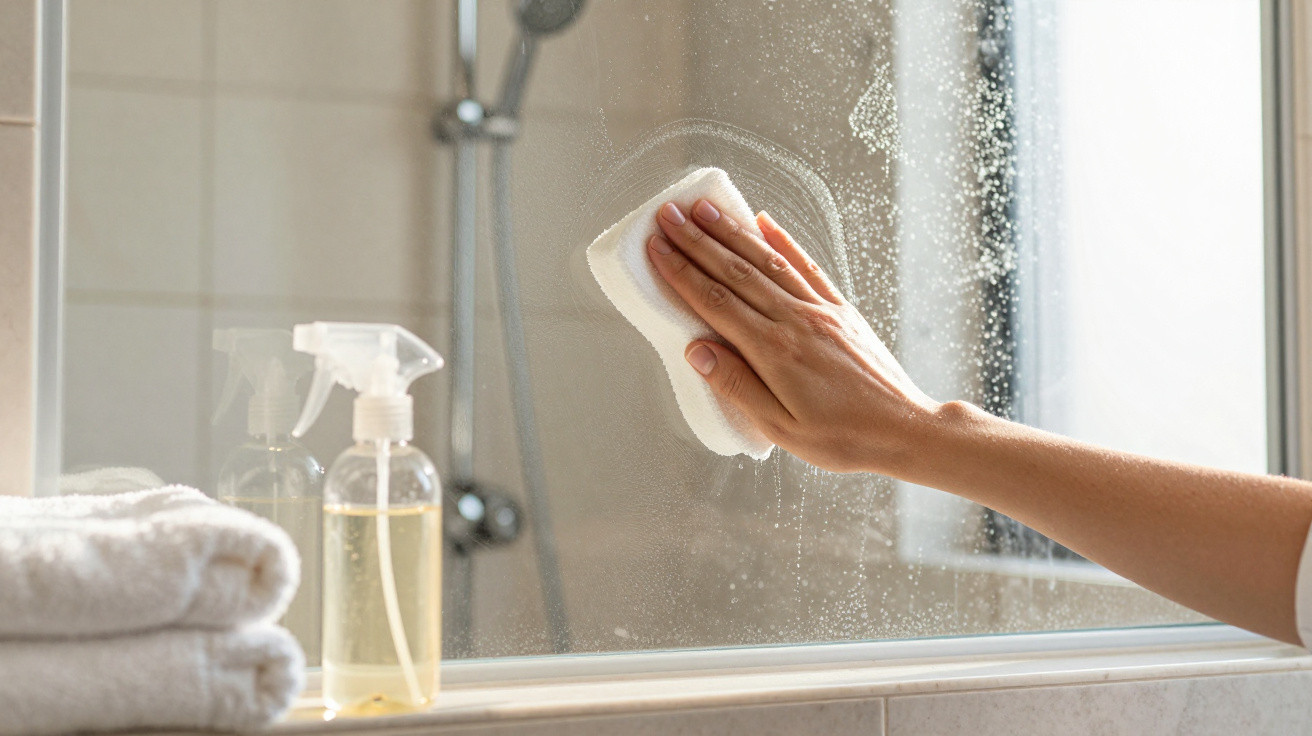
Behind the professional shine is a remarkably simple tool.
After a night in a hotel, many people walk into the bathroom and marvel at the perfectly clear shower screen. There is no limescale edging, soap film or smears. Back in their own bathroom, the picture is usually rather different: white marks, dull surfaces and stubborn deposits. So how do hotels make these glass panels look newly installed every day – and do it in record time? The answer is less about expensive cleaners and more about a surprisingly effective cleaning method.
Why hotels do not compromise on shower screens
Clean glass shapes the first impression
In the hotel industry, the appearance of the bathroom matters greatly. Just a few limescale splashes on the shower screen can make guests question how thoroughly the room has really been cleaned. Cleaning teams therefore work under time pressure while still having to achieve flawless results. Every minute matters, and every movement has to be efficient.
Heavily marketed super sprays with “anti-limescale power” play only a minor part in professional cleaning routines. What looks impressive on television often does not perform for long in a hotel setting, especially against old, baked-on deposits. There is another issue too: aggressive chemicals can gradually damage grout, coatings and fittings. Hotels therefore rely chiefly on targeted mechanical cleaning, which removes deposits rather than merely loosening them chemically.
“The crucial difference is that professionals rely less on chemicals and instead consistently use the right surface treatment – and the right tool.”
The understated star: a special sponge that acts like a glass eraser
The tool hotels use to erase cloudy residue
The professional trick used by most hotels is not a miracle product in a spray bottle, but a simple aid: a melamine resin sponge, often sold as a “magic eraser” or “miracle sponge”. Although it looks like an ordinary white block, it works rather like ultra-fine sandpaper on a miniature scale.
The sponge is made from a hard plastic with extremely fine pores. Under a microscope, the material resembles a dense web of tiny, sharp-edged structures. This microstructure is what makes it so effective: it gently abrades deposits in an extremely thin layer without visibly scratching the glass. As a result, the grey or white haze appears to be erased.
What really makes shower glass look dull
To understand why this technique works, it helps to consider the real cause of cloudiness. Two types of dirt are involved, and each makes the other worse.
| Feature | Limescale deposit | Soap and shower gel residue |
|---|---|---|
| Appearance | White, crusty marks and haze | A greasy, slightly grey film |
| Source | Minerals in hard tap water | Residue from soap, shower gel and skin oils |
| Reaction | Responds to acids (for example vinegar) | Responds to degreasing cleaners |
In everyday use, these two layers combine on the glass into something like a “concrete mix”. Acid may loosen the limescale, but struggles to penetrate the greasy film. Degreasing cleaners remove the film, yet leave the limescale crust behind. This is why many products give disappointing results: part of the haze remains.
This is exactly where the melamine sponge comes in: it mechanically removes both elements – limescale and soap film – at the same time. There is no waiting, no dwell time and no harsh fumes.
How hotels use a melamine sponge correctly
Water is essential
A common mistake at home is using the sponge dry. Professionals do it differently. They first soak the block thoroughly in clean water, then squeeze it lightly until it is merely damp. Only then can its microstructure work at its best. When dry, the sponge wears away very quickly and may leave fine marks.
Gentle pressure rather than aggressive scrubbing
The cleaning motion also matters. Hotel cleaners work in calm, even strokes or small circles. They use only light pressure and cover the surface systematically. Pressing too hard simply wears out the sponge faster – it does not improve the result.
- Wet the entire shower screen.
- Moisten the melamine sponge and squeeze it out.
- Work in strokes or circles using light pressure.
- Rinse away heavier dirt from time to time.
- Finish by rinsing thoroughly with clean water.
The final professional step: remove every trace of water
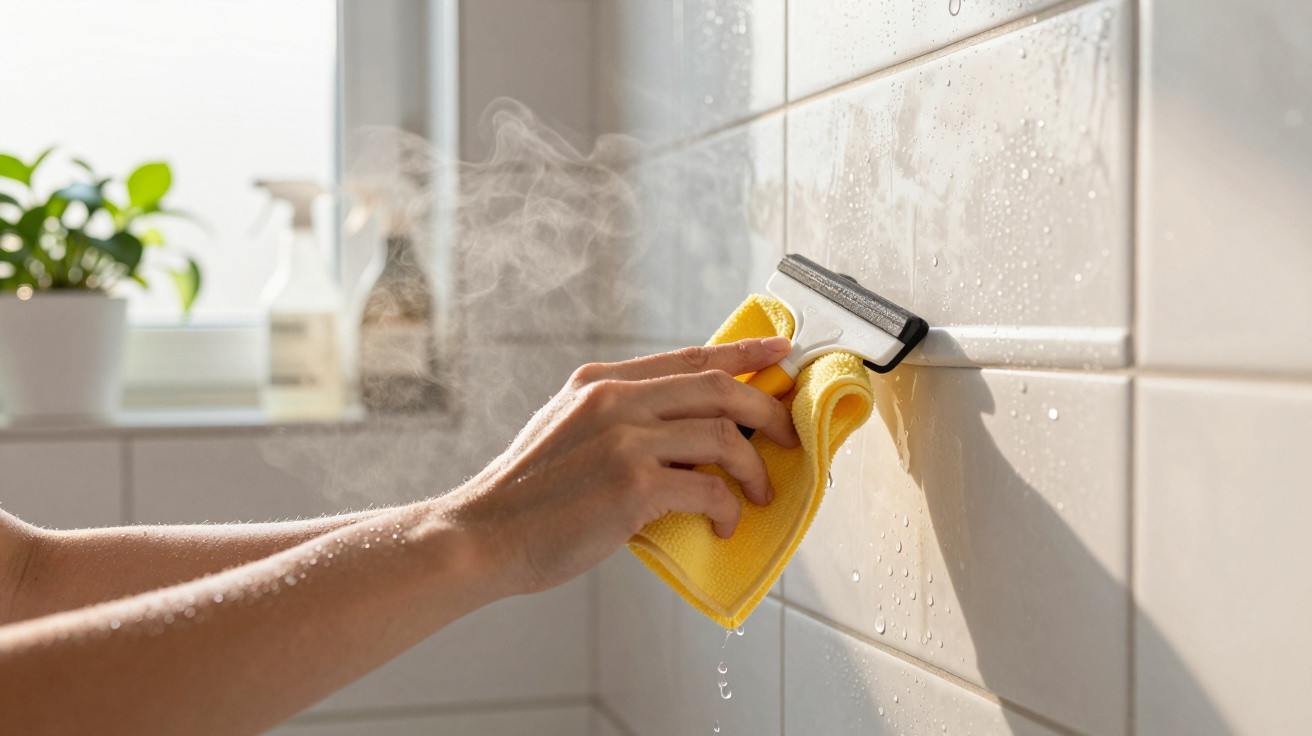
Once the main cleaning pass is complete, a layer of loosened deposits and tiny sponge particles remains on the glass. Hotels therefore rinse with plenty of clean water. Almost immediately afterwards, they use a rubber blade: staff pull the water down vertically from top to bottom with a shower squeegee.
“No water film means no fresh limescale marks – the squeegee is the sponge’s most important supporting tool.”
Professionals remove the final drops around the edges with a microfibre cloth. This creates the familiar streak-free, “like-new effect”.
How to use the hotel trick easily at home
Where to buy the sponge and what to look for
Melamine sponges are now sold in almost every chemist and supermarket. They are often tucked away among the cleaning sponges, labelled as a “dirt eraser” or “miracle foam”. Brand matters very little; the key factor is that the sponge is made from melamine resin.
Because the sponge gradually wears down during use, buying a multipack is worthwhile. For a standard shower enclosure, one sponge will usually last for several cleaning sessions. Important: do not test it on highly delicate, glossy coated surfaces until you are sure it will not leave fine marks.
Cleaning heavily limescaled shower screens in two stages
Anyone who has not properly deep-cleaned a glass screen for years should allow a little more time. Here, the combination of vinegar and a melamine sponge is particularly powerful:
- Spray the glass with lightly diluted vinegar water and leave it to work for a few minutes.
- Rinse with clean water so that the acidic liquid runs away.
- Use a damp melamine sponge and work over the haze in strokes.
- Rinse thoroughly with clean water, squeegee dry and, if required, finish with a microfibre cloth.
This process can often bring even badly weathered surfaces surprisingly close to their original condition. Small scratches or protective coatings that have already been damaged cannot, of course, be “wiped away”, but many shower screens improve considerably in appearance.
How to maintain hotel-level shine over the long term
The 30-second routine after every shower
Almost all bathroom professionals swear by one straightforward daily habit: squeegee the glass surfaces after every shower. It takes barely half a minute, yet stops water from drying onto the glass in the first place. Anyone who also quickly squeegees the taps and tiles with the remaining water will slow the return of marks there too.
Vinegar as a quiet answer to hidden limescale
A simple spray bottle filled with half water and half clear vinegar is entirely sufficient. After squeegeeing, lightly mist the shower screen, allow the mixture to act briefly and rinse if necessary. This also catches the last mineral traces before they become stubbornly baked on.
Let moisture out: how to keep the bathroom cleaner for longer
Many shower-related problems arise simply because damp air remains trapped. Leaving the door slightly open after showering, putting the window on its vent setting or running the extractor fan for long enough significantly lowers humidity and shortens drying time. Less standing water on glass and grout means less limescale, less mould and less cleaning effort overall.
What else to know about melamine sponges
Risks, limits and suitable uses
A melamine sponge is a powerful tool, but it is not appropriate for every surface. Fine abrasive marks can remain on glossy painted cabinet fronts, very soft plastics or delicate displays. In the bathroom, it is ideal for:
- Glass shower screens and doors
- Ceramic surfaces and tiles, provided they are not highly polished
- Chrome-plated fittings – with gentle pressure
- Grout where soap deposits have become ingrained
For peace of mind, test the sponge first in an inconspicuous corner. If the surface becomes dull or looks matt, that material should not be on the list of suitable uses.
Environmental and financial balance in everyday use
Every melamine sponge is a disposable plastic product that gradually breaks down during cleaning. At the same time, it reduces the quantity of aggressive specialist cleaners entering wastewater and indoor air. Many households can manage with an all-purpose cleaner, some vinegar and a few of these sponges – saving not only plastic bottles but also money.
Those who use the hotel method with the sponge only for deep cleaning, then consistently follow up with a squeegee and vinegar water, can often keep their shower screen clear for months. That brings the home bathroom closer to the standard of a good hotel, without needing a major cleaning session every weekend.




Comments
No comments yet. Be the first to comment!
Leave a Comment