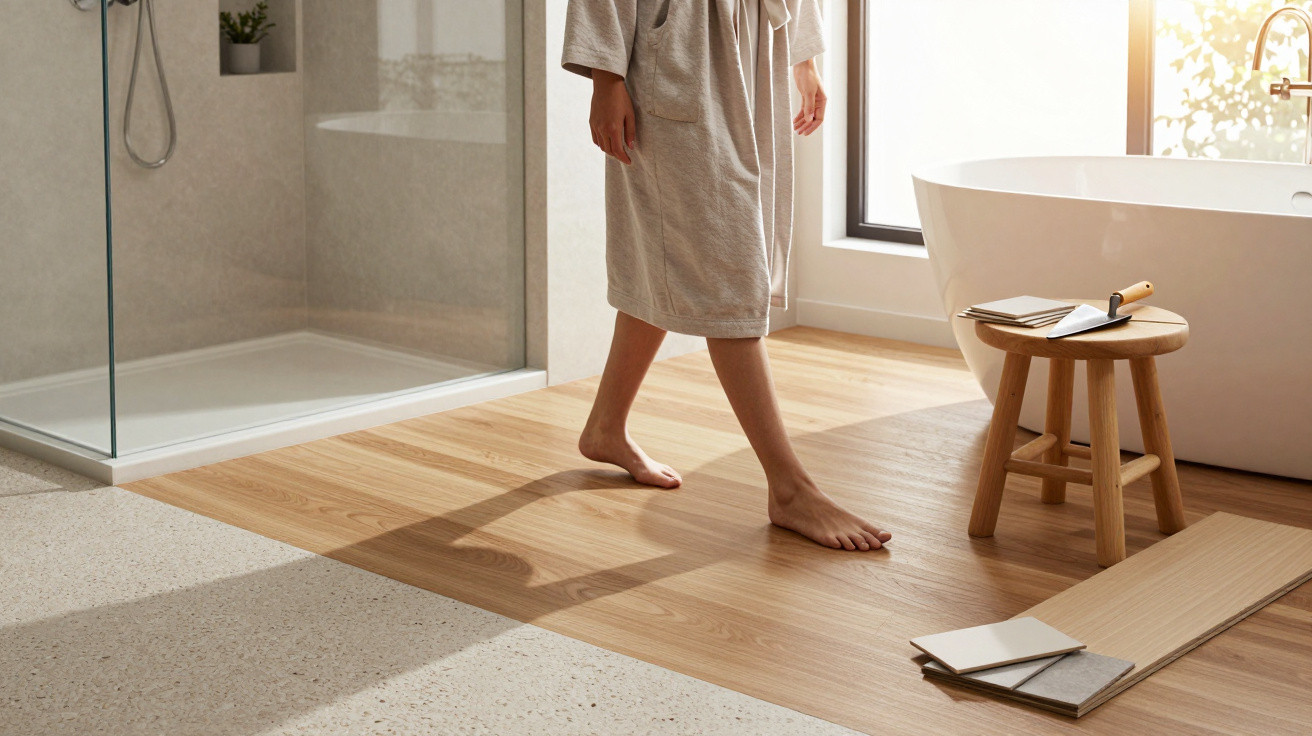
Traditional cold bathroom flooring is gradually giving way to choices that feel warmer, more refined and more practical. In 2026, the aim is no longer simply to select an attractive covering, but to create a bathroom that is comfortable for everyday use, easy to clean and visually better connected with the rest of the home. That is why wood-look materials, seamless surfaces and natural finishes are appearing more frequently in modern schemes.
Why is traditional cold flooring falling out of favour?
Cold flooring has long been a standard bathroom choice because it withstands moisture and is easy to wash. However, in many designs it can make the room feel chilly, dated and lacking in character. In small bathrooms, certain styles can also create excessive visual breaks, particularly with dark grout, small tiles or highly pronounced patterns.
New trends are designed to address exactly these issues. The intention is to retain practicality while introducing greater comfort, visual flow and elegance. Rather than giving the bathroom a purely functional look, current design focuses on a more welcoming, spa-like setting that is easier to coordinate with furniture, taps and lighting.
Water-resistant vinyl flooring offers comfort without sacrificing practicality
One of the fastest-growing alternatives is vinyl flooring made for wet areas, especially designs that replicate pale wood, soft concrete or natural stone. It feels more comfortable underfoot than conventional cold flooring and gives the bathroom a warmer, more inviting appearance.
In compact bathrooms, vinyl works particularly well in long planks or light shades. These choices help create a greater sense of space and stop the room from feeling too heavy. The key consideration is selecting a bathroom-suitable product and ensuring it is correctly fitted, with effective sealing around the edges and careful attention to areas close to the shower enclosure.
Microcement creates a modern bathroom with minimal grout
Microcement is another major trend for 2026. It produces a seamless surface with a contemporary look and an elegant finish, avoiding the pronounced divisions created by numerous floor tiles. This makes it especially suitable for small bathrooms, where fewer lines across the floor can make the whole space appear larger.
Its main benefit is its clean, sophisticated effect. The bathroom can look professionally designed even if the space itself is simple. To apply it without undertaking a major renovation, microcement can often be laid over an existing base, provided that the surface is properly prepared. The final coating must be thoroughly sealed to withstand bathroom moisture.
Natural stone and textured porcelain tiles create a more sophisticated look
The third trend is flooring with a natural appearance, including stone, soft marble, limestone, travertine or textured porcelain tiles that reproduce these materials. They add elegance without relying on the dated shine often associated with traditional flooring.
For smaller bathrooms, light tones, satin or matt finishes, and larger-format tiles are the best option. The fewer visible cuts and joins there are, the more refined the room will appear. This type of flooring works particularly well with wood, black, gold or brushed metal taps, as well as simple worktops and indirect lighting.
How can you use these trends without renovating everything?
It is not always necessary to remove the entire bathroom floor to bring it up to date. In some cases, new coverings can be installed over the existing base, as long as it is sound, level and free from leaks. You can also begin with a smaller area, such as a cloakroom, the dry part of the bathroom or only the floor outside the shower enclosure.
The key to replacing cold flooring successfully is choosing an option that balances appearance with real-life use. Vinyl provides comfort, microcement offers continuity, and porcelain tiles with natural texture deliver sophistication. In 2026, the bathroom is no longer viewed solely as a functional room; it is designed as a beautiful, comfortable and pleasant space to use every day.


Comments
No comments yet. Be the first to comment!
Leave a Comment