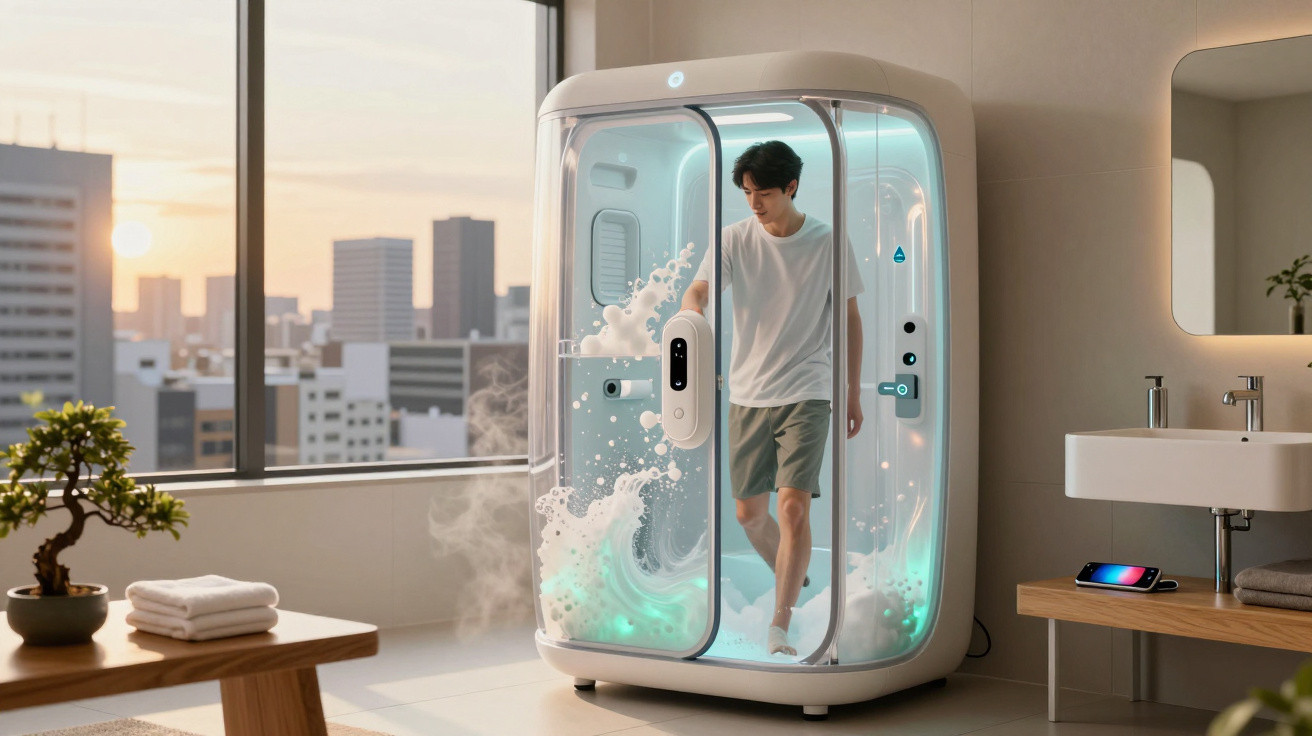
Many people are now turning on the shower tap less often. This is not simply about convenience: health concerns, costs and new technology that promises to rethink personal care entirely are all playing a part. In Japan, a kind of “washing machine for people” is already being presented, designed to cleanse and care for the whole body in just 15 minutes.
Why the daily shower is losing its status
For decades, showering every day was considered the norm. Being clean was virtually synonymous with having just showered. That assumption is beginning to crumble. Dermatologists, environmental organisations and even trend researchers are questioning the old routine.
- Dermatologists caution against excessive soap use and hot water.
- Consumers are feeling the impact of rising energy and water bills.
- Younger generations place greater emphasis on sustainability.
- Technology enthusiasts are increasingly embracing new, more efficient washing solutions.
Rather than taking a long shower every day, many people are changing their routines: washing specific areas of the body, reducing shower time, sometimes washing only their hair and at other times only their body. At the same time, high-tech devices are emerging that claim to combine hygiene, wellbeing and health data in one process.
The “washing machine for people” from Osaka
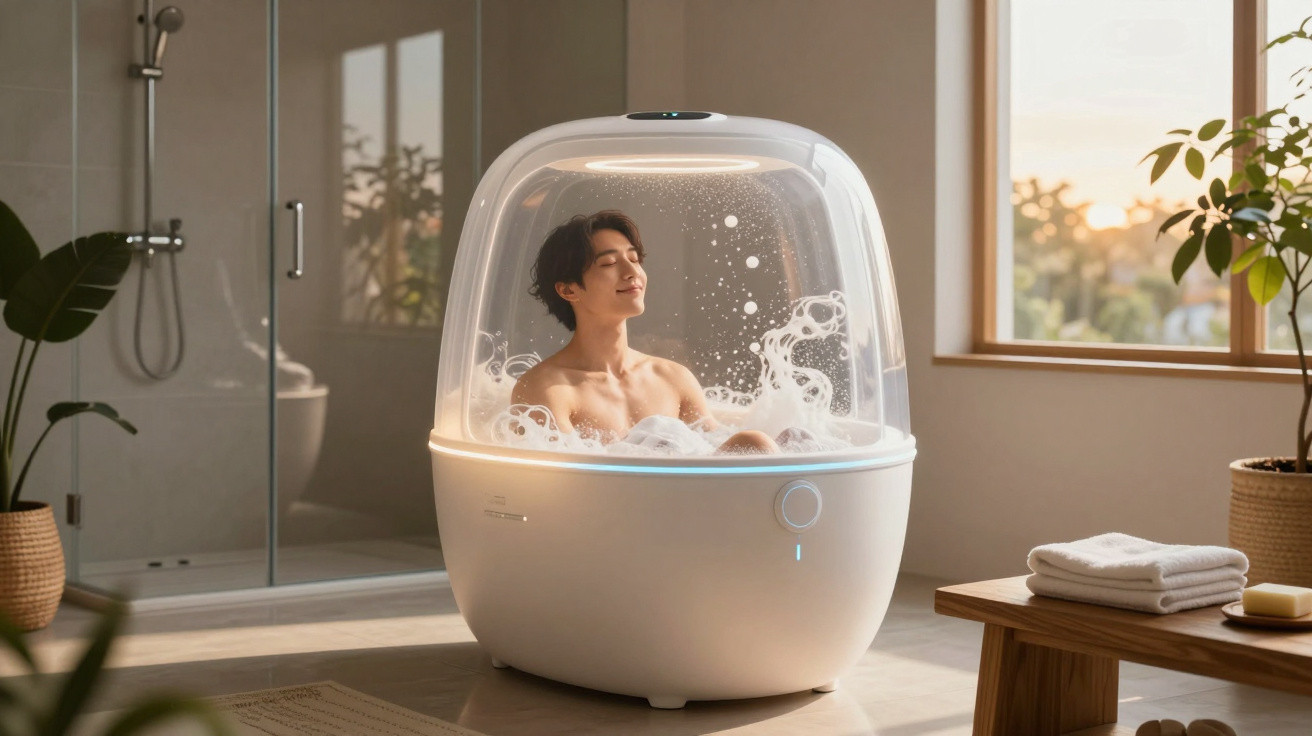
A Japanese company based in Osaka aims to redefine washing completely. Called Mirai Ningen Sentakuki – roughly translated as a washing machine for the person of the future – it is an enclosed capsule in which one person can be washed and dried in around 15 minutes.
Visually, the technology resembles a cross between a bath, a spa cabin and a futuristic pod. Once seated inside, the user goes through an automated sequence:
- The capsule closes and fills with water.
- A system of ultra-fine microbubbles spreads around the body.
- Smart sensors record pulse rate and other physical parameters.
- An AI system adjusts the temperature, water pressure, lighting and sounds.
- Finally, an integrated system dries the entire body.
“The machine is intended to provide three things at once: body cleansing, deep relaxation and continuous monitoring of key health indicators.”
Microbubble technology is already used in some wellness treatments. These tiny bubbles are intended to reach deep into skin folds and pores, loosening dirt and sebum without harsh rubbing or strong surfactants.
Personalised hygiene through artificial intelligence
At the core of the system is a network of sensors and artificial intelligence. Throughout the washing process, the capsule collects data including pulse rate, signs of stress and physical restlessness, and perhaps breathing rhythm or skin temperature as well.
Using this information, the system makes adjustments in real time:
| Parameter | Possible adjustment |
|---|---|
| Heart rate rises | Lower the water temperature slightly, use a gentler flow and play calming sounds |
| High tension | Warmer water, dimmed lighting and soothing noises |
| Tiredness | A somewhat stronger water jet and brighter lighting |
| Signals of sensitive skin | Less pressure, different cleansing programmes and shorter individual phases |
This turns straightforward washing into a kind of mini-spa that responds to a person’s condition that day. Someone who enters feeling stressed is meant to emerge more relaxed, while also being freshly washed.
Hygiene, wellness and health monitoring in one device
The developers intend to create more than a convenient alternative to showering. The machine brings together three areas that would otherwise take place separately:
- Washing: Skin and body are cleansed with microbubbles.
- Relaxation: Lighting, sound and the sensation of water recreate a brief spa visit.
- Monitoring: Physical data can indicate stress levels and strain.
During washing, for instance, the system may detect changes in pulse patterns. Over a longer period, this could reveal trends: a person who repeatedly shows particularly high stress readings after work could identify links between daily life and their physical response.
“Hygiene is becoming the interface between the bathroom and digital health monitoring – an area that has often remained unused until now.”
At the end of the programme, the capsule dries the whole body, meaning that no towel should be required. The full process remains limited to about 15 minutes. This may appeal to people moving quickly through busy days who still value personal care and a pleasant ritual.
An old vision, reimagined
The notion of a human “washing machine” is not entirely new. An initial prototype was displayed at a world exhibition in Osaka as early as the 1970s. At the time, it was mechanical, more visionary than practical, and far from the mass market.
Today, that earlier vision is meeting modern technology: powerful sensors, connected electronics and AI-supported analysis. What once seemed like an unusual exhibition attraction is moving closer to a conceivable everyday technology – at least for hotels, care facilities, luxury flats or wellness areas.
Showering less, using more technology: what is driving the change?
The decline in daily showers has several causes that reinforce one another. They include:
- Skin protection: Dermatologists advise many people to use less lather in order to preserve the skin’s natural protective oil layer.
- Conserving resources: Water shortages and energy prices are prompting a more critical view of long, indulgent showers.
- Social norms: More remote working and fewer rigid office requirements mean that people who spend less time around others often shower less as a fixed ritual.
- Affinity for technology: Those interested in smart homes, wearables and health tracking are open to new ways of washing.
High-tech capsules such as the one in Osaka fit this trend: they promise maximum effect while using limited time and resources. Whether they are genuinely more economical depends on energy consumption, water treatment and how frequently they are used – and there is still little independent data on this.
Who would use such a body-washing machine?
In everyday life, systems of this kind could appeal to several groups:
- People with physical limitations for whom standing in the shower is tiring.
- Older people who want to bathe as safely as possible and avoid falls.
- Very busy professionals looking for a quick combination of care and relaxation.
- Wellness and spa venues wishing to offer guests a futuristic experience.
At the same time, there are important questions. How private will the data collected remain? Who can access it? Could stress profiles eventually become relevant to insurers or employers? The answers will help determine whether acceptance of such capsules grows or declines.
What lies behind microbubbles and similar technology
The term microbubbles may sound like marketing, but it has a real basis. Very small air bubbles increase the contact area between water and skin. This makes it easier to loosen oils and dirt particles. Combined with moderate temperatures, they can cleanse without irritating the skin as much as hot water and rough sponges do.
People without a high-tech capsule can apply similar principles on a smaller scale: choose lukewarm rather than hot water, use mild cleansing lotions, rub less and soak more. Many notice after only a few weeks that their skin and hair respond in a more balanced way and need fewer care products.
Risks, limitations and unanswered questions
For all its appeal, a machine does not automatically replace common sense. Technology can malfunction, sensors can misread values and AI systems can respond incorrectly. Clear medical guidance is needed before the capsule can become an everyday appliance for people with cardiovascular problems or chronic illnesses.
There are practical issues too:
- How much will purchase and maintenance cost?
- How often will the capsule need thorough hygienic cleaning?
- Which cleaning products does it use, and how skin-friendly are they?
- How secure is the data gathered about the body?
Despite these open questions, the trend shows that reaching for the shower head is no longer the only answer to daily hygiene. A new variety is emerging between showering less often, washing individual body areas selectively and using high-tech capsules. People who examine their own habits may benefit from healthier skin, less stress in the bathroom and perhaps even a clearer view of their own physical condition.


Comments
No comments yet. Be the first to comment!
Leave a Comment